
Ever notice that some bottles say “whisky” and others say whiskey”? Is it a secret code? Something special about where it’s from? Is “whiskey” a better way to spell it than “whisky”? Do they mean different things? Or it is just something to argue about after your second pour?
The short answer is, proper spelling of the word “whiskey” is mostly about where it’s made.
- Whisky (no “e”) is the standard spelling in Scotland, Canada, Japan, and a few other countries.
- Whiskey (with with “e”) is used in Ireland and most of the United States.
Everyone spelled it however they wanted. Scotch whisky and Irish whiskey used both spellings. American whiskey used both too. Sometimes the same distillery would switch spelling multiple times, even in the same decade.
How did it become whisky or whiskey?
One theory is that eventually most Irish whiskey producers started adding the “e” to set themselves apart from Scotch whisky. At the time, the market was being flooded with cheaper blended spirits and the Irish wanted something to show the distinction. Some say it was simply clever marketing, like wearing a brighter color so you stand out in the crowd.
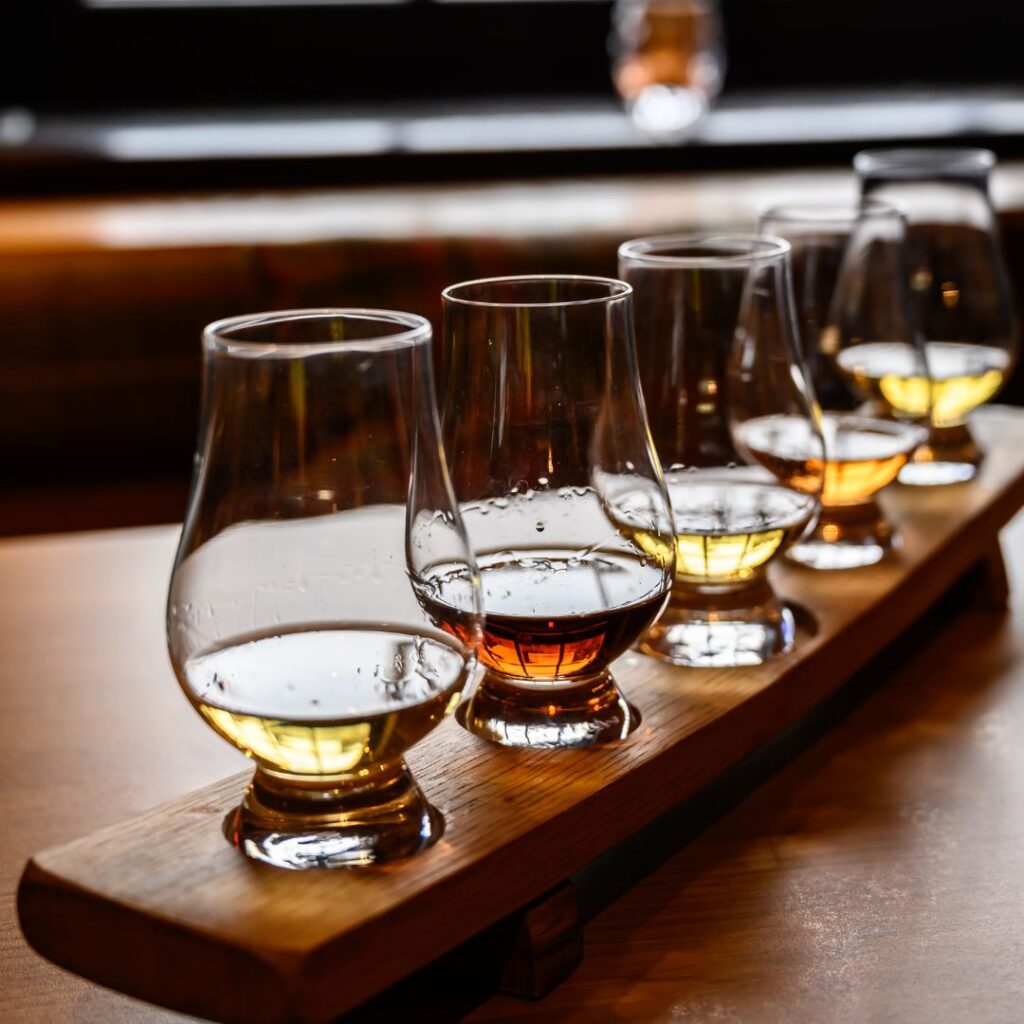
Another theory is the difference between the Scottish Gaelic derivation of “Uisge beatha”, which comes from the Old Irish word “Uisce beatha”. Both mean Water of Life in literal terms and come from the latin word Aqua vitae, which means brandy or distilled spirits. In short, “uisce beatha” is Irish whiskey and “uisge beatha” is Scotch whisky.
Whatever name it goes by, there are key differences between Scotch whisky and Irish whiskey. Scotch whisky is always spelled without the e, has to mature in an oak barrel for at least three years, and must be produced and matured in Scotland. And single malt Scotch whisky has to be made from 100% malted barley.
Irish whiskey is always spelled with an “e”, no exceptions. There’s little to no peat used in most Irish whiskey, so there’s not a lot of smokey flavor (at least not in most). Irish whiskey is distilled three times and, depending on the distillery, may contain a mix of malt, barley, and a portion of grain. Similar to Scotch whiskey, Irish whiskey has to be matured in barrels for at least three years in order to be considered Irish whiskey.
Bringing whiskey to America
When Irish immigrants brought Irish whiskey to America, the spelling came with them. Over time, most American whiskey distillers adopted the “e” in their spelling. Except for some “rebels” like Kentucky bourbon whiskey distiller Markers Mark and Tennessee whiskey distiller George Dickel. They both spell it “whisky” to honor their Scottish heritage. But do you the difference between Kentucky bourbon and Tennessee whiskey?
Bourbon is an American whiskey that’s made from 51% corn with rye and malted barley. Bourbon was originally from a very small area of Kentucky. But after 1964, American law said bourbon can be made anywhere in the United States. Unlike Scotch and Irish whiskey, bourbon whiskey matures in fresh oak casks that have been charred, giving it more flavor.
Rye whiskey is made similarly to bourbon, but it’s 51% rye. Rye whiskey is generally spicier. Overall, Tennessee whiskey and bourbon whiskey are made the same way. The main difference is that Tennessee whiskey is charcoal mellowed (filtered through layers of sugar maple charcoal) before it matures. Charcoal mellowing is required for it to be called Tennessee whiskey.
Yes, the spelling matters
So does it matter if it’s spelled whiskey vs whisky? It actually does…most of the time. At least when you’re talking about the difference between Scotch and Irish whiskey! But to make it even messier, the legal term in U.S. regulations is actually “whisky”. Even though the standard American spelling is “whiskey”. The very distillers who spell it with an “e” are technically the ones breaking tradition. Although it’s only in spelling, not in spirit.
The bottom line: whiskey or whisky?
Here’s the easy way to remember it:
- Countries with an “e” in their name (like Ireland and the United States) tend to spell it “whiskey”
- Countries without an “e” (like Scotland, Canada, and Japan) stick with “whisky”
Does it affect the taste? Nope, not a bit. But knowing the history behind the extra letter means you’ll always have something clever to say when you’re waiting for the bartender to pour you another.
So are you on team “e” or “no e”?
Want more Irish travel inspiration? Check out more Ireland or Scotland blog posts.
Ever notice that some bottles say “whisky” and others say whiskey”? Is it a secret code? Something special about where it’s from? Is “whiskey” a better way to spell it than “whisky”? Do they mean different things? Or it is just something to argue about after your second pour?
The short answer is, proper spelling of the word “whiskey” is mostly about where it’s made.
- Whisky (no “e”) is the standard spelling in Scotland, Canada, Japan, and a few other countries.
- Whiskey (with with “e”) is used in Ireland and most of the United States.
Everyone spelled it however they wanted. Scotch whisky and Irish whiskey used both spellings. American whiskey used both too. Sometimes the same distillery would switch spelling multiple times, even in the same decade.
How did it become whisky or whiskey?
One theory is that eventually most Irish whiskey producers started adding the “e” to set themselves apart from Scotch whisky. At the time, the market was being flooded with cheaper blended spirits and the Irish wanted something to show the distinction. Some say it was simply clever marketing, like wearing a brighter color so you stand out in the crowd.
Another theory is the difference between the Scottish Gaelic derivation of “Uisge beatha”, which comes from the Old Irish word “Uisce beatha”. Both mean Water of Life in literal terms and come from the latin word Aqua vitae, which means brandy or distilled spirits. In short, “uisce beatha” is Irish whiskey and “uisge beatha” is Scotch whisky.
Whatever name it goes by, there are key differences between Scotch whisky and Irish whiskey. Scotch whisky is always spelled without the e, has to mature in an oak barrel for at least three years, and must be produced and matured in Scotland. And single malt Scotch whisky has to be made from 100% malted barley.
Irish whiskey is always spelled with an “e”, no exceptions. There’s little to no peat used in most Irish whiskey, so there’s not a lot of smokey flavor (at least not in most). Irish whiskey is distilled three times and, depending on the distillery, may contain a mix of malt, barley, and a portion of grain. Similar to Scotch whiskey, Irish whiskey has to be matured in barrels for at least three years in order to be considered Irish whiskey.
Bringing whiskey to America
When Irish immigrants brought Irish whiskey to America, the spelling came with them. Over time, most American whiskey distillers adopted the “e” in their spelling. Except for some “rebels” like Kentucky bourbon whiskey distiller Markers Mark and Tennessee whiskey distiller George Dickel. They both spell it “whisky” to honor their Scottish heritage. But do you the difference between Kentucky bourbon and Tennessee whiskey?
Bourbon is an American whiskey that’s made from 51% corn with rye and malted barley. Bourbon was originally from a very small area of Kentucky. But after 1964, American law said bourbon can be made anywhere in the United States. Unlike Scotch and Irish whiskey, bourbon whiskey matures in fresh oak casks that have been charred, giving it more flavor.
Rye whiskey is made similarly to bourbon, but it’s 51% rye. Rye whiskey is generally spicier. Overall, Tennessee whiskey and bourbon whiskey are made the same way. The main difference is that Tennessee whiskey is charcoal mellowed (filtered through layers of sugar maple charcoal) before it matures. Charcoal mellowing is required for it to be called Tennessee whiskey.
Yes, the spelling matters
So does it matter if it’s spelled whiskey vs whisky? It actually does…most of the time. At least when you’re talking about the difference between Scotch and Irish whiskey! But to make it even messier, the legal term in U.S. regulations is actually “whisky”. Even though the standard American spelling is “whiskey”. The very distillers who spell it with an “e” are technically the ones breaking tradition. Although it’s only in spelling, not in spirit.
The bottom line: whiskey or whisky?
Here’s the easy way to remember it:
- Countries with an “e” in their name (like Ireland and the United States) tend to spell it “whiskey”
- Countries without an “e” (like Scotland, Canada, and Japan) stick with “whisky”
Does it affect the taste? Nope, not a bit. But knowing the history behind the extra letter means you’ll always have something clever to say when you’re waiting for the bartender to pour you another.
So are you on team “e” or “no e”?
Want more Irish travel inspiration? Check out more Ireland or Scotland blog posts.

