
If you’re planning a trip through Tuscany Italy, choosing the best towns in Tuscany to visit can be surprisingly difficult. Beyond Florence, Siena, and Pisa lies a region filled with hilltop villages, Renaissance masterpieces, medieval fortresses, and vineyard-covered landscapes. Every town has its own personality, making Tuscany one of Italy’s most rewarding regions to explore.
Some towns are famous for their wine. Others are known for remarkably preserved medieval streets, far-reaching views over the Tuscan countryside, or centuries of history. Whether you’re building a road trip through Tuscany or deciding where to spend a few nights, visiting several different towns offers a much better understanding of the region than staying in one place.
This guide highlights ten of the best towns in Tuscany. They range from internationally recognized destinations to quieter villages that are often overlooked. While each deserves a visit, the right choices for your itinerary will depend on your interests, how much time you have, and whether you’re exploring Tuscany by car or train.
How We Chose the Best Towns in Tuscany
There is no single “best” town in Tuscany. Some travelers are drawn to medieval architecture. Others enjoy wine, food, Renaissance art, or simply the scenery that has made Tuscany famous around the world.
This list includes towns that each offer something distinctly different. Together they showcase the diversity of the region, from perfectly preserved Renaissance planning to dramatic hilltop fortresses and some of Italy’s most celebrated wine regions.
This post contains affiliate links, which means I may earn a small commission if you make a purchase or reservation, at no extra cost to you.
Lucca

Surrounded by some of the best-preserved Renaissance walls in Europe, Lucca offers a different experience from Tuscany’s hill towns. You’ll explore a compact historic center enclosed by broad defensive walls that have been transformed into a tree-lined park. Walking or cycling the four-kilometer circuit is one of the town’s defining experiences, with views across rooftops, church towers, and quiet piazzas.
Inside the walls, Lucca is perfect for slow exploration. Piazza dell’Anfiteatro still follows the outline of the Roman amphitheater that once stood here. Elegant churches, narrow shopping streets, and inviting cafés create a relaxed atmosphere. Even during the busy season, Lucca often feels less crowded than many Tuscan destinations.
One of the most unusual sites is the Guinigi tower, topped with live oak trees. If you’d like you can climb the 230 steps to take in the views over the city from the top.
Music lovers may recognize Lucca as the birthplace of composer Giacomo Puccini. His former home now serves as a museum. Visitors can easily spend a full day exploring Lucca’s history, architecture, and walkable historic center.
Lucca also makes a great day trip from Florence, with frequent direct trains services. Or if you’d like to spend a night or two in Lucca, consider the Grand Universe Lucca. Housed in a restored 16th-century palazzo, it combines contemporary accommodations with a central location inside Lucca’s historic walls.
San Gimignano

Few places are as instantly recognizable as the beautiful town of San Gimignano. Rising above the surrounding countryside, the towers of the medieval town have dominated the skyline for centuries, earning the town the nickname “Medieval Manhattan.”
At its height, wealthy families competed to build taller towers as symbols of status and influence. While only fourteen remain today, they create one of Italy’s most distinctive skylines and helped earn San Gimignano UNESCO World Heritage status.
Beyond the famous towers, San Gimignano is filled with narrow streets, ancient piazzas like the Piazza della Cisterna, artisan shops, small piazzas, and churches decorated with remarkable medieval frescoes. Climbing Torre Grossa, the tallest surviving tower, rewards visitors with panoramic views across vineyards, olive groves, and rolling Tuscan hills.
Because of its popularity, San Gimignano can become busy during the middle of the day. Visiting early in the morning or later in the afternoon offers a quieter experience and allows the town’s medieval atmosphere to shine through.
If you’d like to stay near San Gimignano, consider La Collegiata. Set in a former 16th-century monastery just outside the town walls, it offers peaceful surroundings with views of San Gimignano’s famous towers.
Montepulciano
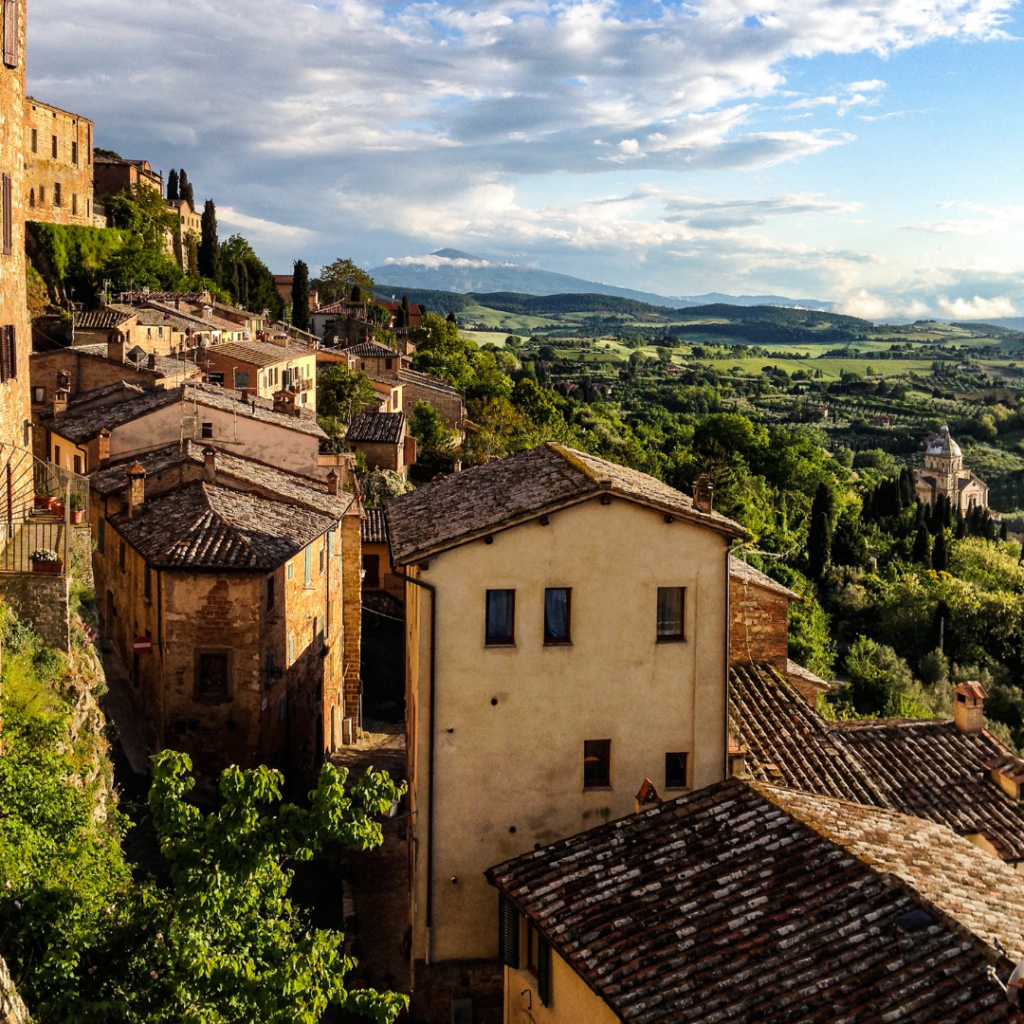
Perched high above vineyards in southeastern Tuscany, Montepulciano combines Renaissance architecture with one of Italy’s most celebrated wine traditions. The town rises steeply toward the Piazza Grande, or main square, where elegant palaces and the cathedral create one of the region’s most impressive historic squares.
One of Montepulciano’s most distinctive features lies beneath its streets. Centuries-old wine cellars extend beneath many historic buildings. Local producers continue to age Vino Nobile di Montepulciano in these underground cellars. Many welcome visitors for wine tours and tastings, offering insight into a tradition that has shaped the town for generations.
Montepulciano is equally rewarding away from the wine cellars. Side streets reveal hidden courtyards, small churches, artisan shops, and viewpoints overlooking vineyards stretching toward the Val d’Orcia. Combined with its excellent restaurants and historic atmosphere, it’s easy to understand why Montepulciano is regularly included among the best towns in Tuscany.
If you’d like to spend a few nights near Montepulciano, consider Borgo San Vincenzo. Located just outside the historic town, this contemporary boutique hotel provides easy access to the town while placing guests in the heart of Tuscany’s wine country.
Pienza
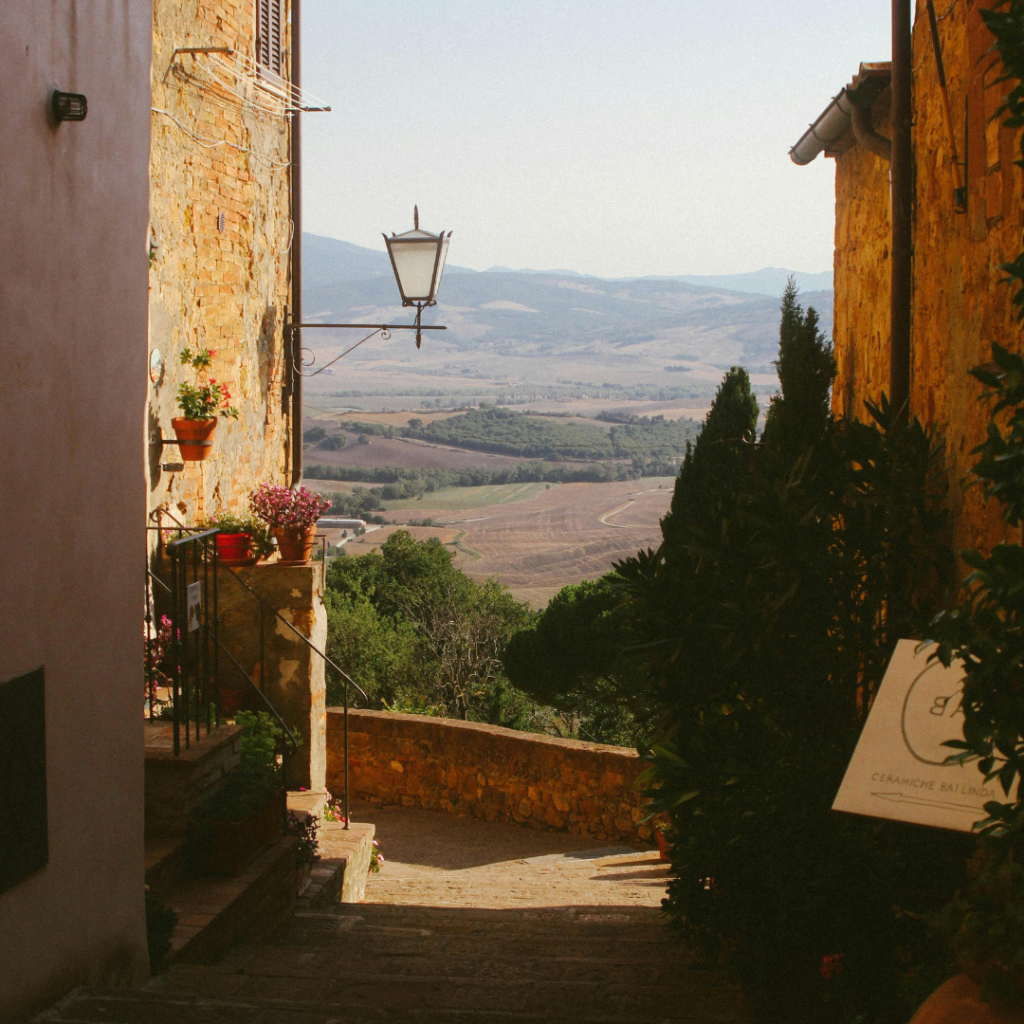
Small in size but significant in history, Pienza is unlike any other town in Tuscany. Rather than developing gradually over centuries, much of this charming town was intentionally redesigned during the 15th century by Pope Pius II as his vision of the ideal Renaissance city.
The result is a remarkably harmonious historic center where elegant palaces, the cathedral, and carefully proportioned public spaces create a sense of balance that continues to impress visitors today. Make sure to visit the Palazzo Piccolomini as well as Piazza Pio II. They form the heart of Pienza’s UNESCO World Heritage Site.
Just as memorable are the views. Sitting above the Val d’Orcia, Pienza overlooks one of Tuscany’s most iconic landscapes, with winding roads, cypress trees, rolling fields, and isolated farmhouses stretching toward the horizon.
No visit would be complete without sampling the town’s famous pecorino cheese. Shops throughout the historic center offer locally produced varieties ranging from fresh and mild to aged and intensely flavorful, making Pienza one of Tuscany’s best destinations for food lovers as well as architecture enthusiasts.
If you’d like to stay in the heart of Pienza, consider La Bandita Townhouse. Set in a restored Renaissance palazzo on the main street, this intimate boutique hotel places the town’s historic center just outside your door.
Volterra
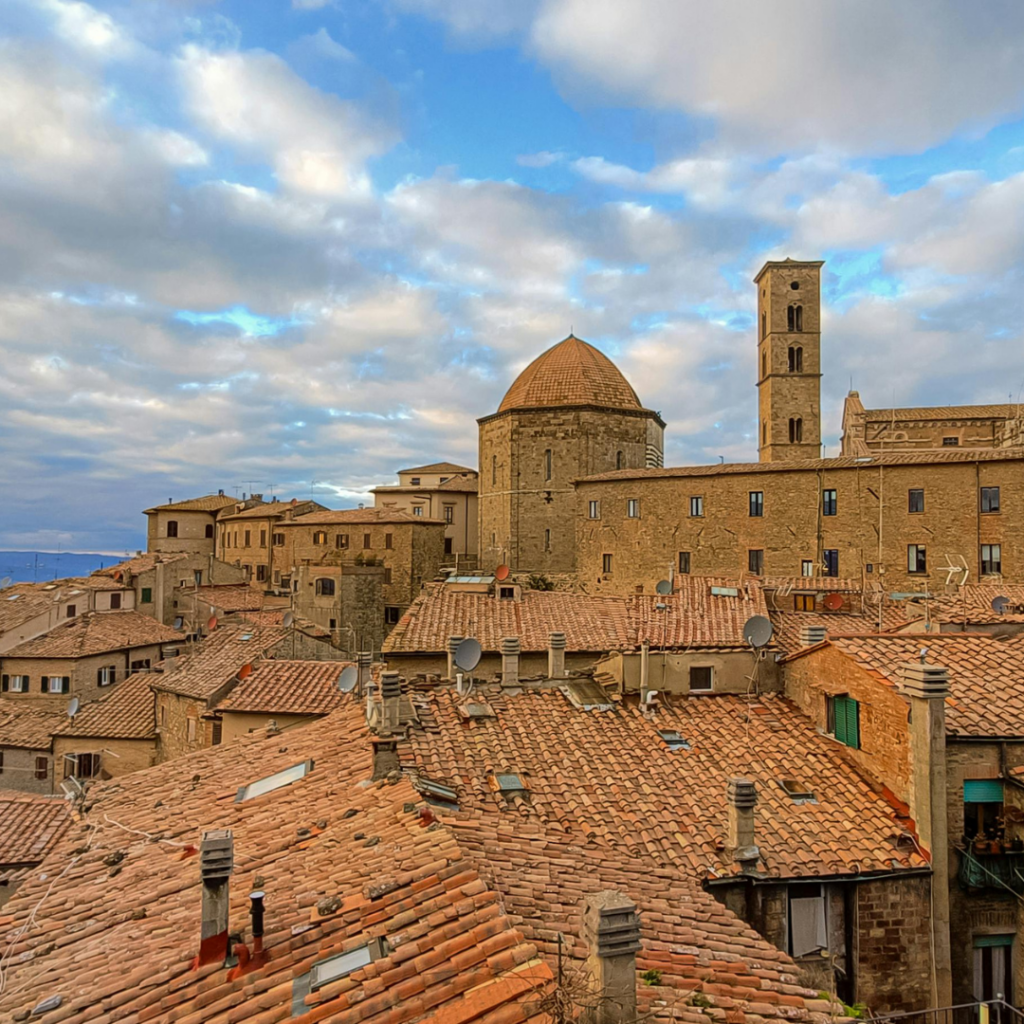
While many Tuscan towns highlight their medieval character, Volterra reaches even further into the past. Long before Florence or Siena rose to prominence, and centuries before Pisa was home to its famous leaning tower, Volterra was one of the principal cities of the Etruscan civilization, and traces of that history remain throughout the town today.
Walking through Volterra reveals layers of history at every turn. Ancient Etruscan walls stand alongside Roman ruins, medieval palaces, and Renaissance buildings, creating one of Tuscany’s most historically diverse destinations. The remarkably preserved Roman theater, dating to the first century BCE, remains one of the town’s standout attractions.
Volterra is also known for its centuries-old tradition of alabaster carving. Workshops throughout the historic center continue to produce sculptures, decorative pieces, and artwork using the soft white stone that has been quarried nearby since Etruscan times. Watching artisans at work offers visitors a chance to experience one of Tuscany’s oldest surviving crafts.
Less crowded than many of the region’s better-known destinations, Volterra rewards travelers interested in archaeology, history, and authentic local craftsmanship while offering spectacular views across the surrounding countryside.
If you’d like to stay near Volterra, consider Borgo Pignano. Set on a restored historic country estate just outside town, it combines a peaceful rural setting with easy access to Volterra’s historic center. Expansive grounds, organic gardens, and sweeping Tuscan views make it one of the region’s most distinctive countryside retreats.
Cortona
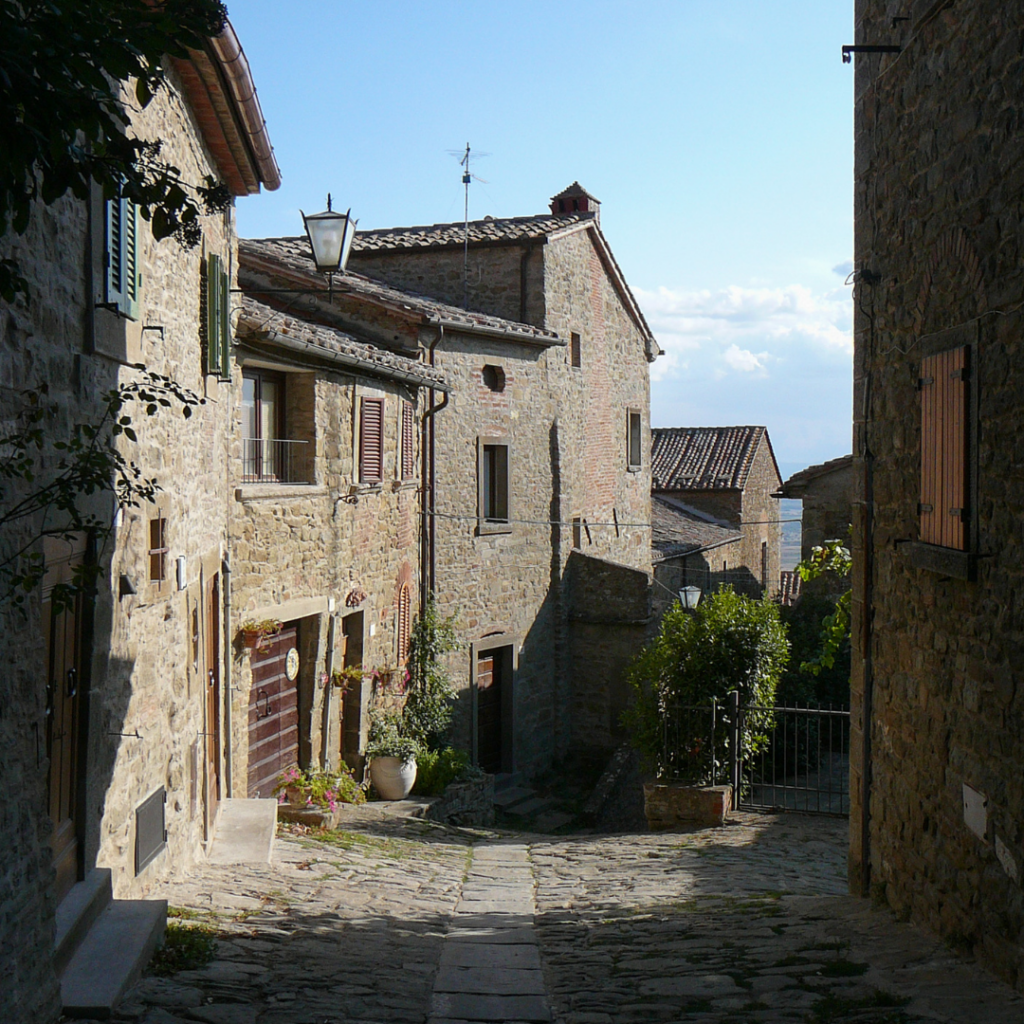
Perched on the slopes of Mount Sant’Egidio overlooking the Val di Chiana, Cortona combines thousands of years of history with some of the most expansive views in Tuscany. Although many visitors first discovered the town through Under the Tuscan Sun, Cortona’s appeal extends far beyond its literary fame.
Founded by the Etruscans, the town still preserves sections of its ancient defensive walls, while its steep medieval streets lead to lively piazzas, churches, and family-run shops. Piazza della Repubblica forms the heart of the historic center, where the Palazzo Comunale has overlooked daily life for centuries.
History enthusiasts shouldn’t miss the Museo dell’Accademia Etrusca, one of Italy’s oldest public museums. Its collection traces the region’s history from Etruscan civilization through the Roman era and beyond, helping visitors understand why Cortona has been an important settlement for more than two millennia.
Cortona also makes an excellent base for exploring southeastern Tuscany, with Montepulciano, Lake Trasimeno, and the Val d’Orcia all within easy driving distance.
If you’d like to stay near Cortona, consider Relais Il Falconiere. Set on a historic estate just outside town, this former 17th-century villa combines a peaceful countryside setting with easy access to Cortona’s historic center. The estate also produces its own wines and olive oil, reflecting the agricultural traditions of the surrounding countryside.
Montalcino
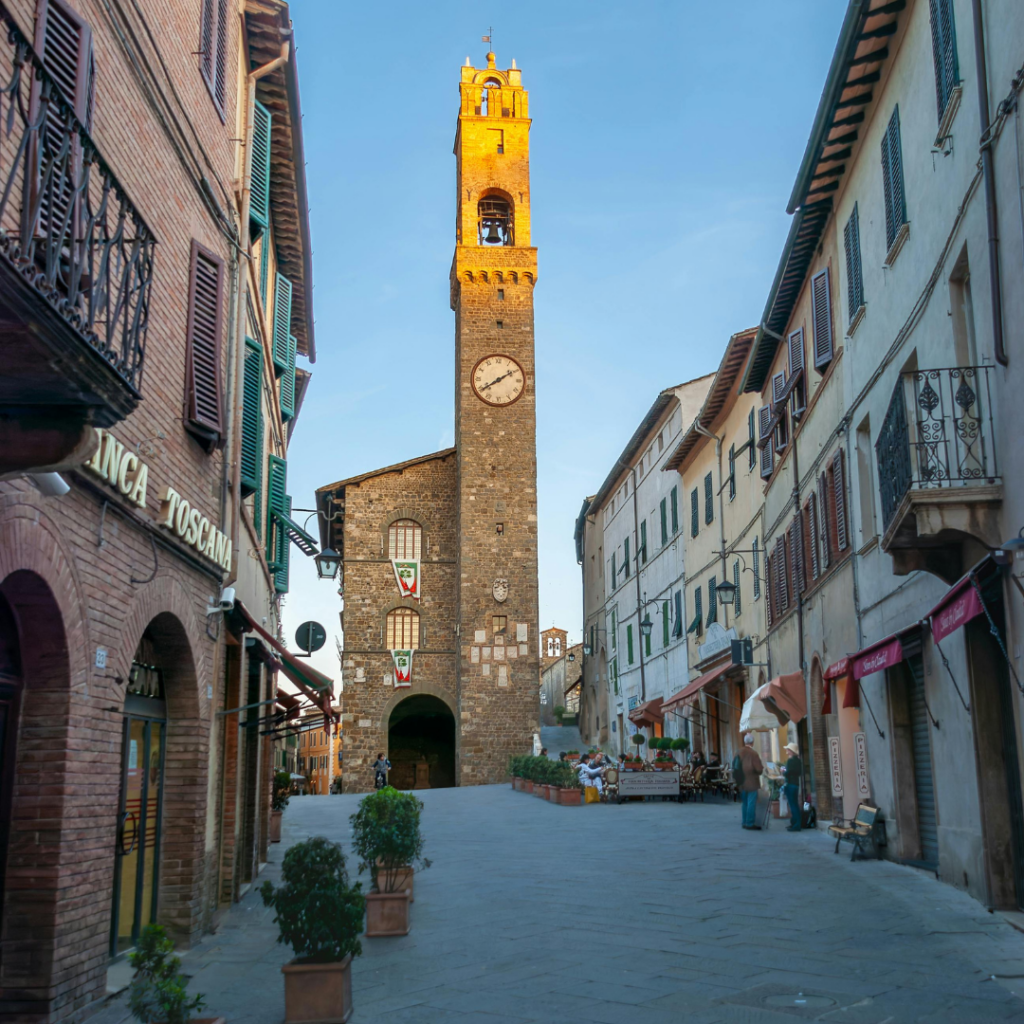
Wine has shaped Montalcino’s identity for centuries, and today the hilltop town is synonymous with Brunello di Montalcino, one of Italy’s most celebrated red wines. Surrounded by vineyards stretching across rolling hills, the town offers some of Tuscany’s most memorable landscapes.
The historic center remains compact and easy to explore, with stone buildings, quiet lanes, and inviting piazzas leading toward the impressive 14th-century fortress. From the fortress walls, visitors are rewarded with panoramic views extending across vineyards, olive groves, and distant hill towns.
While Brunello attracts wine lovers from around the world, Montalcino offers much more than tastings. Local restaurants showcase regional specialties, artisan food shops line the historic streets, and the relaxed pace encourages visitors to slow down and enjoy the atmosphere.
Those visiting in late October may also experience the Festa del Tordo, a medieval festival featuring historical costumes, parades, music, and an archery competition that celebrates traditions dating back hundreds of years.
If you’d like to stay near Montalcino, consider Castello Banfi – Il Borgo. Set on the renowned Banfi wine estate, this restored medieval hamlet combines vineyard views with easy access to Montalcino’s historic center. Guests can also enjoy estate wine tastings, a balsamic cellar, and one of Tuscany’s most respected wineries.
Castellina in Chianti
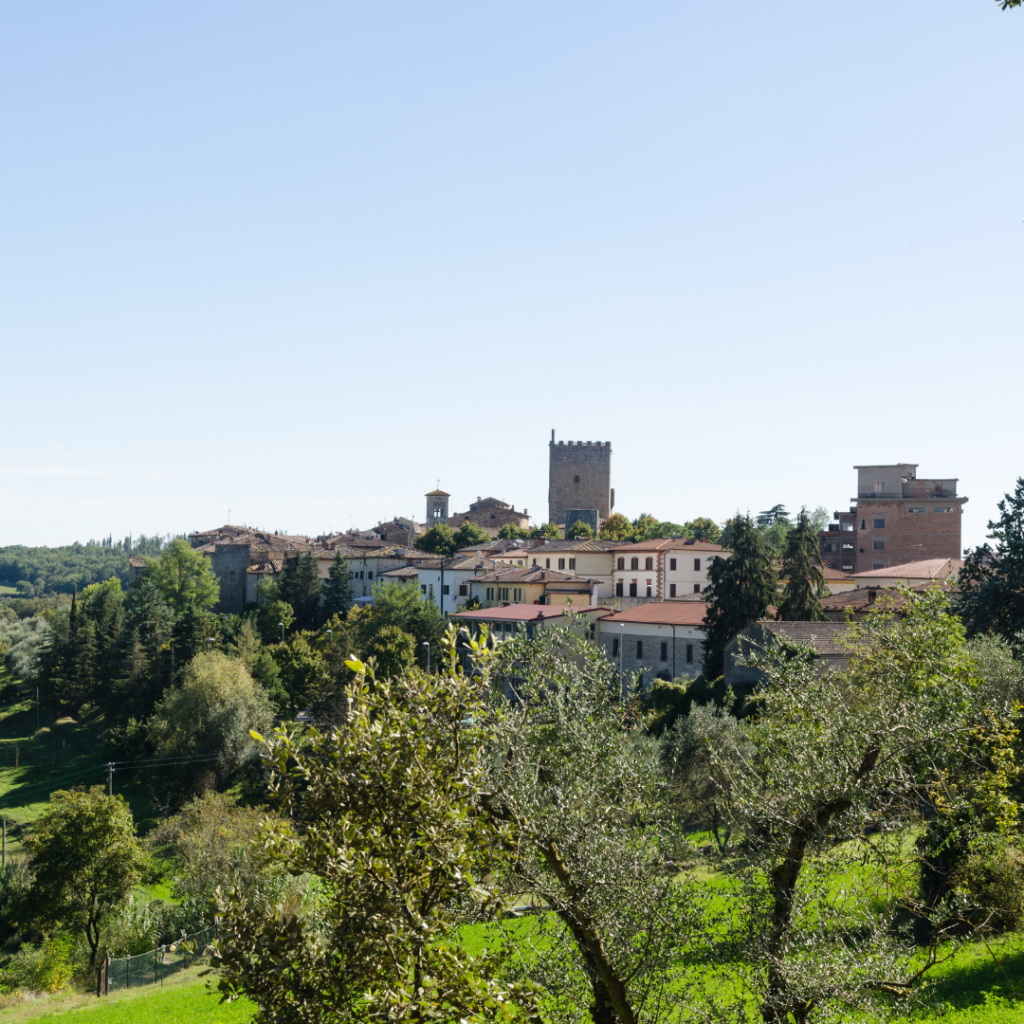
Located along the scenic Chiantigiana road between Florence and Siena, Castellina in Chianti is one of the best places to experience the heart of Tuscany’s famous Chianti Classico wine country. While the surrounding vineyards draw many visitors, the town itself deserves time to explore.
Its historic center is anchored by Via delle Volte, a distinctive covered medieval passage built into the old defensive walls. Walking beneath its stone arches offers a glimpse into the town’s medieval past while opening onto beautiful views across the Chianti countryside.
Small wine bars, local restaurants, artisan boutiques, and specialty food shops give Castellina a welcoming atmosphere without feeling overly commercial. Many nearby wineries offer tastings and cellar tours, making the town an ideal stop for travelers exploring Chianti by car.
Among the best towns in Tuscany, Castellina stands out not for grand monuments but for the way it captures the relaxed rhythm, landscapes, and food-and-wine culture that many visitors associate with the region.
If you’d like to stay near Castellina in Chianti, consider Castello La Leccia. Set on a restored hilltop estate surrounded by vineyards and olive groves, it offers easy access to the villages and Chianti Classico wineries. The historic castle, panoramic views, and working winery make it an ideal base for exploring the region.
Monteriggioni
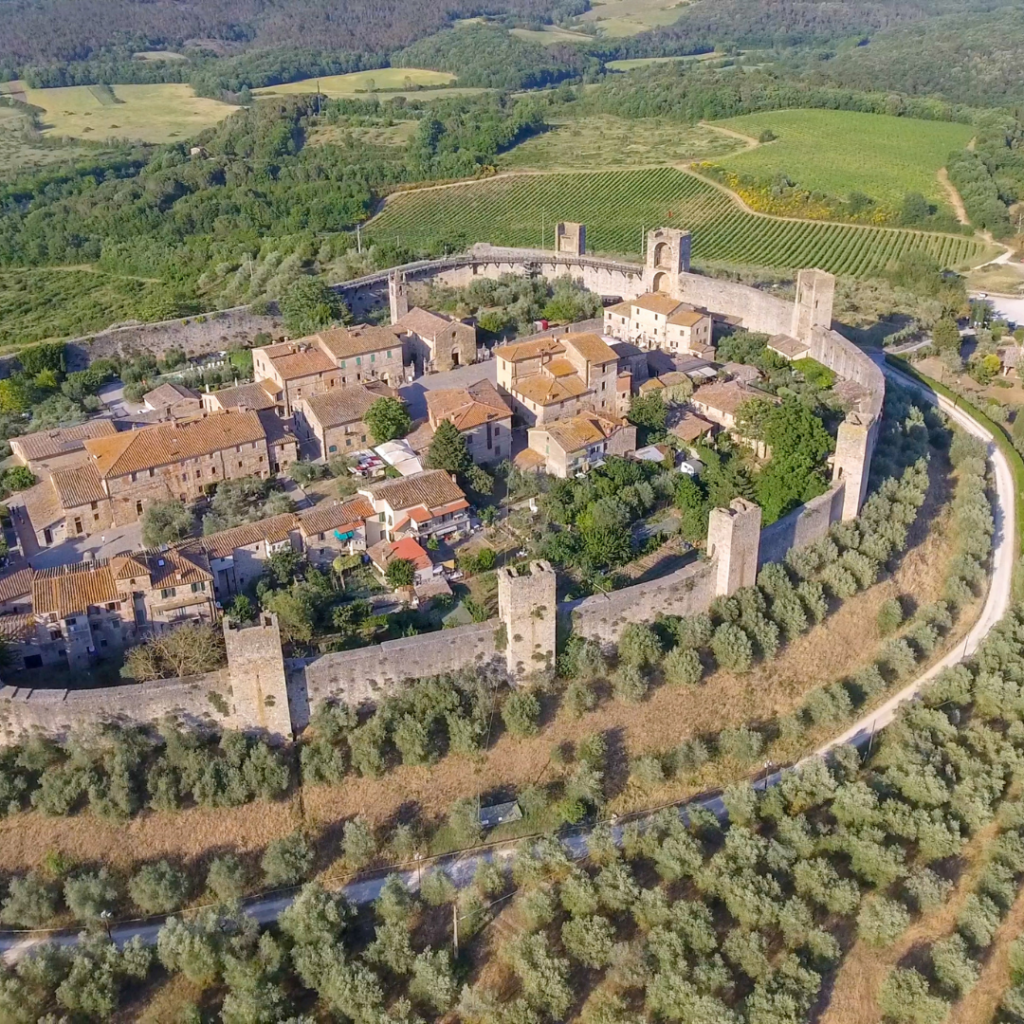
Few places in Tuscany make such a dramatic first impression as Monteriggioni. Encircled by perfectly preserved medieval walls and fourteen watchtowers, the tiny fortress town appears much as it did when it was built by Siena during the early 13th century to defend against Florence.
The village is remarkably small, allowing visitors to explore nearly every street in less than an hour. Rather than rushing through, it’s worth slowing down to appreciate the stone buildings, quiet piazza, and views across the surrounding countryside.
One of the highlights is walking along a section of the restored town walls. From above, visitors can see vineyards, olive groves, and rolling hills stretching in every direction while gaining a better appreciation for the fortress’s strategic position.
Although Monteriggioni is often visited as a stop between Siena and Florence, it deserves more than a quick photo. Its compact size and exceptionally preserved fortifications make it one of the most distinctive medieval villages anywhere in Italy.
Buonconvento
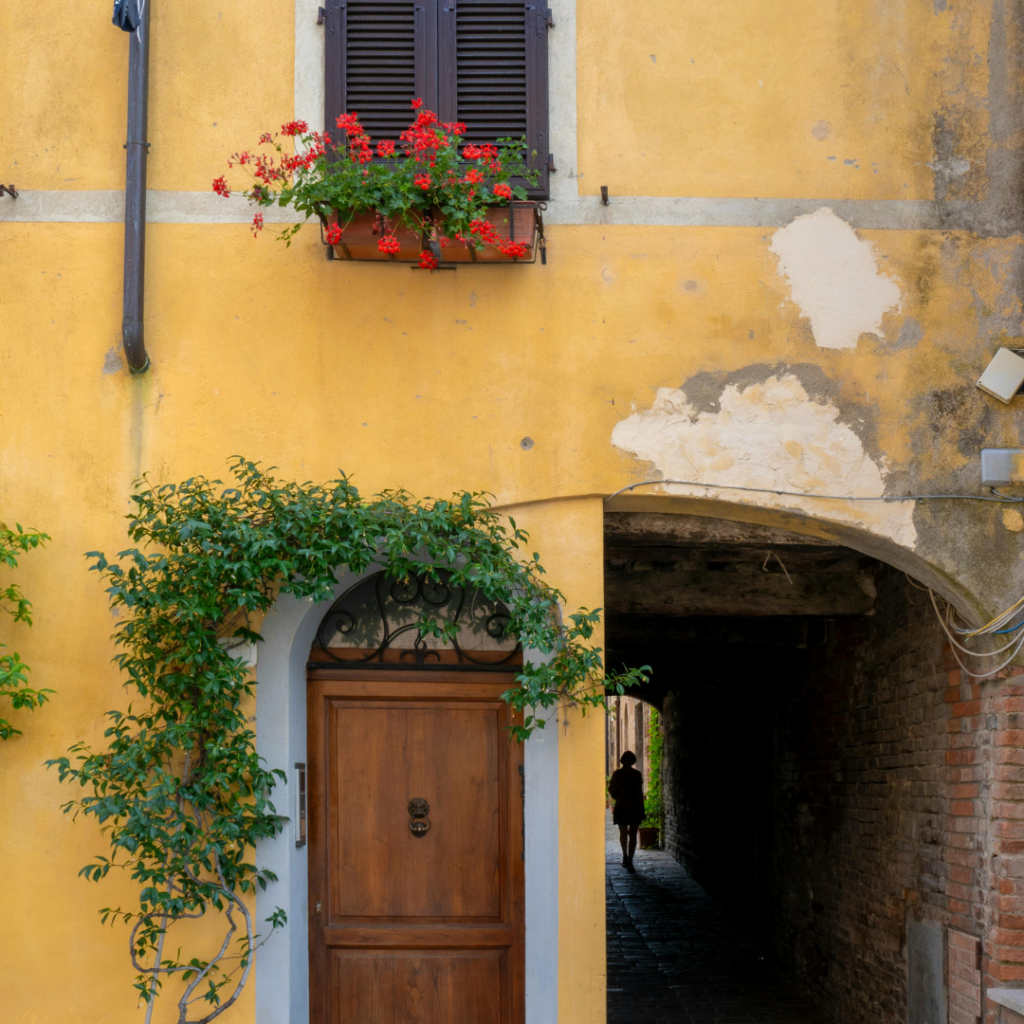
Tucked between Siena and Montalcino along the historic Via Francigena, Buonconvento remains one of Tuscany’s quieter treasures. Many travelers pass through on their way to better-known destinations, but the town rewards those who stop.
Brick walls, historic gates, and narrow streets preserve Buonconvento’s medieval character. Small cafés, family-run restaurants, and independent shops create an atmosphere that encourages visitors to slow down and explore.
The Museo d’Arte Sacra della Val d’Arbia displays religious art from churches throughout the surrounding countryside. Beyond the museum, Buonconvento offers a glimpse into everyday life in a traditional Tuscan town.
If you’re looking beyond Tuscany’s most famous destinations, Buonconvento is well worth adding to your itinerary. Its relaxed pace offers a refreshing contrast to many of the region’s busiest towns.
Which of the Best Towns in Tuscany Are Right for You?
Every traveler experiences Tuscany differently, and no single town suits every itinerary. First-time visitors should consider San Gimignano, Lucca, Montepulciano, and Pienza. Each combines historic landmarks with the scenery that defines Tuscany.
Wine lovers should prioritize Montepulciano, Montalcino, and Castellina in Chianti. History enthusiasts will appreciate Volterra’s Etruscan heritage and Cortona’s layered past. Monteriggioni offers one of Italy’s best-preserved medieval fortified villages.
If your schedule allows, add Buonconvento for a quieter perspective on Tuscany. Its slower pace provides a welcome contrast to the region’s busiest destinations.
The Bottom Line: The Best Towns in Tuscany
The best towns in Tuscany each offer something different. Some are known for medieval towers, while others are celebrated for Renaissance architecture, renowned wines, or ancient history. Together, they showcase the diversity that makes Tuscany one of Italy’s most rewarding regions.
Rather than trying to visit every town, choose several that match your interests. Give yourself enough time to explore each at a relaxed pace.
No matter which towns you choose, venture beyond Tuscany’s major cities. You’ll gain a deeper appreciation for the region’s landscapes, history, and local traditions.
Like this post? Check out our posts on our favorite towns and villages in England and the prettiest towns in Provence, France.
If you’re planning a trip through Tuscany Italy, choosing the best towns in Tuscany to visit can be surprisingly difficult. Beyond Florence, Siena, and Pisa lies a region filled with hilltop villages, Renaissance masterpieces, medieval fortresses, and vineyard-covered landscapes. Every town has its own personality, making Tuscany one of Italy’s most rewarding regions to explore.
Some towns are famous for their wine. Others are known for remarkably preserved medieval streets, far-reaching views over the Tuscan countryside, or centuries of history. Whether you’re building a road trip through Tuscany or deciding where to spend a few nights, visiting several different towns offers a much better understanding of the region than staying in one place.
This guide highlights ten of the best towns in Tuscany. They range from internationally recognized destinations to quieter villages that are often overlooked. While each deserves a visit, the right choices for your itinerary will depend on your interests, how much time you have, and whether you’re exploring Tuscany by car or train.
How We Chose the Best Towns in Tuscany
There is no single “best” town in Tuscany. Some travelers are drawn to medieval architecture. Others enjoy wine, food, Renaissance art, or simply the scenery that has made Tuscany famous around the world.
This list includes towns that each offer something distinctly different. Together they showcase the diversity of the region, from perfectly preserved Renaissance planning to dramatic hilltop fortresses and some of Italy’s most celebrated wine regions.
This post contains affiliate links, which means I may earn a small commission if you make a purchase or reservation, at no extra cost to you.
Lucca
Surrounded by some of the best-preserved Renaissance walls in Europe, Lucca offers a different experience from Tuscany’s hill towns. You’ll explore a compact historic center enclosed by broad defensive walls that have been transformed into a tree-lined park. Walking or cycling the four-kilometer circuit is one of the town’s defining experiences, with views across rooftops, church towers, and quiet piazzas.
Inside the walls, Lucca is perfect for slow exploration. Piazza dell’Anfiteatro still follows the outline of the Roman amphitheater that once stood here. Elegant churches, narrow shopping streets, and inviting cafés create a relaxed atmosphere. Even during the busy season, Lucca often feels less crowded than many Tuscan destinations.
One of the most unusual sites is the Guinigi tower, topped with live oak trees. If you’d like you can climb the 230 steps to take in the views over the city from the top.
Music lovers may recognize Lucca as the birthplace of composer Giacomo Puccini. His former home now serves as a museum. Visitors can easily spend a full day exploring Lucca’s history, architecture, and walkable historic center.
Lucca also makes a great day trip from Florence, with frequent direct trains services. Or if you’d like to spend a night or two in Lucca, consider the Grand Universe Lucca. Housed in a restored 16th-century palazzo, it combines contemporary accommodations with a central location inside Lucca’s historic walls.
San Gimignano
Few places are as instantly recognizable as the beautiful town of San Gimignano. Rising above the surrounding countryside, the towers of the medieval town have dominated the skyline for centuries, earning the town the nickname “Medieval Manhattan.”
At its height, wealthy families competed to build taller towers as symbols of status and influence. While only fourteen remain today, they create one of Italy’s most distinctive skylines and helped earn San Gimignano UNESCO World Heritage status.
Beyond the famous towers, San Gimignano is filled with narrow streets, ancient piazzas like the Piazza della Cisterna, artisan shops, small piazzas, and churches decorated with remarkable medieval frescoes. Climbing Torre Grossa, the tallest surviving tower, rewards visitors with panoramic views across vineyards, olive groves, and rolling Tuscan hills.
Because of its popularity, San Gimignano can become busy during the middle of the day. Visiting early in the morning or later in the afternoon offers a quieter experience and allows the town’s medieval atmosphere to shine through.
If you’d like to stay near San Gimignano, consider La Collegiata. Set in a former 16th-century monastery just outside the town walls, it offers peaceful surroundings with views of San Gimignano’s famous towers.
Montepulciano
Perched high above vineyards in southeastern Tuscany, Montepulciano combines Renaissance architecture with one of Italy’s most celebrated wine traditions. The town rises steeply toward the Piazza Grande, or main square, where elegant palaces and the cathedral create one of the region’s most impressive historic squares.
One of Montepulciano’s most distinctive features lies beneath its streets. Centuries-old wine cellars extend beneath many historic buildings. Local producers continue to age Vino Nobile di Montepulciano in these underground cellars. Many welcome visitors for wine tours and tastings, offering insight into a tradition that has shaped the town for generations.
Montepulciano is equally rewarding away from the wine cellars. Side streets reveal hidden courtyards, small churches, artisan shops, and viewpoints overlooking vineyards stretching toward the Val d’Orcia. Combined with its excellent restaurants and historic atmosphere, it’s easy to understand why Montepulciano is regularly included among the best towns in Tuscany.
If you’d like to spend a few nights near Montepulciano, consider Borgo San Vincenzo. Located just outside the historic town, this contemporary boutique hotel provides easy access to the town while placing guests in the heart of Tuscany’s wine country.
Pienza
Small in size but significant in history, Pienza is unlike any other town in Tuscany. Rather than developing gradually over centuries, much of this charming town was intentionally redesigned during the 15th century by Pope Pius II as his vision of the ideal Renaissance city.
The result is a remarkably harmonious historic center where elegant palaces, the cathedral, and carefully proportioned public spaces create a sense of balance that continues to impress visitors today. Make sure to visit the Palazzo Piccolomini as well as Piazza Pio II. They form the heart of Pienza’s UNESCO World Heritage Site.
Just as memorable are the views. Sitting above the Val d’Orcia, Pienza overlooks one of Tuscany’s most iconic landscapes, with winding roads, cypress trees, rolling fields, and isolated farmhouses stretching toward the horizon.
No visit would be complete without sampling the town’s famous pecorino cheese. Shops throughout the historic center offer locally produced varieties ranging from fresh and mild to aged and intensely flavorful, making Pienza one of Tuscany’s best destinations for food lovers as well as architecture enthusiasts.
If you’d like to stay in the heart of Pienza, consider La Bandita Townhouse. Set in a restored Renaissance palazzo on the main street, this intimate boutique hotel places the town’s historic center just outside your door.
Volterra
While many Tuscan towns highlight their medieval character, Volterra reaches even further into the past. Long before Florence or Siena rose to prominence, and centuries before Pisa was home to its famous leaning tower, Volterra was one of the principal cities of the Etruscan civilization, and traces of that history remain throughout the town today.
Walking through Volterra reveals layers of history at every turn. Ancient Etruscan walls stand alongside Roman ruins, medieval palaces, and Renaissance buildings, creating one of Tuscany’s most historically diverse destinations. The remarkably preserved Roman theater, dating to the first century BCE, remains one of the town’s standout attractions.
Volterra is also known for its centuries-old tradition of alabaster carving. Workshops throughout the historic center continue to produce sculptures, decorative pieces, and artwork using the soft white stone that has been quarried nearby since Etruscan times. Watching artisans at work offers visitors a chance to experience one of Tuscany’s oldest surviving crafts.
Less crowded than many of the region’s better-known destinations, Volterra rewards travelers interested in archaeology, history, and authentic local craftsmanship while offering spectacular views across the surrounding countryside.
If you’d like to stay near Volterra, consider Borgo Pignano. Set on a restored historic country estate just outside town, it combines a peaceful rural setting with easy access to Volterra’s historic center. Expansive grounds, organic gardens, and sweeping Tuscan views make it one of the region’s most distinctive countryside retreats.
Cortona
Perched on the slopes of Mount Sant’Egidio overlooking the Val di Chiana, Cortona combines thousands of years of history with some of the most expansive views in Tuscany. Although many visitors first discovered the town through Under the Tuscan Sun, Cortona’s appeal extends far beyond its literary fame.
Founded by the Etruscans, the town still preserves sections of its ancient defensive walls, while its steep medieval streets lead to lively piazzas, churches, and family-run shops. Piazza della Repubblica forms the heart of the historic center, where the Palazzo Comunale has overlooked daily life for centuries.
History enthusiasts shouldn’t miss the Museo dell’Accademia Etrusca, one of Italy’s oldest public museums. Its collection traces the region’s history from Etruscan civilization through the Roman era and beyond, helping visitors understand why Cortona has been an important settlement for more than two millennia.
Cortona also makes an excellent base for exploring southeastern Tuscany, with Montepulciano, Lake Trasimeno, and the Val d’Orcia all within easy driving distance.
If you’d like to stay near Cortona, consider Relais Il Falconiere. Set on a historic estate just outside town, this former 17th-century villa combines a peaceful countryside setting with easy access to Cortona’s historic center. The estate also produces its own wines and olive oil, reflecting the agricultural traditions of the surrounding countryside.
Montalcino
Wine has shaped Montalcino’s identity for centuries, and today the hilltop town is synonymous with Brunello di Montalcino, one of Italy’s most celebrated red wines. Surrounded by vineyards stretching across rolling hills, the town offers some of Tuscany’s most memorable landscapes.
The historic center remains compact and easy to explore, with stone buildings, quiet lanes, and inviting piazzas leading toward the impressive 14th-century fortress. From the fortress walls, visitors are rewarded with panoramic views extending across vineyards, olive groves, and distant hill towns.
While Brunello attracts wine lovers from around the world, Montalcino offers much more than tastings. Local restaurants showcase regional specialties, artisan food shops line the historic streets, and the relaxed pace encourages visitors to slow down and enjoy the atmosphere.
Those visiting in late October may also experience the Festa del Tordo, a medieval festival featuring historical costumes, parades, music, and an archery competition that celebrates traditions dating back hundreds of years.
If you’d like to stay near Montalcino, consider Castello Banfi – Il Borgo. Set on the renowned Banfi wine estate, this restored medieval hamlet combines vineyard views with easy access to Montalcino’s historic center. Guests can also enjoy estate wine tastings, a balsamic cellar, and one of Tuscany’s most respected wineries.
Castellina in Chianti
Located along the scenic Chiantigiana road between Florence and Siena, Castellina in Chianti is one of the best places to experience the heart of Tuscany’s famous Chianti Classico wine country. While the surrounding vineyards draw many visitors, the town itself deserves time to explore.
Its historic center is anchored by Via delle Volte, a distinctive covered medieval passage built into the old defensive walls. Walking beneath its stone arches offers a glimpse into the town’s medieval past while opening onto beautiful views across the Chianti countryside.
Small wine bars, local restaurants, artisan boutiques, and specialty food shops give Castellina a welcoming atmosphere without feeling overly commercial. Many nearby wineries offer tastings and cellar tours, making the town an ideal stop for travelers exploring Chianti by car.
Among the best towns in Tuscany, Castellina stands out not for grand monuments but for the way it captures the relaxed rhythm, landscapes, and food-and-wine culture that many visitors associate with the region.
If you’d like to stay near Castellina in Chianti, consider Castello La Leccia. Set on a restored hilltop estate surrounded by vineyards and olive groves, it offers easy access to the villages and Chianti Classico wineries. The historic castle, panoramic views, and working winery make it an ideal base for exploring the region.
Monteriggioni
Few places in Tuscany make such a dramatic first impression as Monteriggioni. Encircled by perfectly preserved medieval walls and fourteen watchtowers, the tiny fortress town appears much as it did when it was built by Siena during the early 13th century to defend against Florence.
The village is remarkably small, allowing visitors to explore nearly every street in less than an hour. Rather than rushing through, it’s worth slowing down to appreciate the stone buildings, quiet piazza, and views across the surrounding countryside.
One of the highlights is walking along a section of the restored town walls. From above, visitors can see vineyards, olive groves, and rolling hills stretching in every direction while gaining a better appreciation for the fortress’s strategic position.
Although Monteriggioni is often visited as a stop between Siena and Florence, it deserves more than a quick photo. Its compact size and exceptionally preserved fortifications make it one of the most distinctive medieval villages anywhere in Italy.
Buonconvento
Tucked between Siena and Montalcino along the historic Via Francigena, Buonconvento remains one of Tuscany’s quieter treasures. Many travelers pass through on their way to better-known destinations, but the town rewards those who stop.
Brick walls, historic gates, and narrow streets preserve Buonconvento’s medieval character. Small cafés, family-run restaurants, and independent shops create an atmosphere that encourages visitors to slow down and explore.
The Museo d’Arte Sacra della Val d’Arbia displays religious art from churches throughout the surrounding countryside. Beyond the museum, Buonconvento offers a glimpse into everyday life in a traditional Tuscan town.
If you’re looking beyond Tuscany’s most famous destinations, Buonconvento is well worth adding to your itinerary. Its relaxed pace offers a refreshing contrast to many of the region’s busiest towns.
Which of the Best Towns in Tuscany Are Right for You?
Every traveler experiences Tuscany differently, and no single town suits every itinerary. First-time visitors should consider San Gimignano, Lucca, Montepulciano, and Pienza. Each combines historic landmarks with the scenery that defines Tuscany.
Wine lovers should prioritize Montepulciano, Montalcino, and Castellina in Chianti. History enthusiasts will appreciate Volterra’s Etruscan heritage and Cortona’s layered past. Monteriggioni offers one of Italy’s best-preserved medieval fortified villages.
If your schedule allows, add Buonconvento for a quieter perspective on Tuscany. Its slower pace provides a welcome contrast to the region’s busiest destinations.
The Bottom Line: The Best Towns in Tuscany
The best towns in Tuscany each offer something different. Some are known for medieval towers, while others are celebrated for Renaissance architecture, renowned wines, or ancient history. Together, they showcase the diversity that makes Tuscany one of Italy’s most rewarding regions.
Rather than trying to visit every town, choose several that match your interests. Give yourself enough time to explore each at a relaxed pace.
No matter which towns you choose, venture beyond Tuscany’s major cities. You’ll gain a deeper appreciation for the region’s landscapes, history, and local traditions.
Like this post? Check out our posts on our favorite towns and villages in England and the prettiest towns in Provence, France.

