
If you’re planning a trip to Italy and visiting Rome, especially if it’s your first trip, there are so many things to see and do! It can be a bit overwhelming. That’s why I put together this guide, your go-to resource for the best things to do in Rome.
A trip to Italy is about more than just sightseeing. It’s about being immersed in a new culture, with fantastic history, world-class food, and far more things to see and do than you can possibly fit into one visit.
Rome is full of historical landmarks, culinary experiences, and hidden gardens and alleys just waiting for you to explore. From the Colosseum’s grandeur to the local charm of Trastevere, there’s really something for every traveler to enjoy.
But you can’t miss a few must-see sights!
Wondering which of Rome’s many monuments, museums and churches should be on your list for your first trip? Here’s what I think are the best things to do in Rome the very first time you visit.
This post contains affiliate links, which means we may earn a small commission if you make a purchase, at no extra cost to you.
The Colosseum
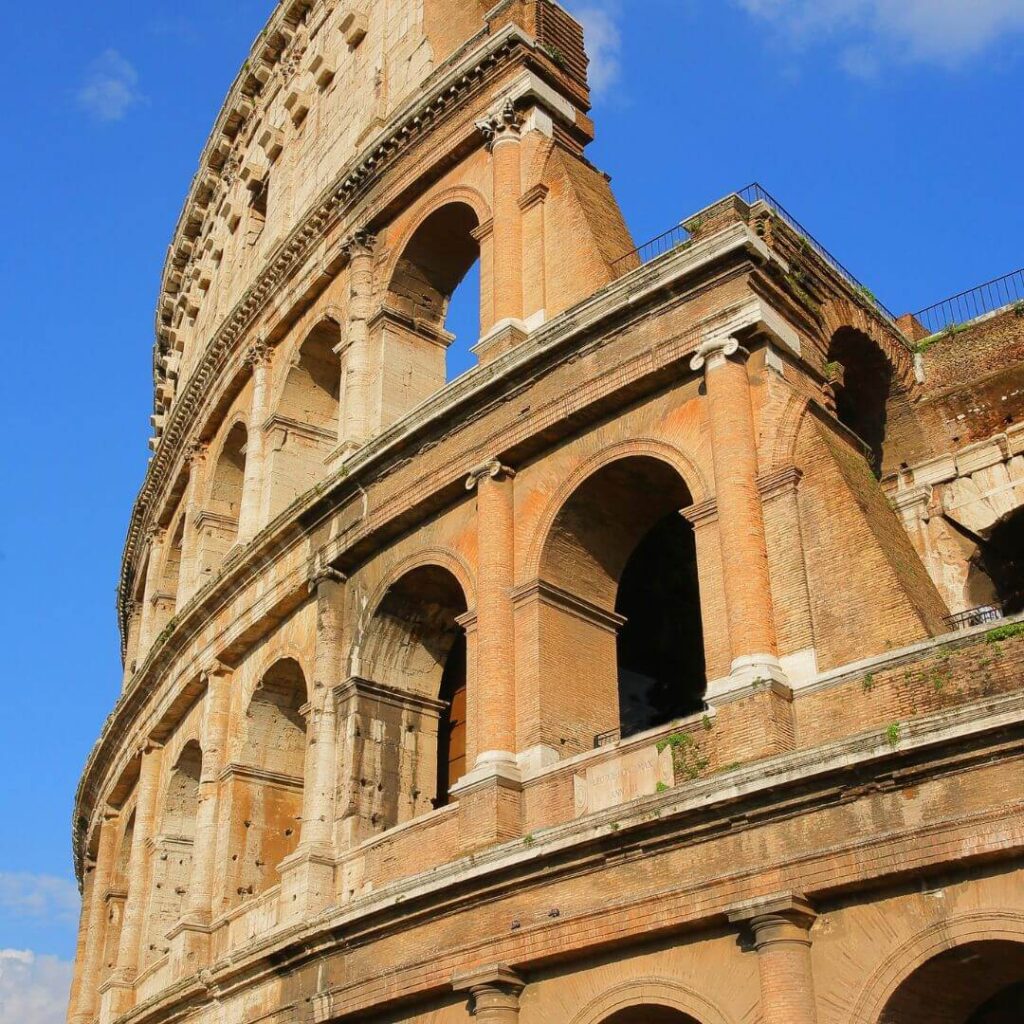
The Colosseum tops the list of the best things to do in Rome for a reason. It’s absolutely essential, and no trip to Rome would be complete without a visit.
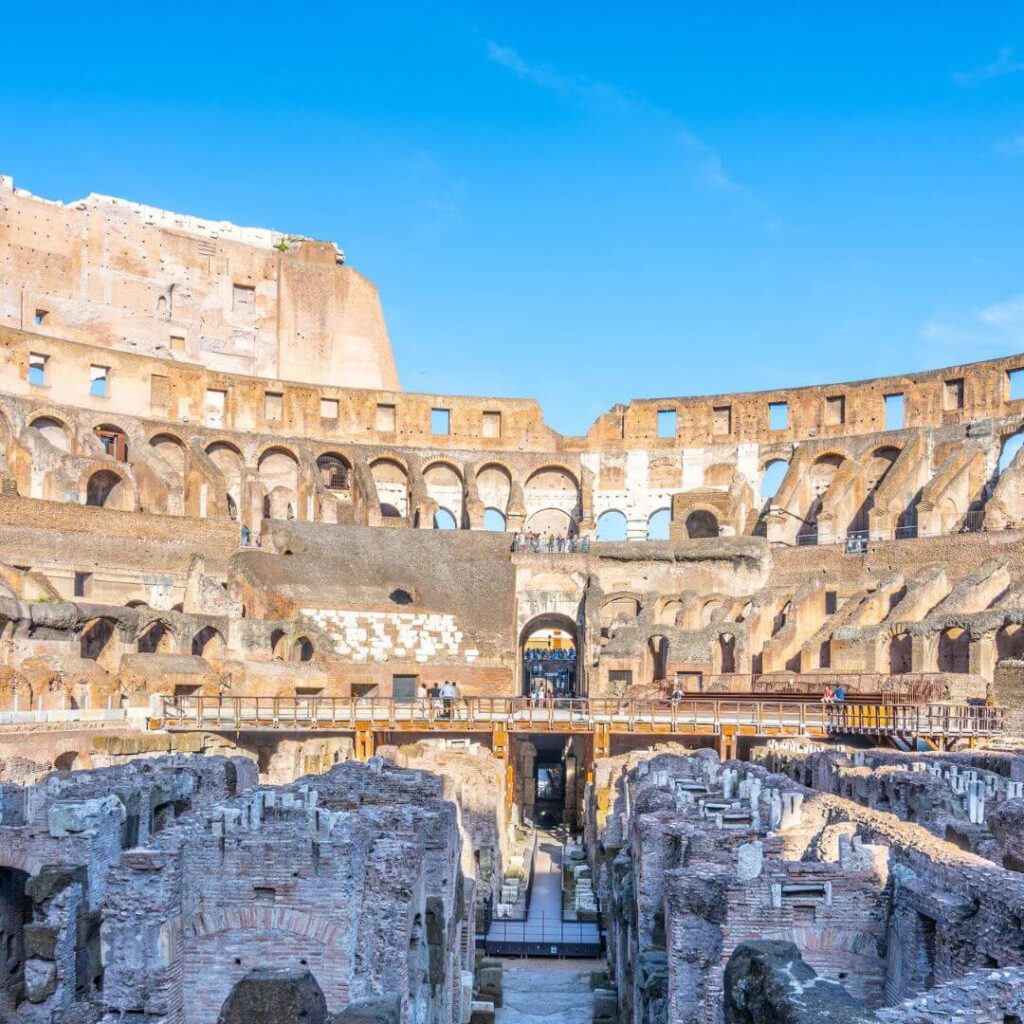
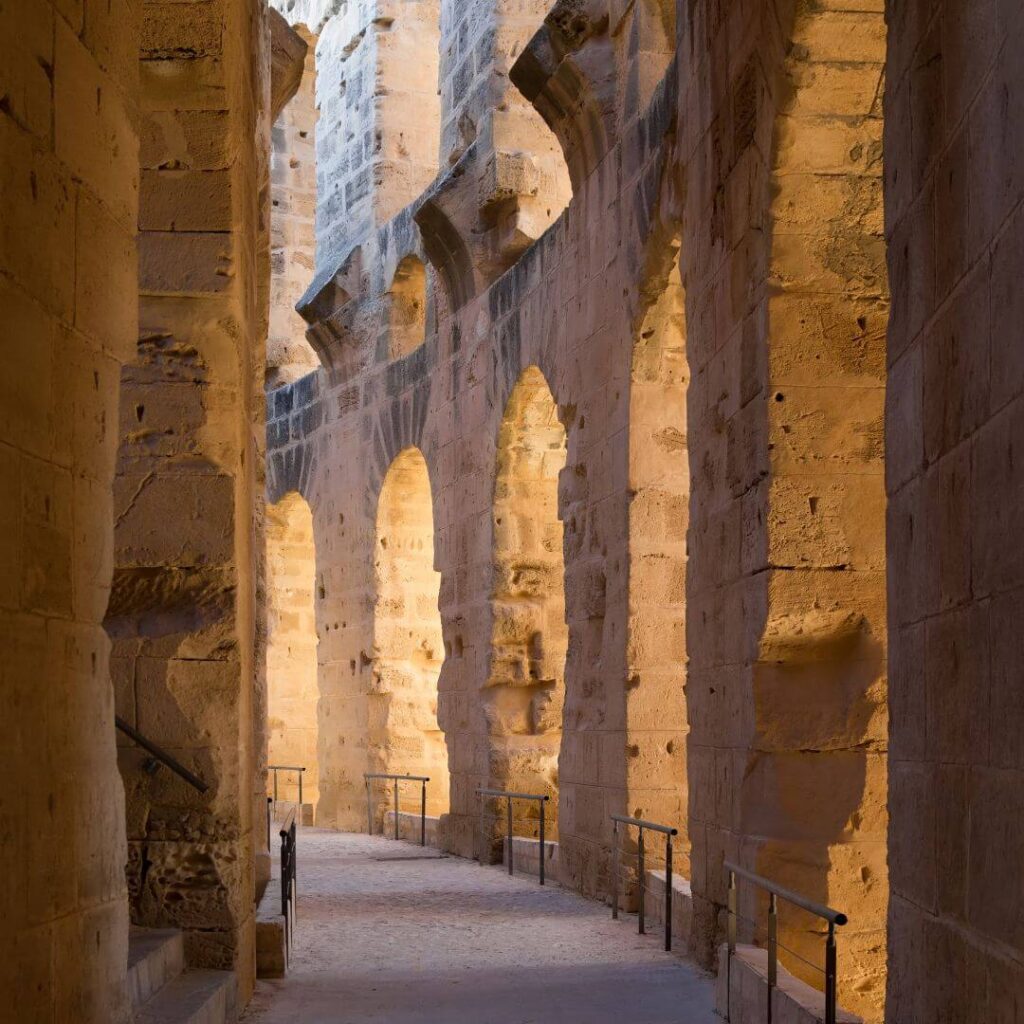
Travel tip: If you take a tour and it doesn’t say that entrance to the Colosseum is included, you’ll only see it from the outside. If you want to go inside (and you do, trust me!) entrance to the Colosseum needs to be listed in the tour description.
My first time visiting Rome we didn’t go inside. My second trip, we still didn’t go inside. It took until my third trip to finally see it from the inside, and it was worth the wait!
Built nearly 2,000 years ago, the Roman Colosseum was the site of ancient gladiator contests as well as being a symbol of the city and a feat of ancient Roman engineering.
But more than just gladiator fights happened in the Colosseum. Dramatic performances were held there, as well as animal hunts, public executions, and battle reenactments. It’s been a top Rome attraction since it was built!
The Colosseum’s massive elliptical walls could hold more than 50,000 spectators inside. The hypogeum, an intricate system of underground passages, made it possible to hold massive spectacles on the arena floor above.
A trip to Rome wouldn’t be complete without going inside the Colosseum. But here’s a tip. Avoid the heaviest crowds by visiting early in the morning or late in the afternoon.
Spring and autumn visits are also less crowded than mid-summer, and the weather tends to be good. I always recommend Italy travel in spring and autumn to my clients to provide a quieter, less crowded experience.
Are you fascinated by Roman history? Or do you like having someone tell you the stories of the building and answer questions? If so you’ll want to book a private tour with an expert guide. You can also combine the Colosseum with an overview tour of Rome or focus on the Colosseum, Roman Forum and Palatine Hill.
The Roman Forum and Palatine Hill
If the Colosseum was the stage of ancient Rome, then the Roman Forum (Forum Romanum in Latin) and Palatine Hill are the backstage, where the real drama unfolded.
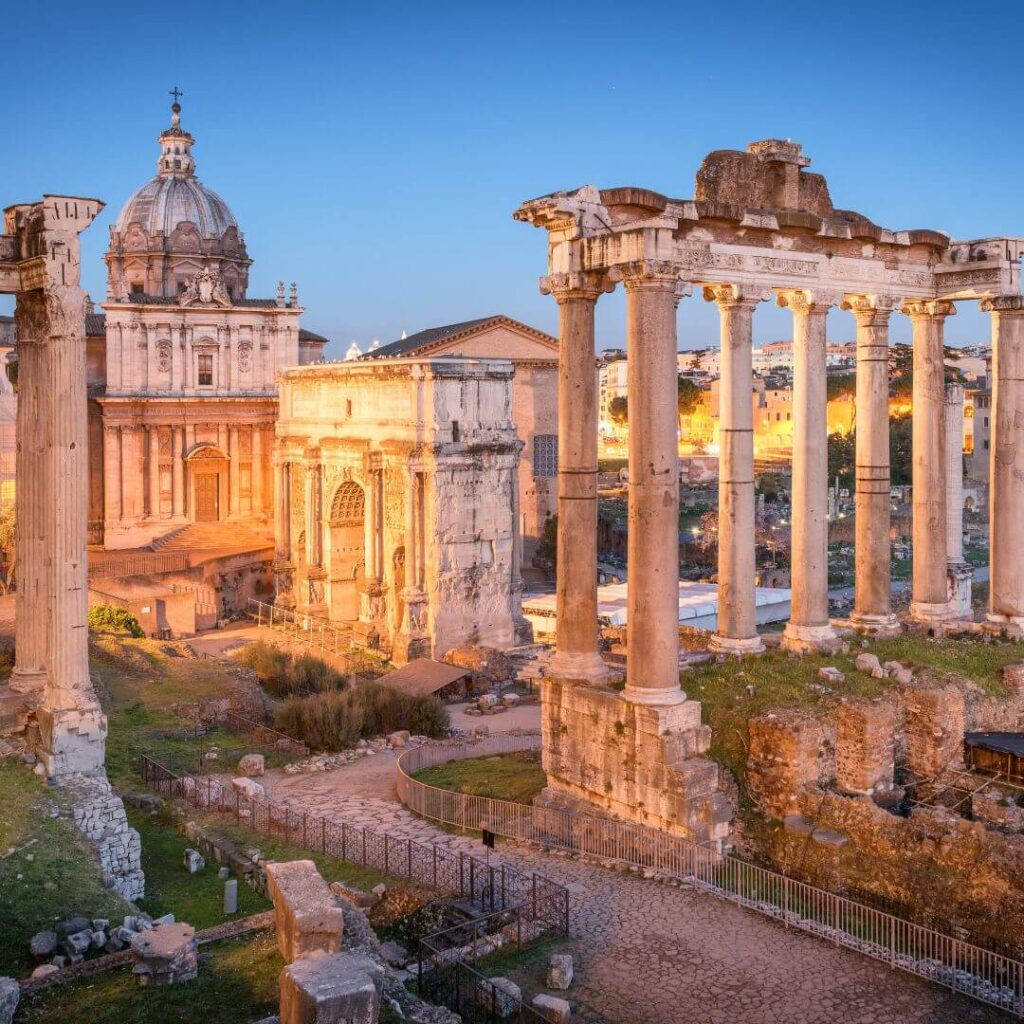
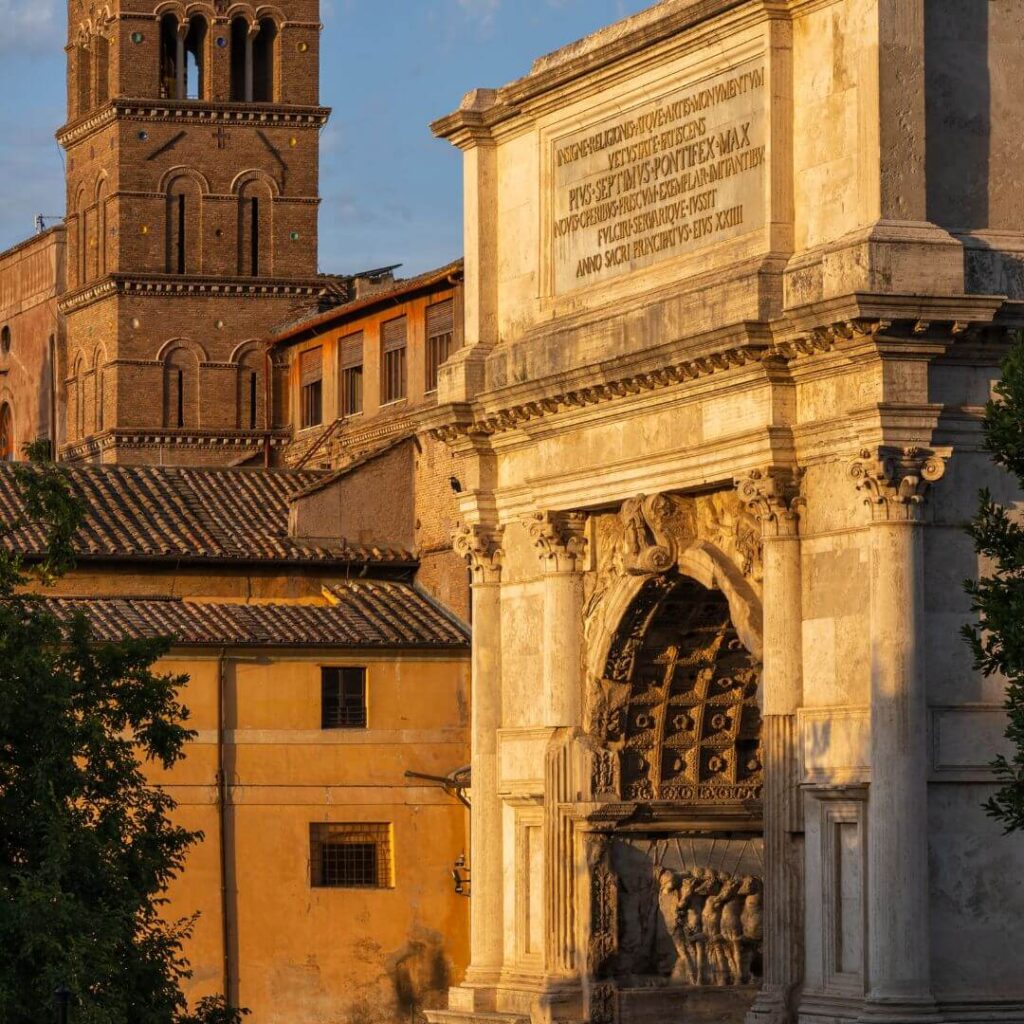

These ancient ruins are essential stops on any trip to Rome. They give a look into the daily life, politics, and myths of a civilization that shaped the world.
The Roman Forum was the heart of ancient Rome and the Roman Empire, bustling with orators, politicians, and citizens. It was where speeches were given, ceremonies were held, and history was made.
Today, the key ruins and structures in the Forum, such as the Arch of Titus, the Domus Aurea and the Temple of Saturn, help us visualize a time when Rome was the center of power and culture.
Adjacent to the Forum, Palatine Hill holds a special place in Rome’s mythological landscape. Legend has it that Romulus and Remus, the twin founders of Rome, were raised by a she-wolf, Lupa, in a cave on this very hill. It’s the birthplace of a city that would conquer continents.
The Roman Forum and Palatine Hill remind us that the best things to do in Rome aren’t just about seeing sites but understanding the stories behind them. Whether you’re a history buff or looking to enrich your Italy travel experience, a guided tour of these sites will help you gain greater understanding of their importance and how they shaped both Rome and the world.
Also nearby you can find the Circus Maximus and Capitoline Hill, which are worth visiting if you have time.
The Pantheon
The Pantheon is much more than just one of the best-preserved monuments of ancient Rome. It’s a masterclass in engineering that still leaves architects in awe of its construction.
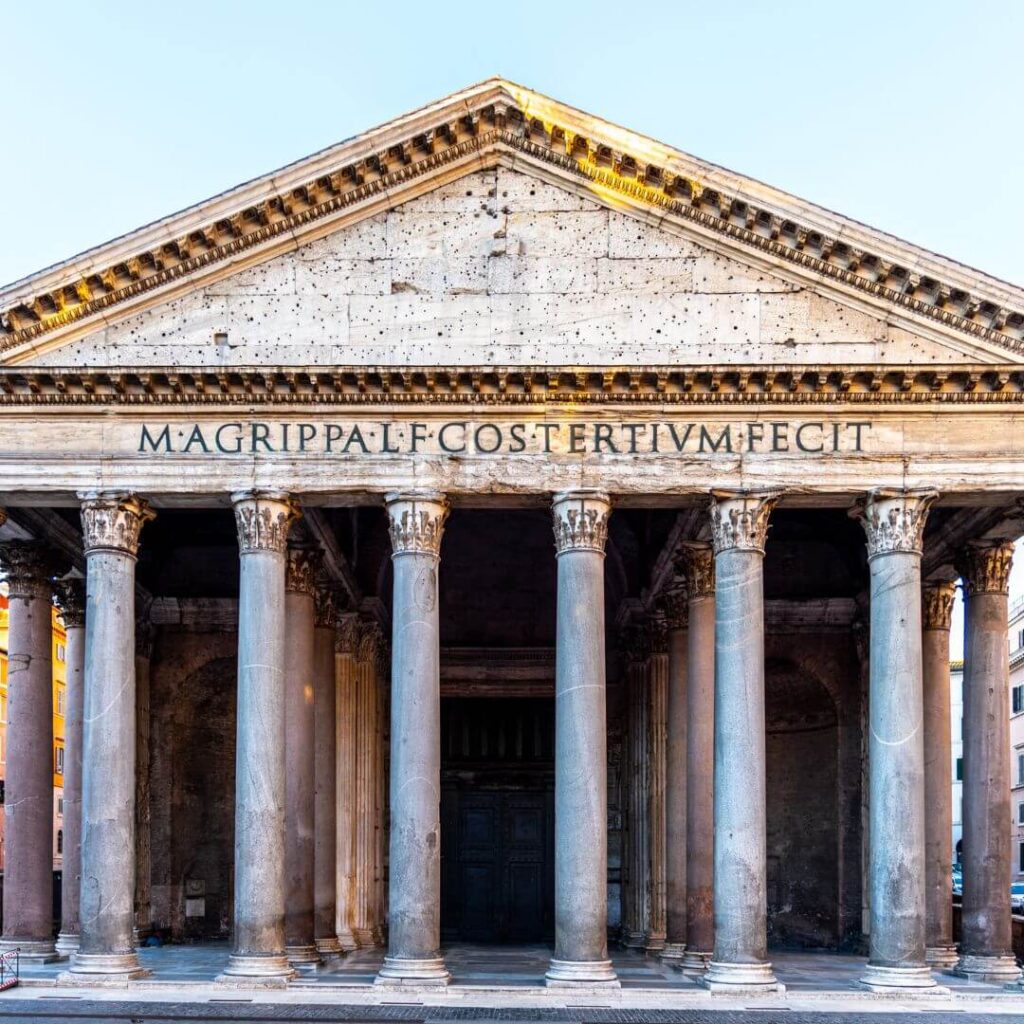
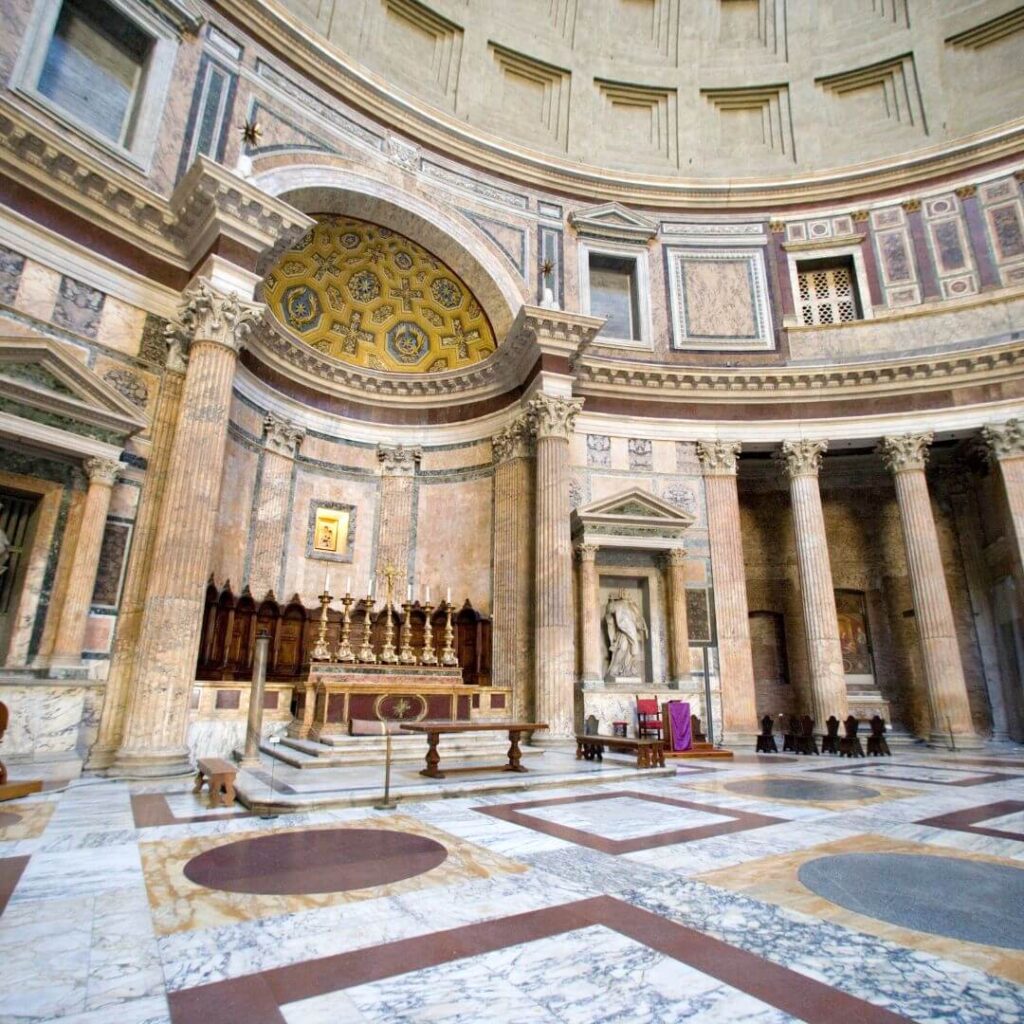
Built around 25 BC and reconstructed by Emperor Hadrian around 125 AD, it was a temple dedicated to all the gods of pagan Rome. Later, it took on a second life as a Christian church.
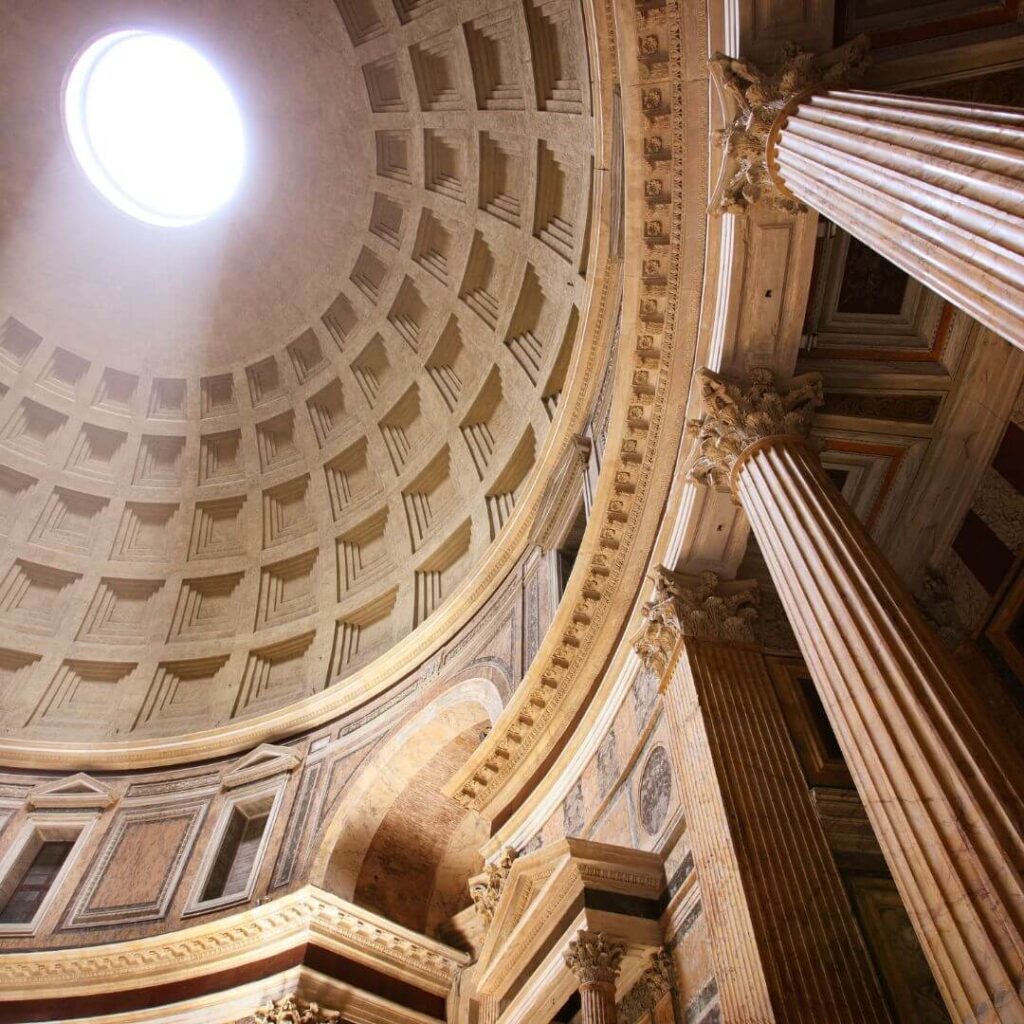
Step inside, and you’ll be greeted by the world’s largest unreinforced concrete dome. It was the largest dome in the world for over 1,300 years. It was surpassed by the Florence Cathedral in 1436.
Read more: 10 things you (probably) don’t know about the Florence Cathedral
The interior is a blend of art, religion, and mathematics. The oculus, a 30-foot hole in the center, is the only source of natural light.
Inside the Pantheon you’ll find a variety of tombs and monuments. The most important are the tombs of Raphael, the great Renaissance artist, and Victor Emmanuel II, who unified Italy and became the first King of Italy in 1861.
Once you’ve soaked in the Pantheon’s history, don’t rush off. The surrounding neighborhood is a charming maze of narrow streets, cafes, and boutiques. It’s Rome at its most authentic, where locals sip espresso, artists find inspiration, and travelers discover hidden gems.
Or, for a deeper understanding of the Pantheon and the version of Rome that Octavian, nephew of Julius Caesar (known as Caesar Augustus), envisioned, consider a private tour of the Pantheon and several nearby ancient monuments.
Trevi Fountain
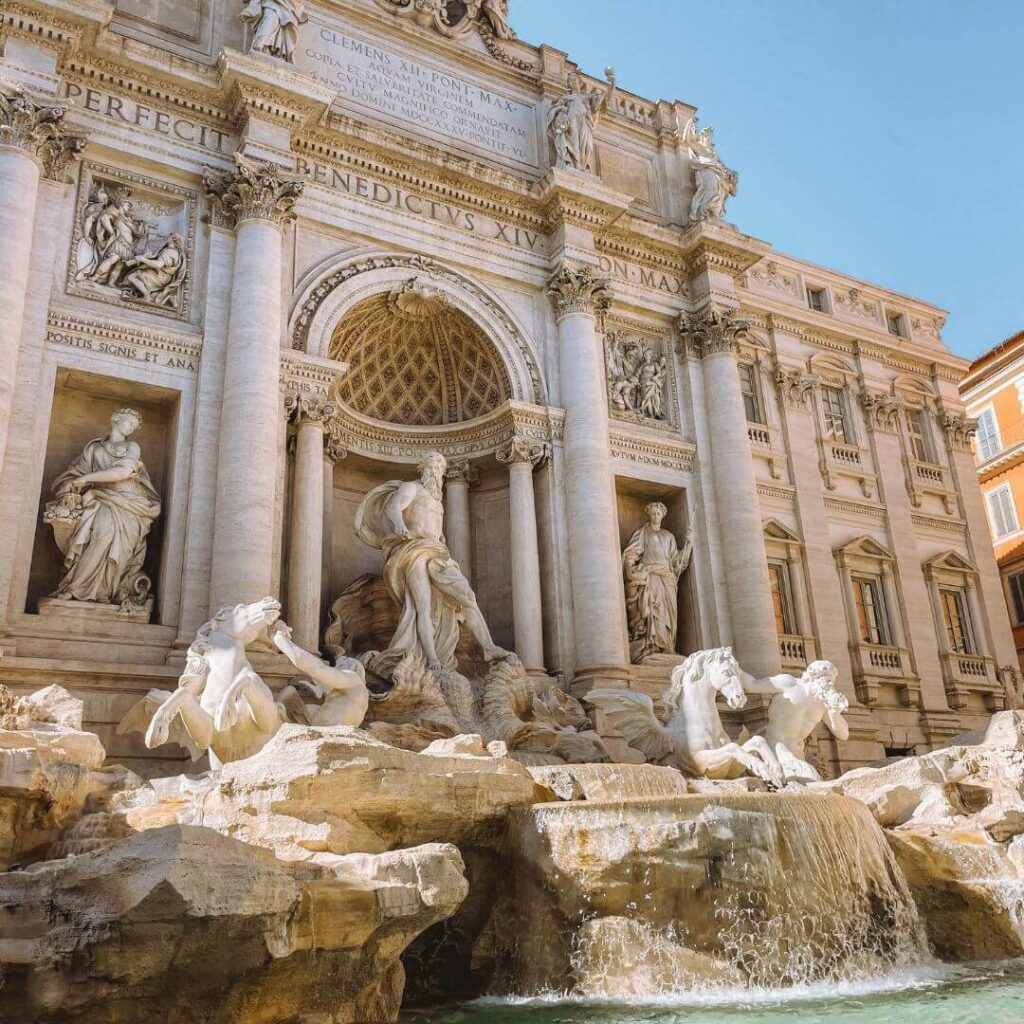
When it comes to the best things to do in Rome, the Trevi Fountain is also essential. This iconic fountain is a symbol of Rome’s artistic heritage and a must-visit on any trip to Rome.
Built in the 18th century and designed by Nicola Salvi, the Trevi Fountain is a masterpiece of Baroque art. The central figure, Oceanus, guides a shell-shaped chariot pulled by sea horses, while Tritons guide them. Every curve, splash, and sculpture is art in motion, and it’s all set against the backdrop of the Palazzo Poli.
Legend has it that tossing a coin over your left shoulder into the fountain ensures a return to Rome. Two coins? A new romance. Three coins? Marriage. The coins are collected regularly and donated to charity. So the coin tossing is doing good in more ways than one!
If you’d like to visit four of Rome’s main sites in one tour, I recommend this Rome walking tour that takes you from Piazza del Popolo to Piazza Navona, the Trevi Fountain, the Pantheon, and Spanish Steps in one walking tour. Plus you’ll have a private guide to help you discover Rome and recommend some non touristy things the locals love. It’s a great way to discover how to get off the beaten path and see an authentic side of Rome!
The Vatican Museums
Located in the heart of Vatican City, the Vatican Museums are a must-see on any trip to Rome, and not just for the art enthusiasts.
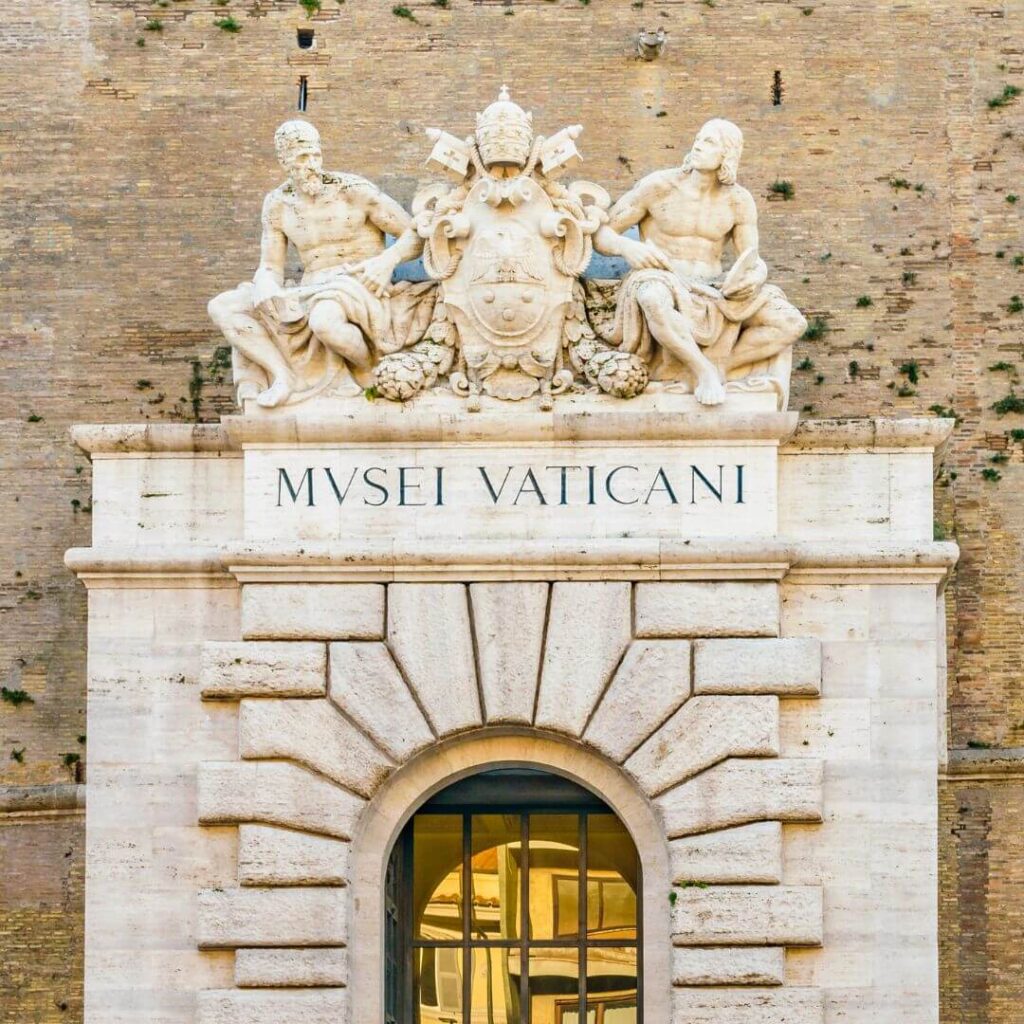
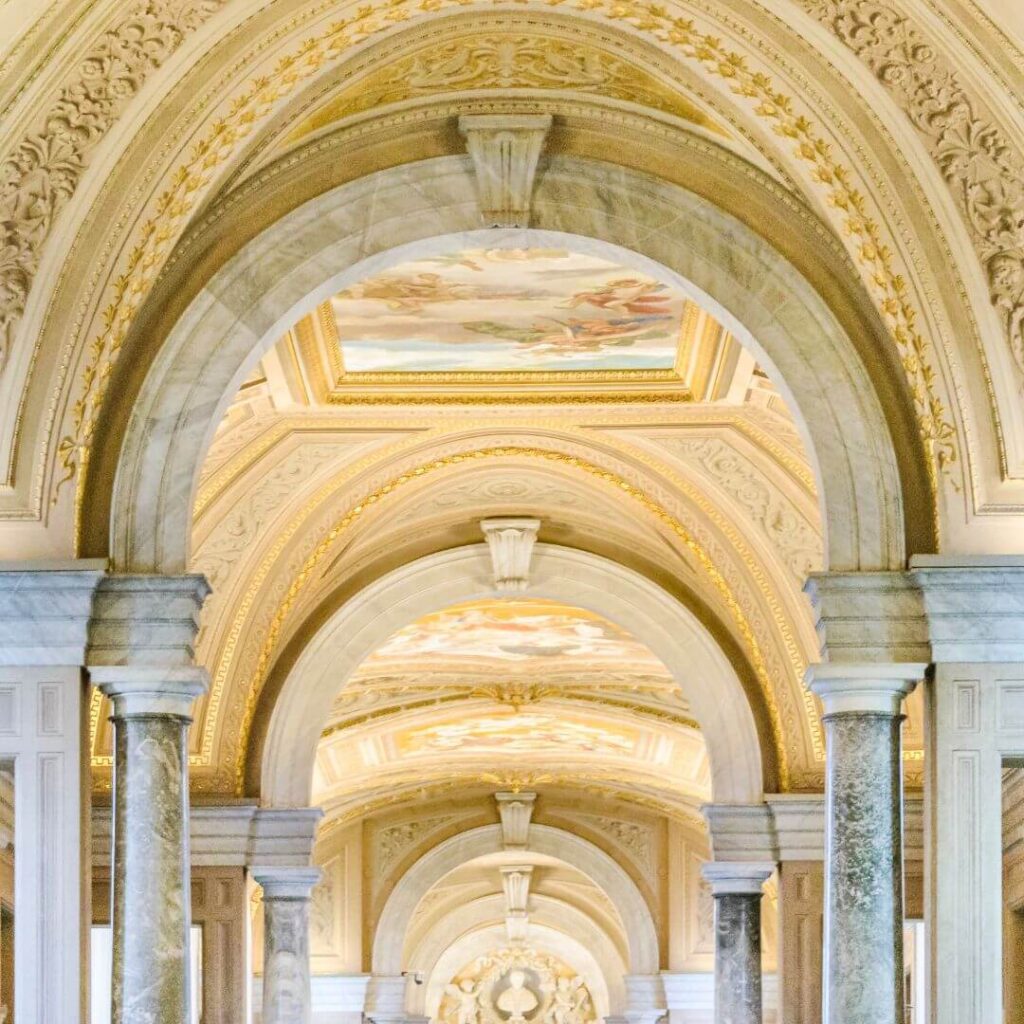
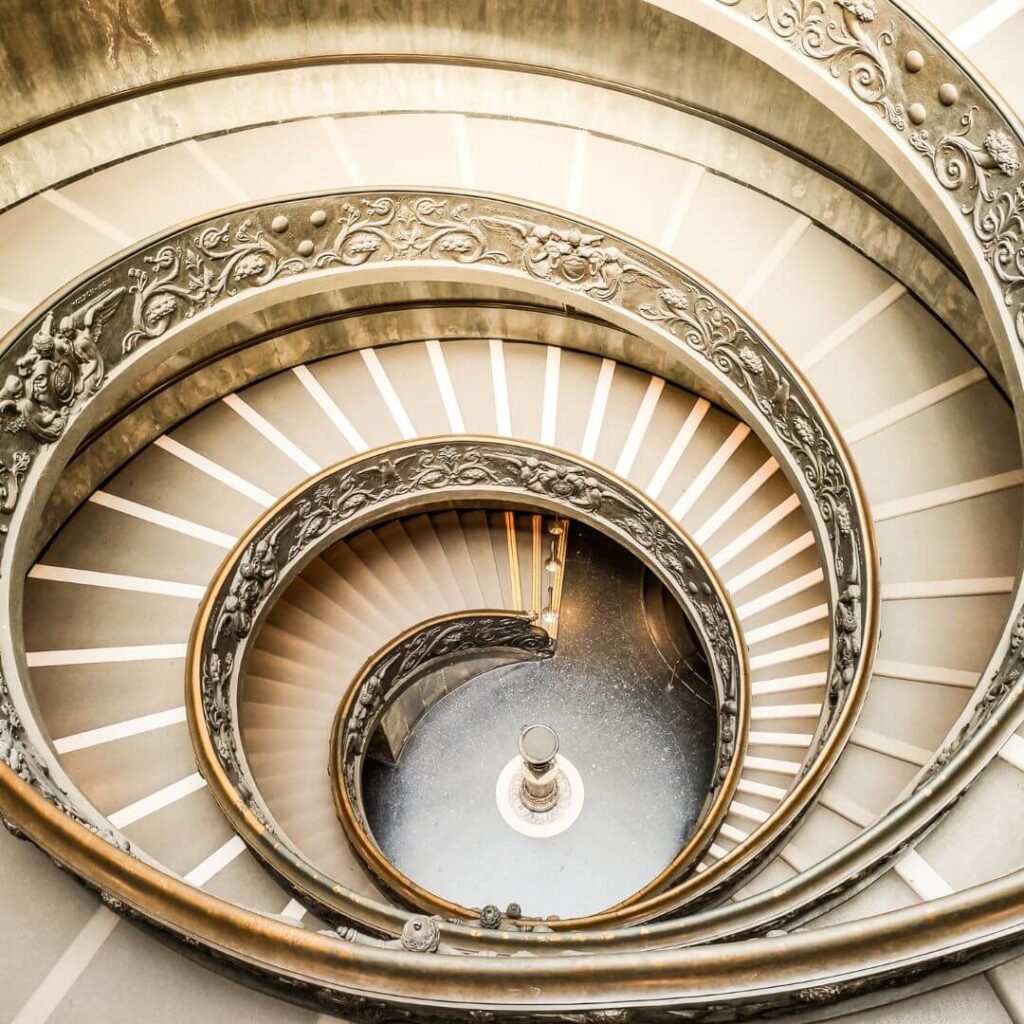
With a collection that contains over 70,000 paintings and sculptures in dozens of galleries, you’ll need multiple days if you want to see it all.
The Vatican Museums house some of the world’s most famous artworks. From the ancient sculptures of the Pio-Clementino Museum to the beautifully frescoed maps in the Gallery of Maps, it’s a visual feast that spans centuries.
And let’s not forget the Sistine Chapel, where Michelangelo’s ceiling is the star of the show!
Planning a visit to the Vatican Museums is one of the best things to do in Rome, but requires a bit of strategy. The lines can be as epic as the art, so booking a ticket online in advance is a wise move.
Consider a guided Vatican Museum tour if you want to dive deep into the history and significance of the collection. And don’t forget to wear comfortable shoes; the Vatican Museums are generous with art but not with seating.
You can also book early entry tours, which take you through the highlights of the museums before they open to the general public. One of the most interesting and exclusive Vatican Museum tours is with the Vatican Key Master, who will take you through the museums as he opens them for the day.
The Sistine Chapel
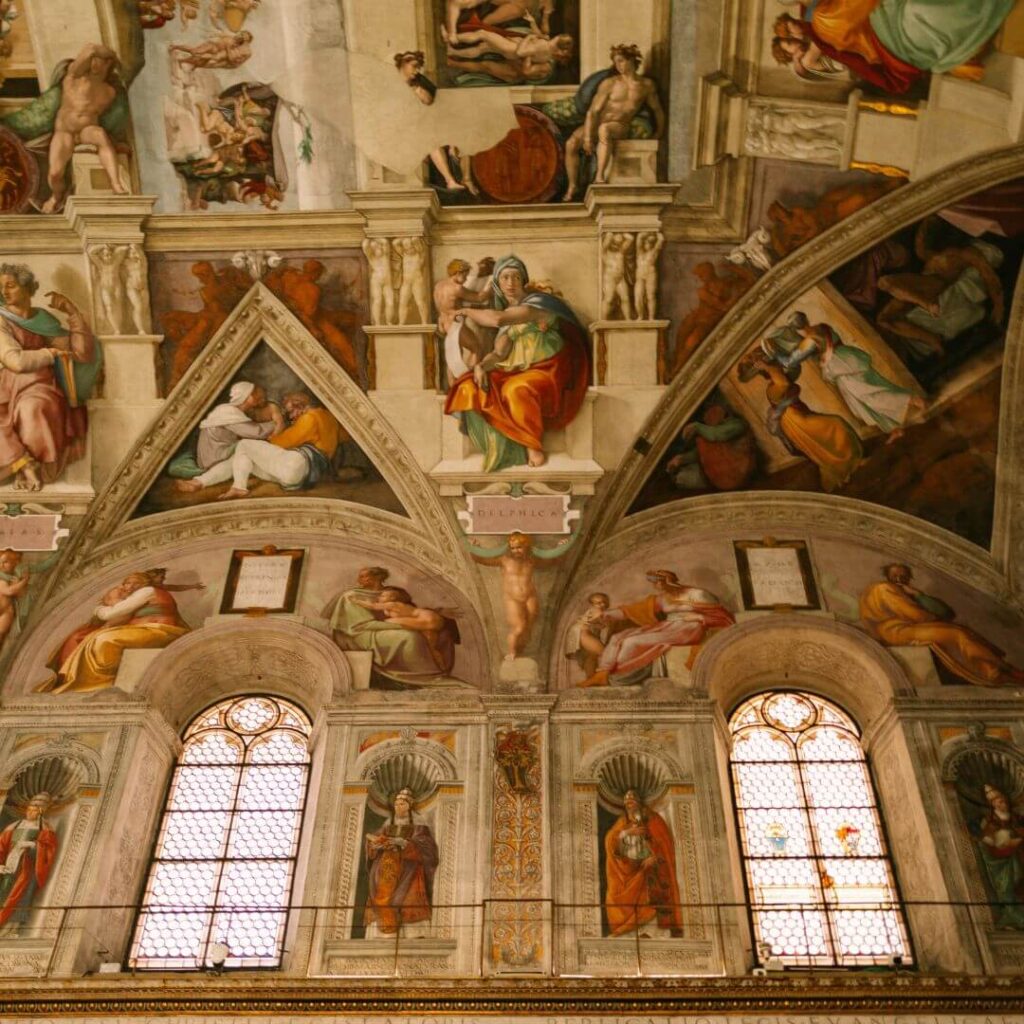
While it’s part of the Vatican Museums, the Sistine Chapel deserves a spot of its own on any list of the best things to do in Rome.
The Sistine Chapel’s ceiling, painted by Michelangelo between 1508 and 1512, is a visual symphony that tells the story of creation, humanity, and divine connection. It’s not just art; it’s a spiritual dialogue that speaks across centuries. Whether you’re an art aficionado or a casual observer, the sheer scale, beauty, and complexity of the work are awe-inspiring.
Read more: 10 things you (probably) don’t know about the Sistine Chapel
Visiting this iconic site requires a bit of decorum. Photography is a no-no, and silence is golden. It’s a place of worship, after all, as well as the place where popes are elected and the future of the Catholic Church is determined.
Dress modestly, and take your time to absorb the details. Your Instagram feed can wait; Michelangelo’s genius cannot.
I highly recommend a guided tour that includes the Vatican Museums, Sistine Chapel and St Peters Basilica. On a combined tour you’ll get access through a special entry that takes you directly in St. Peter’s, allowing you to bypass the crowds outside.
St. Peter’s Basilica
When it comes to architectural grandeur, it’s hard to surpass St. Peter’s Basilica, or in Italian the Basilica di San Pietro in Vaticano.
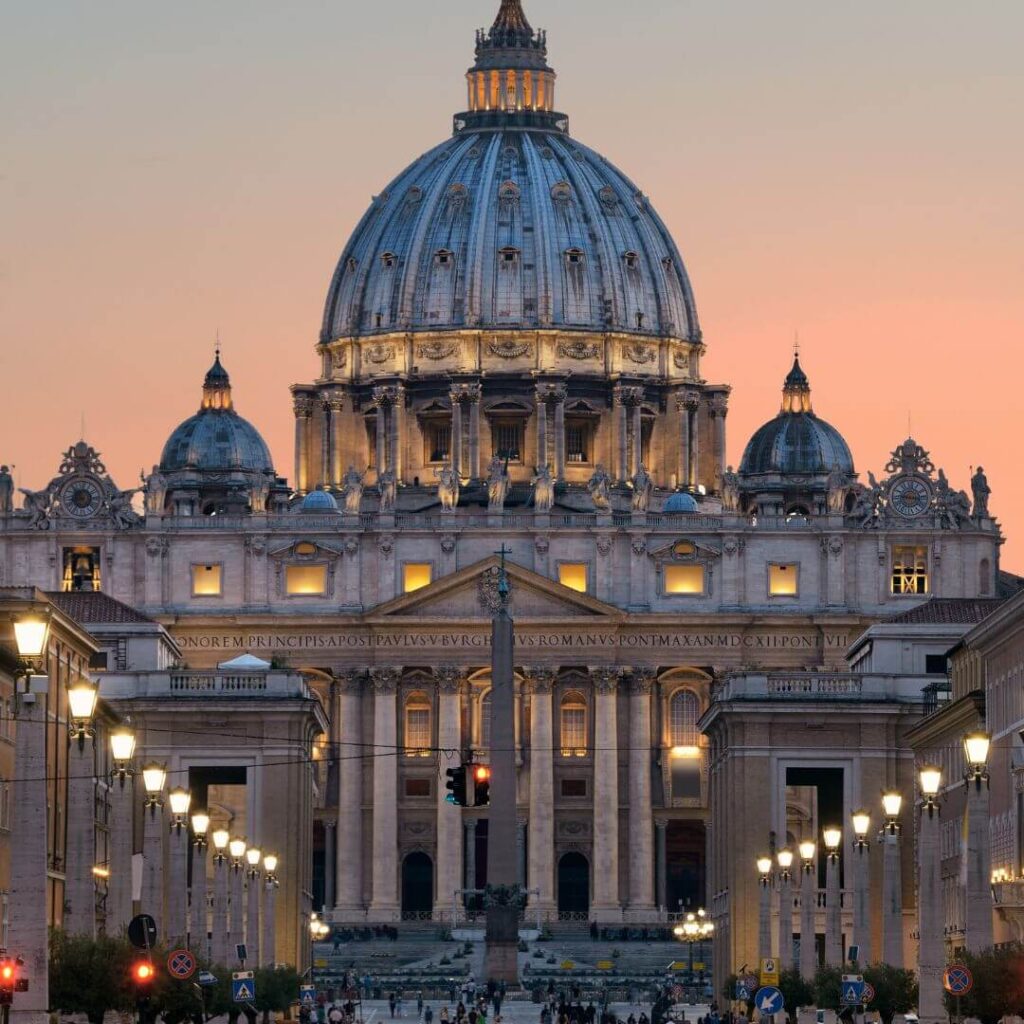
As one of the best things to do in Rome, a visit to this iconic church is a journey into the heart of Christianity and the modern Catholic church.
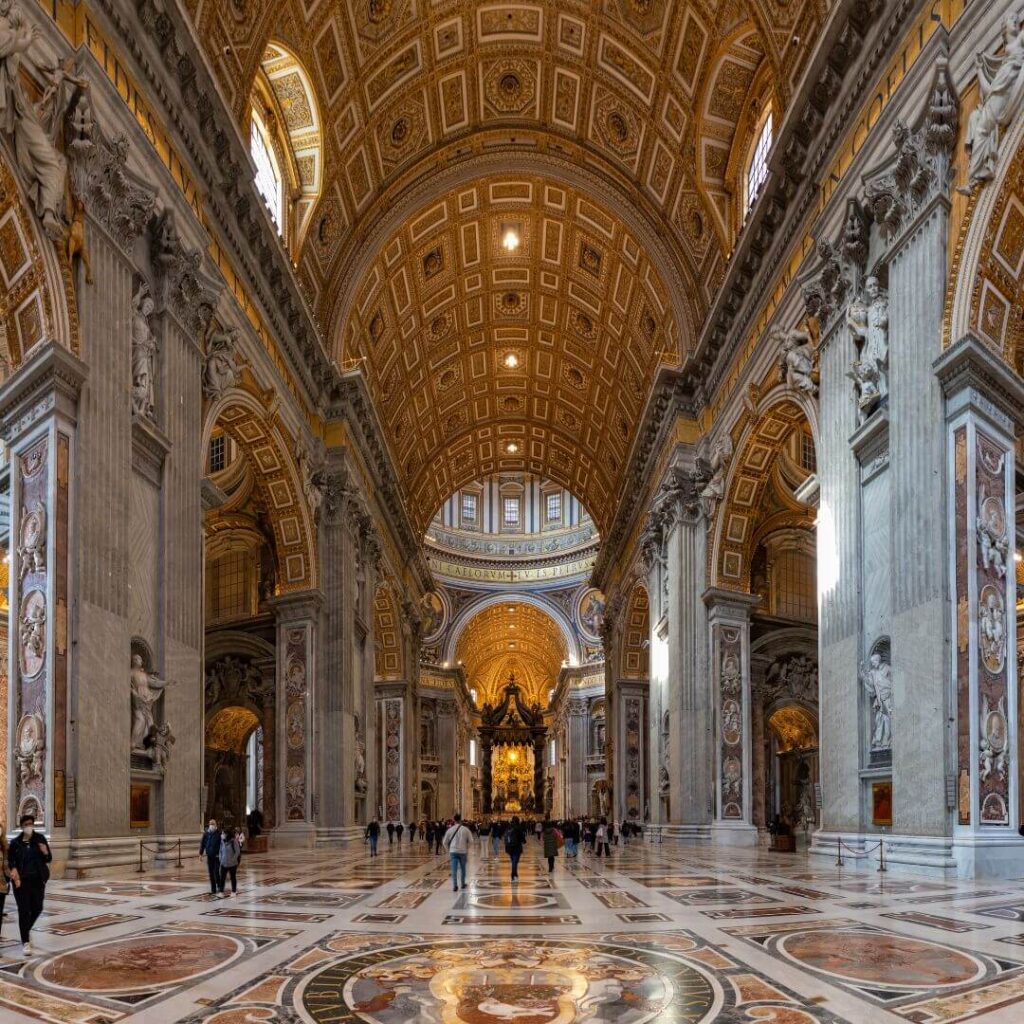
Designed by a dream team of architects including Bramante, Michelangelo, and Bernini, it’s a symphony of domes, columns, and marbles. Whether you’re admiring the bronze baldachin (the canopy over the high altar) or seeing Michelangelo’s Pietà, for the first time, the Basilica is well worth a visit.
Now, about that dome. If you’re up for a climb, heading to the top is a must-do on your trip to Rome. It’s a bit of a workout, but the panorama of the Eternal City from the top is a reward worth every step.
When you’re in the Basilica you’ll notice the beautiful paintings on the walls, in vivid colors as fresh as the day they were made.
That’s because they’re not paintings at all! They’re actually mosaics, made of thousands of pieces of glass and stone.
You can visit on your own, but to really understand the highlights of this gigantic building I recommend taking a guided tour of Saint Peters Basilica.
If you’re looking for a unique way to experience St. Peter’s Basilica, take a tour of the Scavi, the excavations underneath the Vatican. These tours need to be booked well in advance, since only 250 people per day are allowed to enter.
If you’d like to see the Scavi, or Necropolis, you’ll need to contact the Scavi excavations office directly. I also assist my full-service travel clients with arrangements like this.
St. Peter’s Square
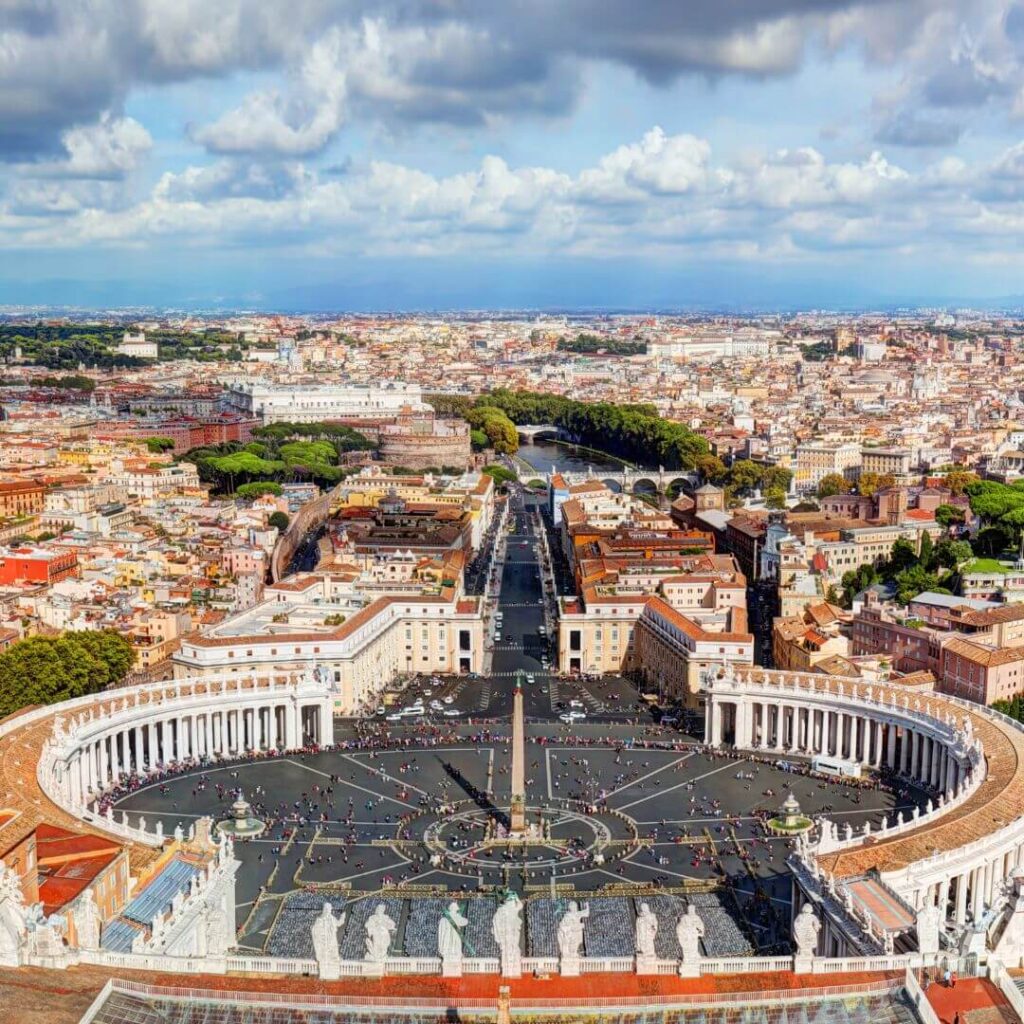
Designed by the masterful Gian Lorenzo Bernini in the 17th century, St. Peter’s Square, or the Piazza San Pietro, is a real-world lesson in geometry, with its colossal colonades and beautiful eliptical shape.
Throughout history, St Peters Square has been a stage for events and gatherings that reverberate far beyond Rome. From Papal blessings to concerts, it’s where the world meets the Eternal City.
And speaking of ambiance, don’t rush through the Square. Take a moment to find the “center of the universe” (it’s marked by a stone, not a sign), where the columns align in perfect symmetry.
Villa Borghese and the Galleria Borghese
If you’re planning a trip to Rome and have a penchant for the finer things in life, the Villa Borghese and the Galleria Borghese should be on your “best things to do in Rome” list. And trust me, it’s not just for the art aficionados. It’s for anyone who appreciates beauty in all its forms.
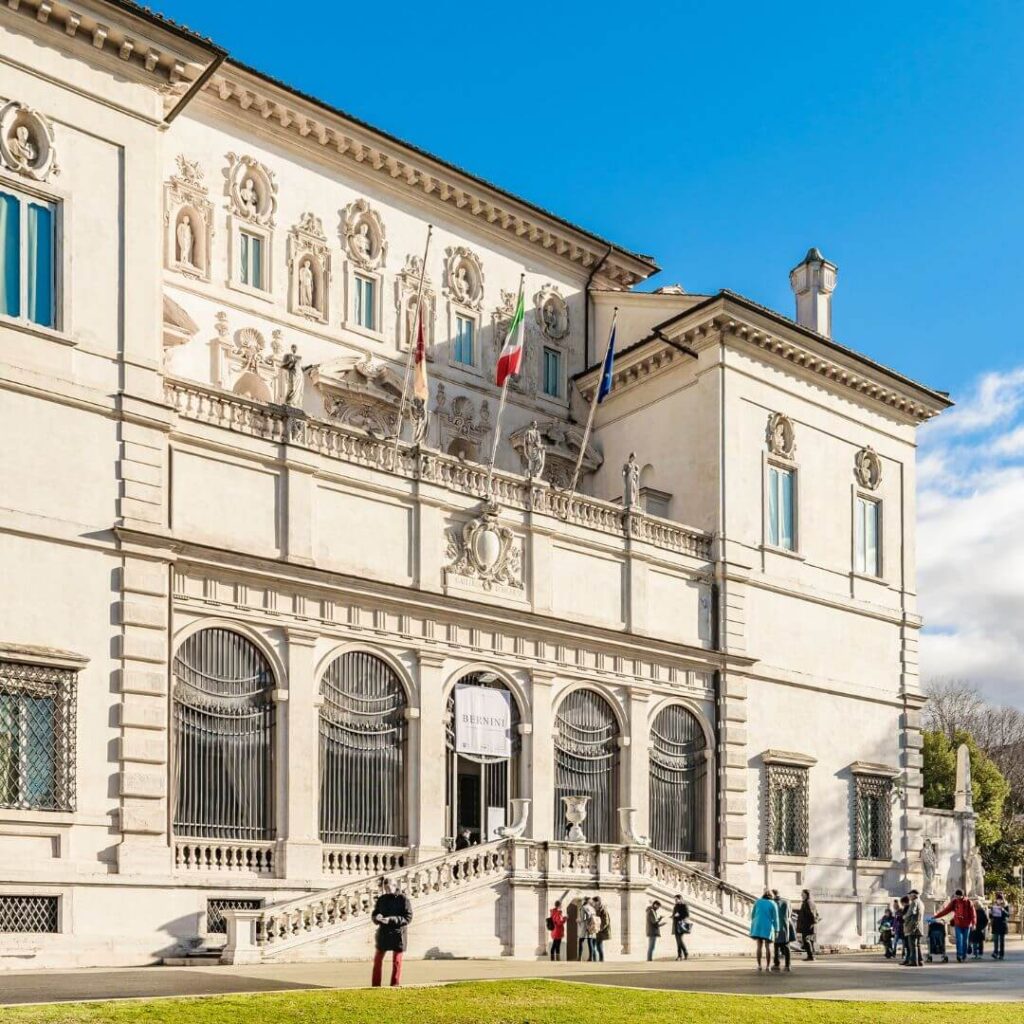
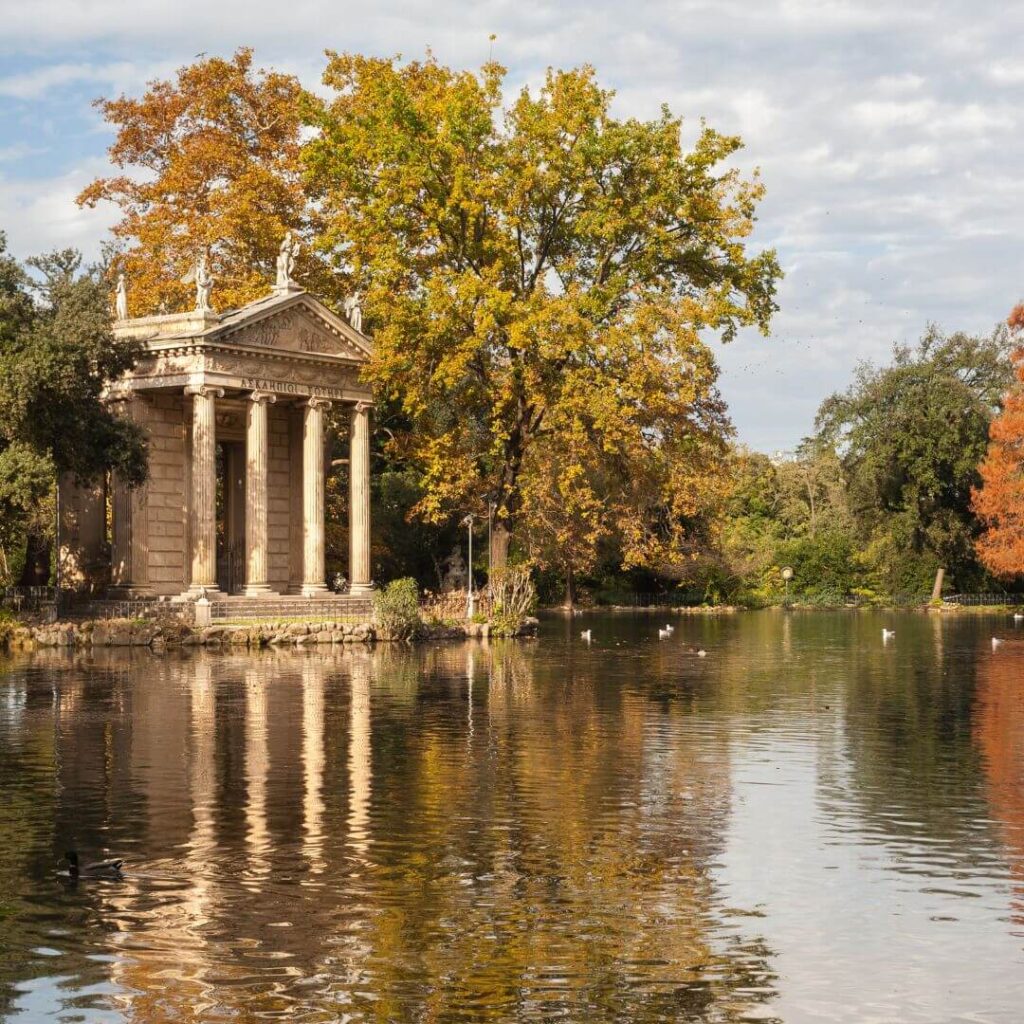
The Borghese Gallery is full of artistic gems that many visitors miss. The collection includes some of Bernini’s sensuous sculptures and Caravaggio’s dramatic paintings.
Pro tip: booking tickets in advance is an absolute necessity. Galleria Borghese is exclusive, not in a snobbish way, but in a “we value quality time with art” way. So, plan ahead to secure your spot. Or take a guided tour of the Borghese Gallery and learn the history behind the most significant pieces in the collection directly from an art historian.
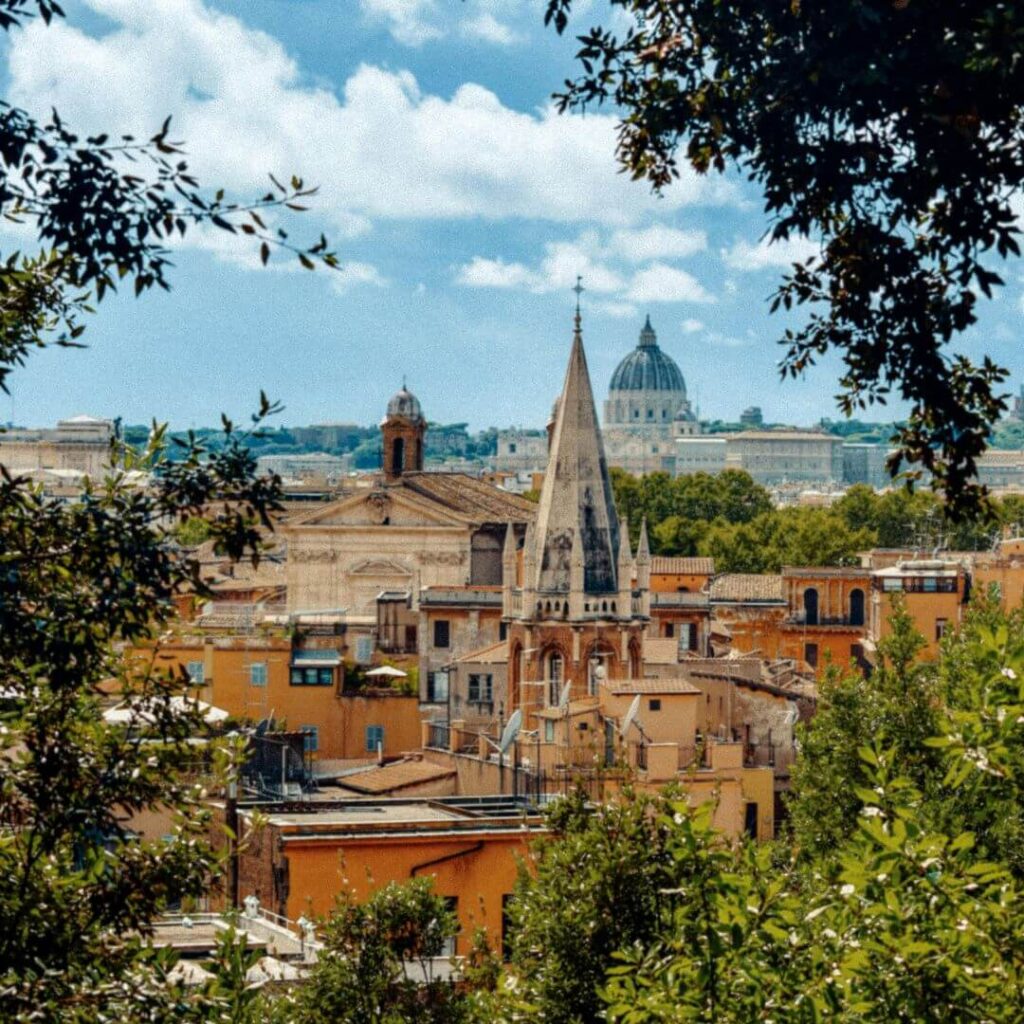
Once you’ve had your fill of artistic brilliance, step outside into the Villa Borghese gardens. Whether you’re rowing a boat on the lake or strolling through the manicured paths, Villa Borghese offers a peaceful break away from the bustling city. Plus you can get one of the best views of Rome from the Pincio Terrace.
The Spanish Steps
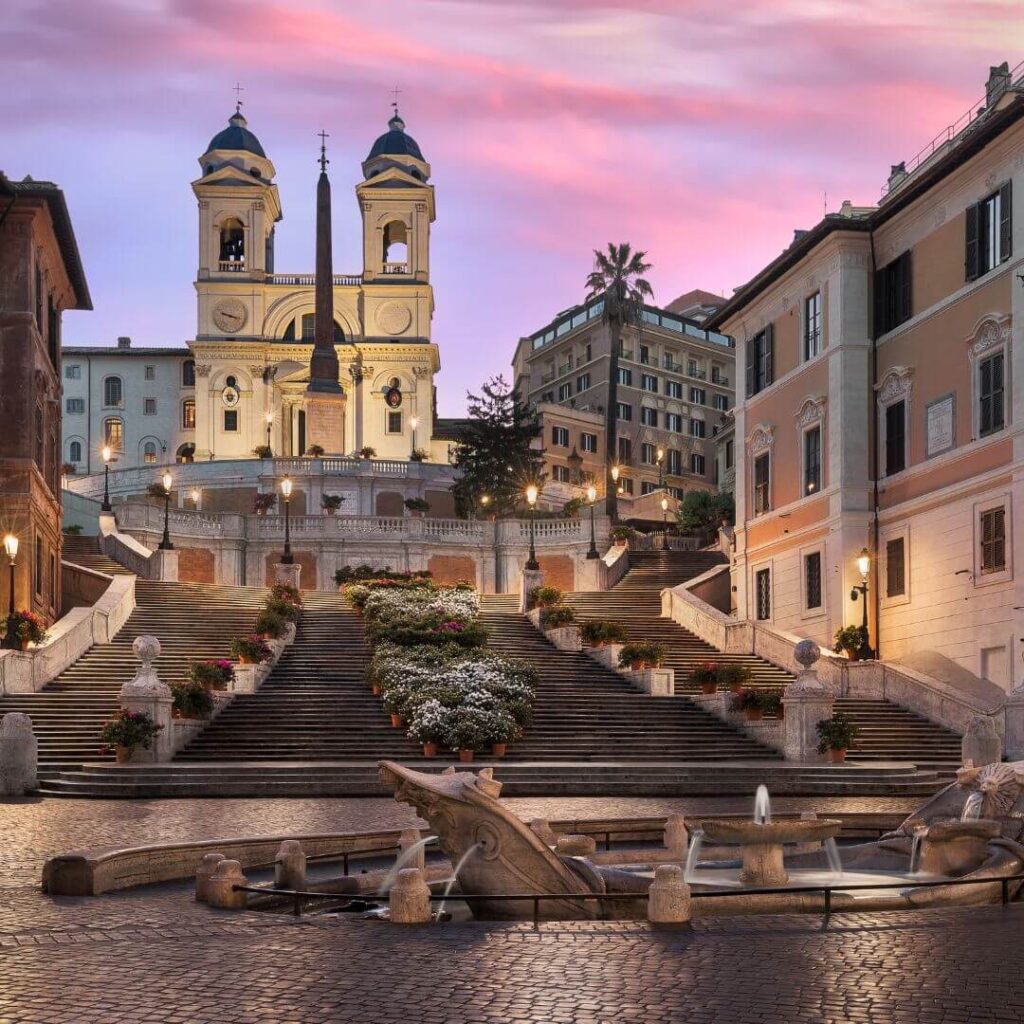
The Spanish Steps, or Scalinata di Trinità dei Monti as they’re officially known, is an iconic site. It was made world famous in the movie Roman Holiday, but they’re more than just a photo stop.
At the bottom you’ll find the Piazza di Spagna, with its fountain by Bernini. At the top the steps are crowned by the beautiful church of Trinità dei Monti.
Built in the 18th century, the Spanish Steps were never meant to be a simple staircase. They were a symbol of cooperation between the French, who owned the church at the top, and the Spanish, whose embassy was at the bottom. In between was a wooded hill. That hill is where the connecting staircase was built.
Since the steps were completed they’ve been a place for people to gather, socialize, and, of course, show off a bit. Today, they’re a lively hub where tourists and locals alike come to soak in the Roman ambiance.
If you’d like to do some shopping you’ll find famous Italian brands like Gucci, Versace, Fendi, Prada, Armani, and Valentino close by. Plus, some of the best Rome hotels can be found in this area.
Piazza Navona
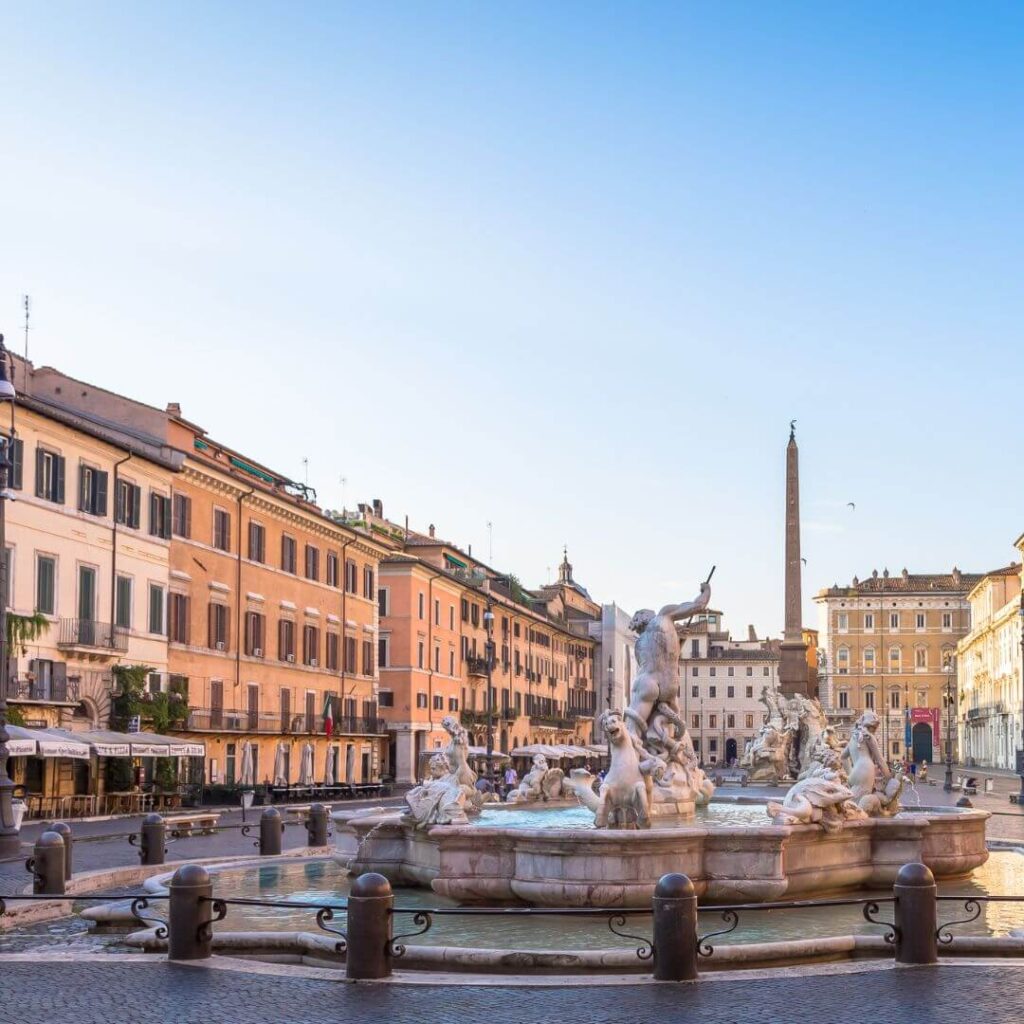
Piazza Navona is where Rome’s rich Baroque architecture, famous fountains, and vibrant street life come together. If you’re planning a trip to Rome, this piazza is a place to experience.
Let’s talk about the Baroque flair first. With its grand palazzos and ornate churches, Piazza Navona is a showcase of Baroque style. It’s elegant, it’s extravagant, and it’s oh-so-Roman.
The Fountain of the Four Rivers, designed by the legendary Gian Lorenzo Bernini, is the star of the Piazza’s fountains. But there are two other fountains in the piazza as well.The Fountain of Neptune and the Fontana del Moro help balance the overall composition of the Piazza.
Piazza Navona isn’t just about architecture and fountains. It’s about enjoying the lively culture that Rome has to offer. Street artists sketch portraits, performers entertain crowds, and cafes and restaurants serve coffee and gelato. It’s a slice of Rome, all in one piazza.
Trastevere
One of Rome’s most beautiful neighborhoods is Trastevere, nestled on the west bank of the Tiber River. It’s a delightful maze of narrow streets, ivy-clad buildings, and a charm that’s distinctly Roman.

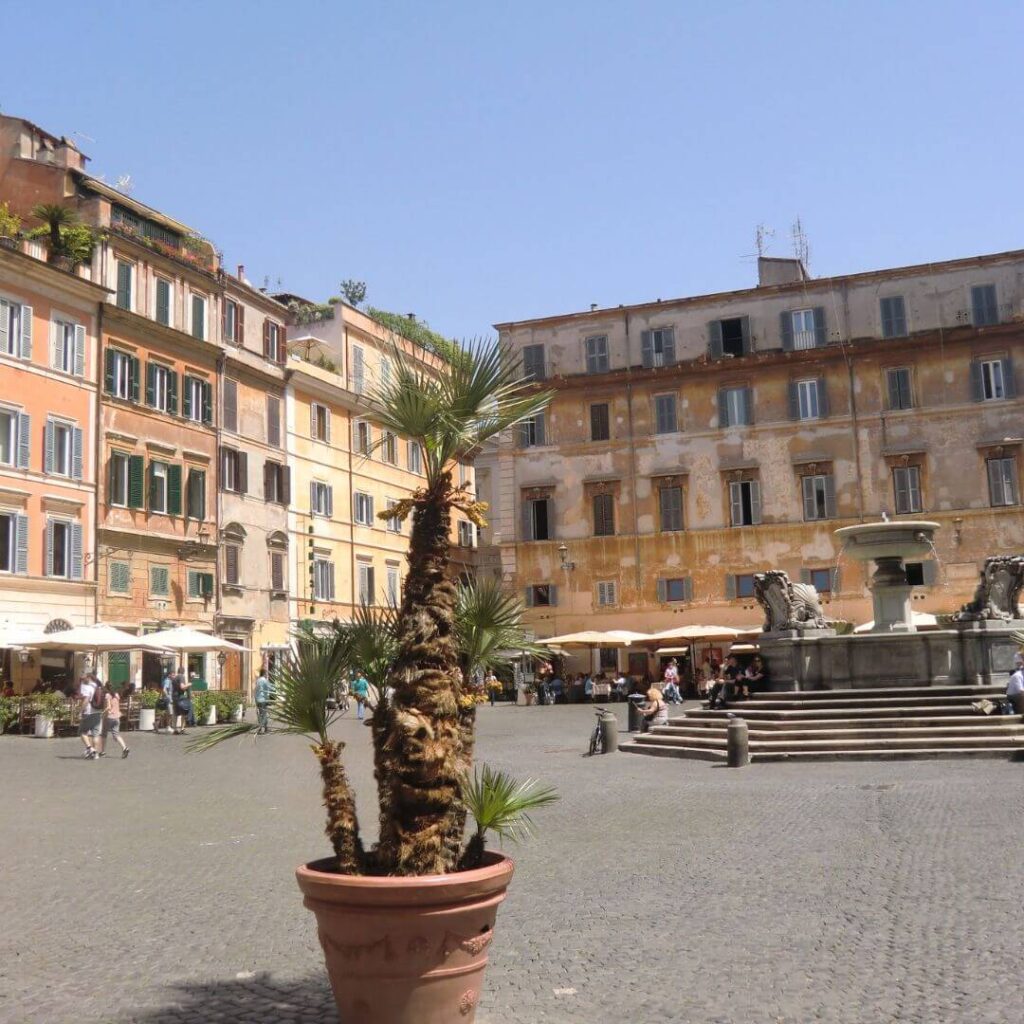
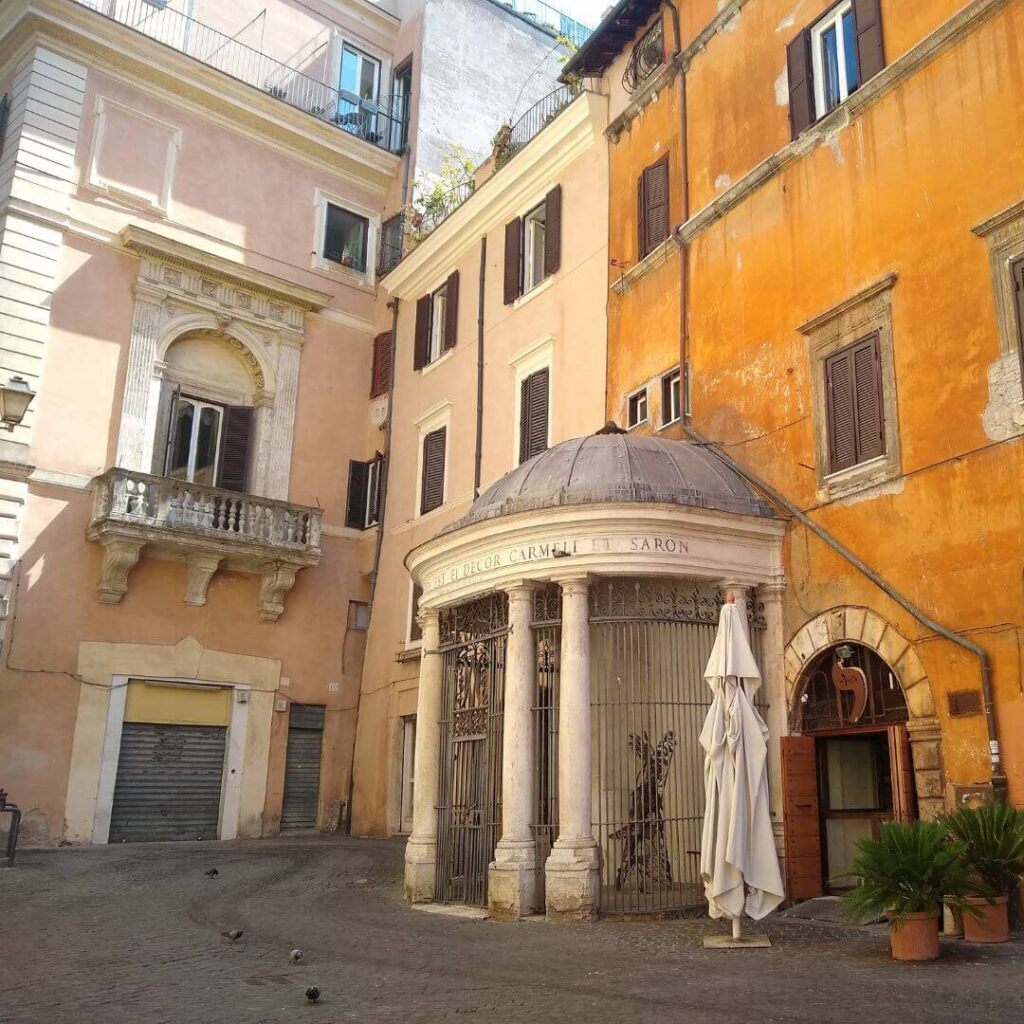
If you’re on a trip to Rome, missing Trastevere would be like having pasta without the sauce. Unthinkable!
Trastevere is like a village within the city. It’s where you’ll find cobblestone streets, medieval houses, and a rich sense of history. Don’t miss the Basilica of Santa Maria in Trastevere, with its beautiful mosaics dating from the 12th century.
Hungry? Trastevere won’t disappoint. This is where you’ll find some of the best restaurants in Rome, serving everything from traditional Roman fare to innovative culinary delights.
Whether it’s a family-run trattoria or a chic modern eatery, the food here is fantastic. It’s the perfect place to take a Rome food tour.
If you love gardens you’ll want to visit Rome’s Botanical Gardens, located in Trastevere between Gianicolo hill and Villa Farnesina. In the gardens and greenhouses you’ll find thousands of varieties of plants, from cacti to orchids, spread over almost 30 acres.
The bottom line: The best things to do in Rome
From the grandeur of the Colosseum to the intimate charm of Trastevere, there’s so much to see and do in Rome. But let’s be honest, this is just the tip of the Rome iceberg.
There’s so much more to see, from the Castel SantAngelo to Appia Antica and the Roman Catacombs, more churches and museums than you could visit in a lifetime, and plenty of fascinating day trips from Rome as well.
Ready to start planning your Rome itinerary? You’ll find a lot more resources in our other Rome blog posts!
If you’re planning a trip to Italy and visiting Rome, especially if it’s your first trip, there are so many things to see and do! It can be a bit overwhelming. That’s why I put together this guide, your go-to resource for the best things to do in Rome.
A trip to Italy is about more than just sightseeing. It’s about being immersed in a new culture, with fantastic history, world-class food, and far more things to see and do than you can possibly fit into one visit.
Rome is full of historical landmarks, culinary experiences, and hidden gardens and alleys just waiting for you to explore. From the Colosseum’s grandeur to the local charm of Trastevere, there’s really something for every traveler to enjoy.
But you can’t miss a few must-see sights!
Wondering which of Rome’s many monuments, museums and churches should be on your list for your first trip? Here’s what I think are the best things to do in Rome the very first time you visit.
This post contains affiliate links, which means we may earn a small commission if you make a purchase, at no extra cost to you.
The Colosseum
The Colosseum tops the list of the best things to do in Rome for a reason. It’s absolutely essential, and no trip to Rome would be complete without a visit.
Travel tip: If you take a tour and it doesn’t say that entrance to the Colosseum is included, you’ll only see it from the outside. If you want to go inside (and you do, trust me!) entrance to the Colosseum needs to be listed in the tour description.
My first time visiting Rome we didn’t go inside. My second trip, we still didn’t go inside. It took until my third trip to finally see it from the inside, and it was worth the wait!
Built nearly 2,000 years ago, the Roman Colosseum was the site of ancient gladiator contests as well as being a symbol of the city and a feat of ancient Roman engineering.
But more than just gladiator fights happened in the Colosseum. Dramatic performances were held there, as well as animal hunts, public executions, and battle reenactments. It’s been a top Rome attraction since it was built!
The Colosseum’s massive elliptical walls could hold more than 50,000 spectators inside. The hypogeum, an intricate system of underground passages, made it possible to hold massive spectacles on the arena floor above.
A trip to Rome wouldn’t be complete without going inside the Colosseum. But here’s a tip. Avoid the heaviest crowds by visiting early in the morning or late in the afternoon.
Spring and autumn visits are also less crowded than mid-summer, and the weather tends to be good. I always recommend Italy travel in spring and autumn to my clients to provide a quieter, less crowded experience.
Are you fascinated by Roman history? Or do you like having someone tell you the stories of the building and answer questions? If so you’ll want to book a private tour with an expert guide. You can also combine the Colosseum with an overview tour of Rome or focus on the Colosseum, Roman Forum and Palatine Hill.
The Roman Forum and Palatine Hill
If the Colosseum was the stage of ancient Rome, then the Roman Forum (Forum Romanum in Latin) and Palatine Hill are the backstage, where the real drama unfolded.
These ancient ruins are essential stops on any trip to Rome. They give a look into the daily life, politics, and myths of a civilization that shaped the world.
The Roman Forum was the heart of ancient Rome and the Roman Empire, bustling with orators, politicians, and citizens. It was where speeches were given, ceremonies were held, and history was made.
Today, the key ruins and structures in the Forum, such as the Arch of Titus, the Domus Aurea and the Temple of Saturn, help us visualize a time when Rome was the center of power and culture.
Adjacent to the Forum, Palatine Hill holds a special place in Rome’s mythological landscape. Legend has it that Romulus and Remus, the twin founders of Rome, were raised by a she-wolf, Lupa, in a cave on this very hill. It’s the birthplace of a city that would conquer continents.
The Roman Forum and Palatine Hill remind us that the best things to do in Rome aren’t just about seeing sites but understanding the stories behind them. Whether you’re a history buff or looking to enrich your Italy travel experience, a guided tour of these sites will help you gain greater understanding of their importance and how they shaped both Rome and the world.
Also nearby you can find the Circus Maximus and Capitoline Hill, which are worth visiting if you have time.
The Pantheon
The Pantheon is much more than just one of the best-preserved monuments of ancient Rome. It’s a masterclass in engineering that still leaves architects in awe of its construction.
Built around 25 BC and reconstructed by Emperor Hadrian around 125 AD, it was a temple dedicated to all the gods of pagan Rome. Later, it took on a second life as a Christian church.
Step inside, and you’ll be greeted by the world’s largest unreinforced concrete dome. It was the largest dome in the world for over 1,300 years. It was surpassed by the Florence Cathedral in 1436.
Read more: 10 things you (probably) don’t know about the Florence Cathedral
The interior is a blend of art, religion, and mathematics. The oculus, a 30-foot hole in the center, is the only source of natural light.
Inside the Pantheon you’ll find a variety of tombs and monuments. The most important are the tombs of Raphael, the great Renaissance artist, and Victor Emmanuel II, who unified Italy and became the first King of Italy in 1861.
Once you’ve soaked in the Pantheon’s history, don’t rush off. The surrounding neighborhood is a charming maze of narrow streets, cafes, and boutiques. It’s Rome at its most authentic, where locals sip espresso, artists find inspiration, and travelers discover hidden gems.
Or, for a deeper understanding of the Pantheon and the version of Rome that Octavian, nephew of Julius Caesar (known as Caesar Augustus), envisioned, consider a private tour of the Pantheon and several nearby ancient monuments.
Trevi Fountain
When it comes to the best things to do in Rome, the Trevi Fountain is also essential. This iconic fountain is a symbol of Rome’s artistic heritage and a must-visit on any trip to Rome.
Built in the 18th century and designed by Nicola Salvi, the Trevi Fountain is a masterpiece of Baroque art. The central figure, Oceanus, guides a shell-shaped chariot pulled by sea horses, while Tritons guide them. Every curve, splash, and sculpture is art in motion, and it’s all set against the backdrop of the Palazzo Poli.
Legend has it that tossing a coin over your left shoulder into the fountain ensures a return to Rome. Two coins? A new romance. Three coins? Marriage. The coins are collected regularly and donated to charity. So the coin tossing is doing good in more ways than one!
If you’d like to visit four of Rome’s main sites in one tour, I recommend this Rome walking tour that takes you from Piazza del Popolo to Piazza Navona, the Trevi Fountain, the Pantheon, and Spanish Steps in one walking tour. Plus you’ll have a private guide to help you discover Rome and recommend some non touristy things the locals love. It’s a great way to discover how to get off the beaten path and see an authentic side of Rome!
The Vatican Museums
Located in the heart of Vatican City, the Vatican Museums are a must-see on any trip to Rome, and not just for the art enthusiasts.
With a collection that contains over 70,000 paintings and sculptures in dozens of galleries, you’ll need multiple days if you want to see it all.
The Vatican Museums house some of the world’s most famous artworks. From the ancient sculptures of the Pio-Clementino Museum to the beautifully frescoed maps in the Gallery of Maps, it’s a visual feast that spans centuries.
And let’s not forget the Sistine Chapel, where Michelangelo’s ceiling is the star of the show!
Planning a visit to the Vatican Museums is one of the best things to do in Rome, but requires a bit of strategy. The lines can be as epic as the art, so booking a ticket online in advance is a wise move.
Consider a guided Vatican Museum tour if you want to dive deep into the history and significance of the collection. And don’t forget to wear comfortable shoes; the Vatican Museums are generous with art but not with seating.
You can also book early entry tours, which take you through the highlights of the museums before they open to the general public. One of the most interesting and exclusive Vatican Museum tours is with the Vatican Key Master, who will take you through the museums as he opens them for the day.
The Sistine Chapel
While it’s part of the Vatican Museums, the Sistine Chapel deserves a spot of its own on any list of the best things to do in Rome.
The Sistine Chapel’s ceiling, painted by Michelangelo between 1508 and 1512, is a visual symphony that tells the story of creation, humanity, and divine connection. It’s not just art; it’s a spiritual dialogue that speaks across centuries. Whether you’re an art aficionado or a casual observer, the sheer scale, beauty, and complexity of the work are awe-inspiring.
Read more: 10 things you (probably) don’t know about the Sistine Chapel
Visiting this iconic site requires a bit of decorum. Photography is a no-no, and silence is golden. It’s a place of worship, after all, as well as the place where popes are elected and the future of the Catholic Church is determined.
Dress modestly, and take your time to absorb the details. Your Instagram feed can wait; Michelangelo’s genius cannot.
I highly recommend a guided tour that includes the Vatican Museums, Sistine Chapel and St Peters Basilica. On a combined tour you’ll get access through a special entry that takes you directly in St. Peter’s, allowing you to bypass the crowds outside.
St. Peter’s Basilica
When it comes to architectural grandeur, it’s hard to surpass St. Peter’s Basilica, or in Italian the Basilica di San Pietro in Vaticano.
As one of the best things to do in Rome, a visit to this iconic church is a journey into the heart of Christianity and the modern Catholic church.
Designed by a dream team of architects including Bramante, Michelangelo, and Bernini, it’s a symphony of domes, columns, and marbles. Whether you’re admiring the bronze baldachin (the canopy over the high altar) or seeing Michelangelo’s Pietà, for the first time, the Basilica is well worth a visit.
Now, about that dome. If you’re up for a climb, heading to the top is a must-do on your trip to Rome. It’s a bit of a workout, but the panorama of the Eternal City from the top is a reward worth every step.
When you’re in the Basilica you’ll notice the beautiful paintings on the walls, in vivid colors as fresh as the day they were made.
That’s because they’re not paintings at all! They’re actually mosaics, made of thousands of pieces of glass and stone.
You can visit on your own, but to really understand the highlights of this gigantic building I recommend taking a guided tour of Saint Peters Basilica.
If you’re looking for a unique way to experience St. Peter’s Basilica, take a tour of the Scavi, the excavations underneath the Vatican. These tours need to be booked well in advance, since only 250 people per day are allowed to enter.
If you’d like to see the Scavi, or Necropolis, you’ll need to contact the Scavi excavations office directly. I also assist my full-service travel clients with arrangements like this.
St. Peter’s Square
Designed by the masterful Gian Lorenzo Bernini in the 17th century, St. Peter’s Square, or the Piazza San Pietro, is a real-world lesson in geometry, with its colossal colonades and beautiful eliptical shape.
Throughout history, St Peters Square has been a stage for events and gatherings that reverberate far beyond Rome. From Papal blessings to concerts, it’s where the world meets the Eternal City.
And speaking of ambiance, don’t rush through the Square. Take a moment to find the “center of the universe” (it’s marked by a stone, not a sign), where the columns align in perfect symmetry.
Villa Borghese and the Galleria Borghese
If you’re planning a trip to Rome and have a penchant for the finer things in life, the Villa Borghese and the Galleria Borghese should be on your “best things to do in Rome” list. And trust me, it’s not just for the art aficionados. It’s for anyone who appreciates beauty in all its forms.
The Borghese Gallery is full of artistic gems that many visitors miss. The collection includes some of Bernini’s sensuous sculptures and Caravaggio’s dramatic paintings.
Pro tip: booking tickets in advance is an absolute necessity. Galleria Borghese is exclusive, not in a snobbish way, but in a “we value quality time with art” way. So, plan ahead to secure your spot. Or take a guided tour of the Borghese Gallery and learn the history behind the most significant pieces in the collection directly from an art historian.
Once you’ve had your fill of artistic brilliance, step outside into the Villa Borghese gardens. Whether you’re rowing a boat on the lake or strolling through the manicured paths, Villa Borghese offers a peaceful break away from the bustling city. Plus you can get one of the best views of Rome from the Pincio Terrace.
The Spanish Steps
The Spanish Steps, or Scalinata di Trinità dei Monti as they’re officially known, is an iconic site. It was made world famous in the movie Roman Holiday, but they’re more than just a photo stop.
At the bottom you’ll find the Piazza di Spagna, with its fountain by Bernini. At the top the steps are crowned by the beautiful church of Trinità dei Monti.
Built in the 18th century, the Spanish Steps were never meant to be a simple staircase. They were a symbol of cooperation between the French, who owned the church at the top, and the Spanish, whose embassy was at the bottom. In between was a wooded hill. That hill is where the connecting staircase was built.
Since the steps were completed they’ve been a place for people to gather, socialize, and, of course, show off a bit. Today, they’re a lively hub where tourists and locals alike come to soak in the Roman ambiance.
If you’d like to do some shopping you’ll find famous Italian brands like Gucci, Versace, Fendi, Prada, Armani, and Valentino close by. Plus, some of the best Rome hotels can be found in this area.
Piazza Navona
Piazza Navona is where Rome’s rich Baroque architecture, famous fountains, and vibrant street life come together. If you’re planning a trip to Rome, this piazza is a place to experience.
Let’s talk about the Baroque flair first. With its grand palazzos and ornate churches, Piazza Navona is a showcase of Baroque style. It’s elegant, it’s extravagant, and it’s oh-so-Roman.
The Fountain of the Four Rivers, designed by the legendary Gian Lorenzo Bernini, is the star of the Piazza’s fountains. But there are two other fountains in the piazza as well.The Fountain of Neptune and the Fontana del Moro help balance the overall composition of the Piazza.
Piazza Navona isn’t just about architecture and fountains. It’s about enjoying the lively culture that Rome has to offer. Street artists sketch portraits, performers entertain crowds, and cafes and restaurants serve coffee and gelato. It’s a slice of Rome, all in one piazza.
Trastevere
One of Rome’s most beautiful neighborhoods is Trastevere, nestled on the west bank of the Tiber River. It’s a delightful maze of narrow streets, ivy-clad buildings, and a charm that’s distinctly Roman.
If you’re on a trip to Rome, missing Trastevere would be like having pasta without the sauce. Unthinkable!
Trastevere is like a village within the city. It’s where you’ll find cobblestone streets, medieval houses, and a rich sense of history. Don’t miss the Basilica of Santa Maria in Trastevere, with its beautiful mosaics dating from the 12th century.
Hungry? Trastevere won’t disappoint. This is where you’ll find some of the best restaurants in Rome, serving everything from traditional Roman fare to innovative culinary delights.
Whether it’s a family-run trattoria or a chic modern eatery, the food here is fantastic. It’s the perfect place to take a Rome food tour.
If you love gardens you’ll want to visit Rome’s Botanical Gardens, located in Trastevere between Gianicolo hill and Villa Farnesina. In the gardens and greenhouses you’ll find thousands of varieties of plants, from cacti to orchids, spread over almost 30 acres.
The bottom line: The best things to do in Rome
From the grandeur of the Colosseum to the intimate charm of Trastevere, there’s so much to see and do in Rome. But let’s be honest, this is just the tip of the Rome iceberg.
There’s so much more to see, from the Castel SantAngelo to Appia Antica and the Roman Catacombs, more churches and museums than you could visit in a lifetime, and plenty of fascinating day trips from Rome as well.
Ready to start planning your Rome itinerary? You’ll find a lot more resources in our other Rome blog posts!

