
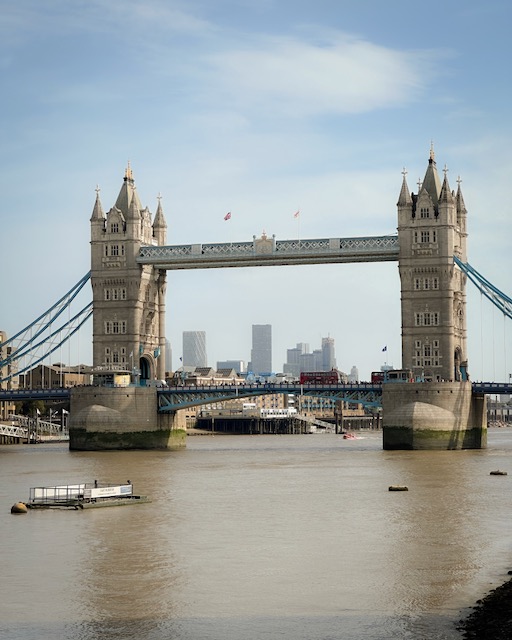
England is one of the easiest international destinations for American travelers, but that does not mean everything works the way you expect. There are certainly things to know before traveling to England that will help make your trip more enjoyable.
The language is familiar, the major cities are easy to navigate, and many customs feel recognizable. But the small differences matter. From train luggage to tipping, restaurant reservations, driving, plug adapters, and public toilets, knowing what to expect can make your trip much smoother.
Here are the practical things to know before traveling to England.
Before You Travel
Travel regulations and entry requirements can change, so always verify the latest information before your departure. While this guide may be updated, it should be used as a planning resource rather than an official source.
Before traveling, confirm current entry requirements, customs regulations, and travel advisories with the appropriate government agencies, including the UK government and U.S. Customs and Border Protection, as well as your airline if you have questions about your specific itinerary.
Entry Requirements for England
U.S. passport holders do not need a traditional tourist visa for visits of less than six months to any country in the United Kingdom, but you do need a UK ETA, or Electronic Travel Authorization.
The ETA is not a visa, but it is required before travel. Apply through the official UK government website or app, and take care of it well before your departure date. Once approved, the ETA is valid for two years for all UK countries (England, Scotland, Wales and Northern Ireland)
Your passport should also be valid for the entire duration of your trip and have at least one blank page.
If you are not traveling on a U.S. passport, check the UK entry requirements for your specific nationality before booking travel.
Money and Payments in England
The official currency is the British pound sterling, written as £.
England is very card-friendly, and contactless payment is widely used. You can usually pay with a credit card, Apple Pay, or Google Pay in restaurants, shops, train stations, museums, taxis, and even many public toilets.
Still, it is smart to carry a small amount of cash. You may need coins for rural toilets, small vendors, or situations where a card reader is not working.
For the best exchange rate, use an ATM connected to a major bank rather than exchanging money at an airport kiosk or currency exchange desk. Before you travel, notify your bank and credit card company so your transactions are not blocked.
You can also look into opening a Wise account. Wise is a financial tech company that makes it easy to have accounts in multiple currencies, as well as having some of the most wallet-friendly conversion costs that I’ve found.
One of the best things about Wise is that It can also be a great way to set aside money for your trip. You can convert from USD to GBP when conversion rates are more favorable and then not worry about it as much if the rate isn’t as favorable while you’re traveling.
What to Pack for England
Weather across Great Britain is changeable, even in summer. You may have sunshine, wind, rain, and cooler evening temperatures all in the same day. When it comes to England’s weather, there is no best time to travel, you just need to make sure you pack appropriately for the season.
One of the most important things to know before traveling to England is that the most useful packing strategy is layers.
Bring:
- A raincoat or water-resistant jacket
- Comfortable walking shoes
- A small umbrella
- A sweater or light jacket, even in summer
- Waterproof footwear if you will be visiting gardens, countryside estates, or rural areas
Summer temperatures are usually mild by American standards. In England, anything above 75-80°F can feel unusually hot, and many buildings do not have strong air conditioning.
This is especially important when choosing hotels. Older hotels, countryside inns, historic properties, and even some city hotels may have limited or no air conditioning.
Pack Smaller Luggage Than You Think You Need
Large suitcases can quickly become a problem in England, especially if you’re traveling primarily by rail and public transportation.
You may need to carry your own bags up hotel stairs, onto trains, through public transport stations, or into smaller vehicles. Rental cars, taxis, and Ubers are often much smaller than what American travelers expect.
If you are traveling by train, keep in mind that luggage racks are limited and first come, first served. Smaller bags can usually go overhead, but larger suitcases may need to be placed in luggage areas near the train doors.
A medium-sized suitcase and a backpack per person is usually much easier than one oversized suitcase.
UK Culture Differences American Travelers Should Know
England may feel familiar, but another of the things to know before traveling to England is that it has its own social rules.
Politeness matters in British culture. Say “please,” “thank you,” and “sorry” often. Queue properly. Keep your voice at a moderate level in public places, especially on trains and buses.
Communication can also be more indirect than Americans are used to. A phrase like “I’m not sure that’s ideal” may actually mean “no.” Listen for nuance rather than expecting a direct refusal.
Dress is another subtle difference. Locals often dress a bit smarter than Americans do for everyday outings. You do not need to dress formally, but athleisure and very casual clothing may stand out in nicer restaurants, hotels, and city settings.
One quick UK travel tip – the English take queueing very seriously! Queue jumping (cutting in line) will be met with tutting and eye rolls, which for the British is a very serious reprimand.
Dining and Tipping in England
Dinner often starts later than in the U.S., with many restaurants beginning full dinner service around 7:00 p.m.
Reservations are strongly recommended, especially in popular cities, small towns with limited restaurants, and for groups of more than four.
One of the things to know before traveling to England that surprises visitors is that tipping is different from the U.S. Many restaurants add a service charge to the bill, often around 12.5%. If a service charge is included, you usually do not need to add more.
If there is no service charge, tip around 10-15% for good service.
In pubs, you usually order at the bar rather than waiting for someone to come to your table. Some pubs do take reservations for meals, which is helpful in busy areas or on weekends.
Staying Safe in England
England is generally a safe destination, but normal safety awareness still applies.
Keep your bag secure, do not leave belongings on the back of a chair, and avoid openly displaying expensive jewelry or electronics.
In London, phone snatching can be an issue in some areas. Be careful when holding your phone near the street to take photos or check directions. Thieves on bikes or scooters may target phones held loosely in one hand.
Pharmacies and Medical Help
Pharmacies are useful for minor health issues while traveling.
Boots is one of the most common pharmacy chains and is a good place to find first aid supplies, over-the-counter medicine, toiletries, and travel basics. Larger grocery stores may also have pharmacies.
For urgent but non-life-threatening medical concerns, NHS 111 can help direct you to the right care. Emergency rooms are called A&E, which stands for Accident & Emergency.
Emergency services can be reached by calling 999, which is similar to dialing 911 in the US.
Travel insurance is always a good idea, in the event of a medical concern or emergency many insurance companies offer telemedicine services as part of their coverage.
Electricity and Plug Adapters
Another of the things to know before traveling to England is that the UK uses Type G plugs with three rectangular prongs.
You will need a UK plug adapter for American devices. Most modern phones, laptops, tablets, and camera chargers are dual voltage, which means they only need an adapter, not a converter.
Check your device label. If it says 110V/220V or 100-240V, it is dual voltage.
Bathrooms in the UK do not have standard outlets. You may only see a low-power shaver outlet. Plan to use hair tools or appliances, including hair dryers, outside the bathroom.
Also, UK outlets have switches. If your phone is not charging, make sure the outlet is switched on. There’s at least one time on every UK trip that I realize I didn’t switch on the outlet, so my phone didn’t charge when I thought it would.
Wi-Fi and Cell Service
Wi-Fi is widely available in hotels, restaurants, cafes, airports, and train stations, but speeds can vary.
Cell coverage is strong in cities and larger towns but may be weaker in rural areas. Download maps, tickets, confirmations, and driving directions before heading into the countryside.
Before your trip, check your mobile provider’s international plan. If your phone supports eSIMs, an eSIM can also be a convenient option.
Getting Around England
England has a strong public transportation network, especially between major cities.
Trains are useful for routes such as London to Bath, York, Oxford, Cambridge, Manchester, or Edinburgh. Book long-distance train tickets in advance when possible, as prices are often lower.
Read more: 8 Breathtaking Train Journeys in the UK
Large cities may have several train stations, so always check your departure station carefully.
In London, the Underground is the easiest way to move around the city. Contactless payment makes it simple: tap in and tap out with the same card or device.
For navigation, Citymapper is especially helpful in London and other major cities. Google Maps or Apple Maps work well in smaller towns and rural areas.
Driving in England
Driving can be a great way to explore the countryside, villages, gardens, and historic houses that are harder to reach by train.
But driving in England is different.
Rea more: Traveling in England: Train or Car?
You will drive on the left side of the road, and the driver sits on the right side of the car. Roads are often narrower than American roads, especially in villages and rural areas.
Roundabouts are common. Always give way to traffic already on the roundabout, and look right before entering.
Rent the smallest car that will comfortably fit your luggage. Smaller cars are easier to manage on country lanes, in tight car parks, and through historic towns.
When you rent a car, one of the things to know before traveling to England is that most cars have manual transmissions. You’ll need to request an automatic transmission, which is more expensive, if you aren’t comfortable driving manual. Even if you are, do you really want to do it while driving on the left? It’s usually best to simply rent an automatic.
Speed limits are in miles per hour, and speed cameras are common. Posted speeds are limits, not targets, especially on narrow country roads.
Public Toilets
Public restrooms are usually called toilets or loos.
Many public toilets are pay-to-use. In larger towns and cities, payment may be by card or contactless. In smaller towns or rural areas, you may see a donation box asking for 20-50p.
Use the toilet when one is available, especially before long drives, countryside walks, or train journeys.
Museums, attractions, train stations, department stores, hotels, and pubs are usually the most reliable places to find facilities. If you stop in a pub to use the toilet, it is polite to buy a drink.
Returning Home to the U.S.
TSA PreCheck does not apply when departing from England. You will need to follow normal airport security rules, including the 100mL liquid limit for carry-on luggage if it applies.
If you buy duty-free liquids before flying home and have a connecting flight in the U.S., make sure you have space to pack them in your checked luggage after clearing customs.
When you arrive in the U.S., you must collect your checked bags, clear customs, and then recheck your luggage for your connecting flight.
Avoid bringing restricted agricultural products such as fruits, vegetables, plants, or fresh food back into the United States.
The Bottom Line
England is a wonderful destination for first-time and repeat travelers, but the trip feels much easier when you understand how everyday details work.
Pack lighter than you think you need to, bring layers, make restaurant reservations, learn the basics of train travel, and prepare for a few cultural differences.
Once you know what to expect, you can spend less time figuring things out and more time enjoying the historic cities, countryside villages, gardens, castles, pubs, and traditions that make England such a rewarding place to visit.
Check out our full England travel blog for more England travel guide and travel advice.
England is one of the easiest international destinations for American travelers, but that does not mean everything works the way you expect. There are certainly things to know before traveling to England that will help make your trip more enjoyable.
The language is familiar, the major cities are easy to navigate, and many customs feel recognizable. But the small differences matter. From train luggage to tipping, restaurant reservations, driving, plug adapters, and public toilets, knowing what to expect can make your trip much smoother.
Here are the practical things to know before traveling to England.
Before You Travel
Travel regulations and entry requirements can change, so always verify the latest information before your departure. While this guide may be updated, it should be used as a planning resource rather than an official source.
Before traveling, confirm current entry requirements, customs regulations, and travel advisories with the appropriate government agencies, including the UK government and U.S. Customs and Border Protection, as well as your airline if you have questions about your specific itinerary.
Entry Requirements for England
U.S. passport holders do not need a traditional tourist visa for visits of less than six months to any country in the United Kingdom, but you do need a UK ETA, or Electronic Travel Authorization.
The ETA is not a visa, but it is required before travel. Apply through the official UK government website or app, and take care of it well before your departure date. Once approved, the ETA is valid for two years for all UK countries (England, Scotland, Wales and Northern Ireland)
Your passport should also be valid for the entire duration of your trip and have at least one blank page.
If you are not traveling on a U.S. passport, check the UK entry requirements for your specific nationality before booking travel.
Money and Payments in England
The official currency is the British pound sterling, written as £.
England is very card-friendly, and contactless payment is widely used. You can usually pay with a credit card, Apple Pay, or Google Pay in restaurants, shops, train stations, museums, taxis, and even many public toilets.
Still, it is smart to carry a small amount of cash. You may need coins for rural toilets, small vendors, or situations where a card reader is not working.
For the best exchange rate, use an ATM connected to a major bank rather than exchanging money at an airport kiosk or currency exchange desk. Before you travel, notify your bank and credit card company so your transactions are not blocked.
You can also look into opening a Wise account. Wise is a financial tech company that makes it easy to have accounts in multiple currencies, as well as having some of the most wallet-friendly conversion costs that I’ve found.
One of the best things about Wise is that It can also be a great way to set aside money for your trip. You can convert from USD to GBP when conversion rates are more favorable and then not worry about it as much if the rate isn’t as favorable while you’re traveling.
What to Pack for England
Weather across Great Britain is changeable, even in summer. You may have sunshine, wind, rain, and cooler evening temperatures all in the same day. When it comes to England’s weather, there is no best time to travel, you just need to make sure you pack appropriately for the season.
One of the most important things to know before traveling to England is that the most useful packing strategy is layers.
Bring:
- A raincoat or water-resistant jacket
- Comfortable walking shoes
- A small umbrella
- A sweater or light jacket, even in summer
- Waterproof footwear if you will be visiting gardens, countryside estates, or rural areas
Summer temperatures are usually mild by American standards. In England, anything above 75-80°F can feel unusually hot, and many buildings do not have strong air conditioning.
This is especially important when choosing hotels. Older hotels, countryside inns, historic properties, and even some city hotels may have limited or no air conditioning.
Pack Smaller Luggage Than You Think You Need
Large suitcases can quickly become a problem in England, especially if you’re traveling primarily by rail and public transportation.
You may need to carry your own bags up hotel stairs, onto trains, through public transport stations, or into smaller vehicles. Rental cars, taxis, and Ubers are often much smaller than what American travelers expect.
If you are traveling by train, keep in mind that luggage racks are limited and first come, first served. Smaller bags can usually go overhead, but larger suitcases may need to be placed in luggage areas near the train doors.
A medium-sized suitcase and a backpack per person is usually much easier than one oversized suitcase.
UK Culture Differences American Travelers Should Know
England may feel familiar, but another of the things to know before traveling to England is that it has its own social rules.
Politeness matters in British culture. Say “please,” “thank you,” and “sorry” often. Queue properly. Keep your voice at a moderate level in public places, especially on trains and buses.
Communication can also be more indirect than Americans are used to. A phrase like “I’m not sure that’s ideal” may actually mean “no.” Listen for nuance rather than expecting a direct refusal.
Dress is another subtle difference. Locals often dress a bit smarter than Americans do for everyday outings. You do not need to dress formally, but athleisure and very casual clothing may stand out in nicer restaurants, hotels, and city settings.
One quick UK travel tip – the English take queueing very seriously! Queue jumping (cutting in line) will be met with tutting and eye rolls, which for the British is a very serious reprimand.
Dining and Tipping in England
Dinner often starts later than in the U.S., with many restaurants beginning full dinner service around 7:00 p.m.
Reservations are strongly recommended, especially in popular cities, small towns with limited restaurants, and for groups of more than four.
One of the things to know before traveling to England that surprises visitors is that tipping is different from the U.S. Many restaurants add a service charge to the bill, often around 12.5%. If a service charge is included, you usually do not need to add more.
If there is no service charge, tip around 10-15% for good service.
In pubs, you usually order at the bar rather than waiting for someone to come to your table. Some pubs do take reservations for meals, which is helpful in busy areas or on weekends.
Staying Safe in England
England is generally a safe destination, but normal safety awareness still applies.
Keep your bag secure, do not leave belongings on the back of a chair, and avoid openly displaying expensive jewelry or electronics.
In London, phone snatching can be an issue in some areas. Be careful when holding your phone near the street to take photos or check directions. Thieves on bikes or scooters may target phones held loosely in one hand.
Pharmacies and Medical Help
Pharmacies are useful for minor health issues while traveling.
Boots is one of the most common pharmacy chains and is a good place to find first aid supplies, over-the-counter medicine, toiletries, and travel basics. Larger grocery stores may also have pharmacies.
For urgent but non-life-threatening medical concerns, NHS 111 can help direct you to the right care. Emergency rooms are called A&E, which stands for Accident & Emergency.
Emergency services can be reached by calling 999, which is similar to dialing 911 in the US.
Travel insurance is always a good idea, in the event of a medical concern or emergency many insurance companies offer telemedicine services as part of their coverage.
Electricity and Plug Adapters
Another of the things to know before traveling to England is that the UK uses Type G plugs with three rectangular prongs.
You will need a UK plug adapter for American devices. Most modern phones, laptops, tablets, and camera chargers are dual voltage, which means they only need an adapter, not a converter.
Check your device label. If it says 110V/220V or 100-240V, it is dual voltage.
Bathrooms in the UK do not have standard outlets. You may only see a low-power shaver outlet. Plan to use hair tools or appliances, including hair dryers, outside the bathroom.
Also, UK outlets have switches. If your phone is not charging, make sure the outlet is switched on. There’s at least one time on every UK trip that I realize I didn’t switch on the outlet, so my phone didn’t charge when I thought it would.
Wi-Fi and Cell Service
Wi-Fi is widely available in hotels, restaurants, cafes, airports, and train stations, but speeds can vary.
Cell coverage is strong in cities and larger towns but may be weaker in rural areas. Download maps, tickets, confirmations, and driving directions before heading into the countryside.
Before your trip, check your mobile provider’s international plan. If your phone supports eSIMs, an eSIM can also be a convenient option.
Getting Around England
England has a strong public transportation network, especially between major cities.
Trains are useful for routes such as London to Bath, York, Oxford, Cambridge, Manchester, or Edinburgh. Book long-distance train tickets in advance when possible, as prices are often lower.
Read more: 8 Breathtaking Train Journeys in the UK
Large cities may have several train stations, so always check your departure station carefully.
In London, the Underground is the easiest way to move around the city. Contactless payment makes it simple: tap in and tap out with the same card or device.
For navigation, Citymapper is especially helpful in London and other major cities. Google Maps or Apple Maps work well in smaller towns and rural areas.
Driving in England
Driving can be a great way to explore the countryside, villages, gardens, and historic houses that are harder to reach by train.
But driving in England is different.
Rea more: Traveling in England: Train or Car?
You will drive on the left side of the road, and the driver sits on the right side of the car. Roads are often narrower than American roads, especially in villages and rural areas.
Roundabouts are common. Always give way to traffic already on the roundabout, and look right before entering.
Rent the smallest car that will comfortably fit your luggage. Smaller cars are easier to manage on country lanes, in tight car parks, and through historic towns.
When you rent a car, one of the things to know before traveling to England is that most cars have manual transmissions. You’ll need to request an automatic transmission, which is more expensive, if you aren’t comfortable driving manual. Even if you are, do you really want to do it while driving on the left? It’s usually best to simply rent an automatic.
Speed limits are in miles per hour, and speed cameras are common. Posted speeds are limits, not targets, especially on narrow country roads.
Public Toilets
Public restrooms are usually called toilets or loos.
Many public toilets are pay-to-use. In larger towns and cities, payment may be by card or contactless. In smaller towns or rural areas, you may see a donation box asking for 20-50p.
Use the toilet when one is available, especially before long drives, countryside walks, or train journeys.
Museums, attractions, train stations, department stores, hotels, and pubs are usually the most reliable places to find facilities. If you stop in a pub to use the toilet, it is polite to buy a drink.
Returning Home to the U.S.
TSA PreCheck does not apply when departing from England. You will need to follow normal airport security rules, including the 100mL liquid limit for carry-on luggage if it applies.
If you buy duty-free liquids before flying home and have a connecting flight in the U.S., make sure you have space to pack them in your checked luggage after clearing customs.
When you arrive in the U.S., you must collect your checked bags, clear customs, and then recheck your luggage for your connecting flight.
Avoid bringing restricted agricultural products such as fruits, vegetables, plants, or fresh food back into the United States.
The Bottom Line
England is a wonderful destination for first-time and repeat travelers, but the trip feels much easier when you understand how everyday details work.
Pack lighter than you think you need to, bring layers, make restaurant reservations, learn the basics of train travel, and prepare for a few cultural differences.
Once you know what to expect, you can spend less time figuring things out and more time enjoying the historic cities, countryside villages, gardens, castles, pubs, and traditions that make England such a rewarding place to visit.
Check out our full England travel blog for more England travel guide and travel advice.

