
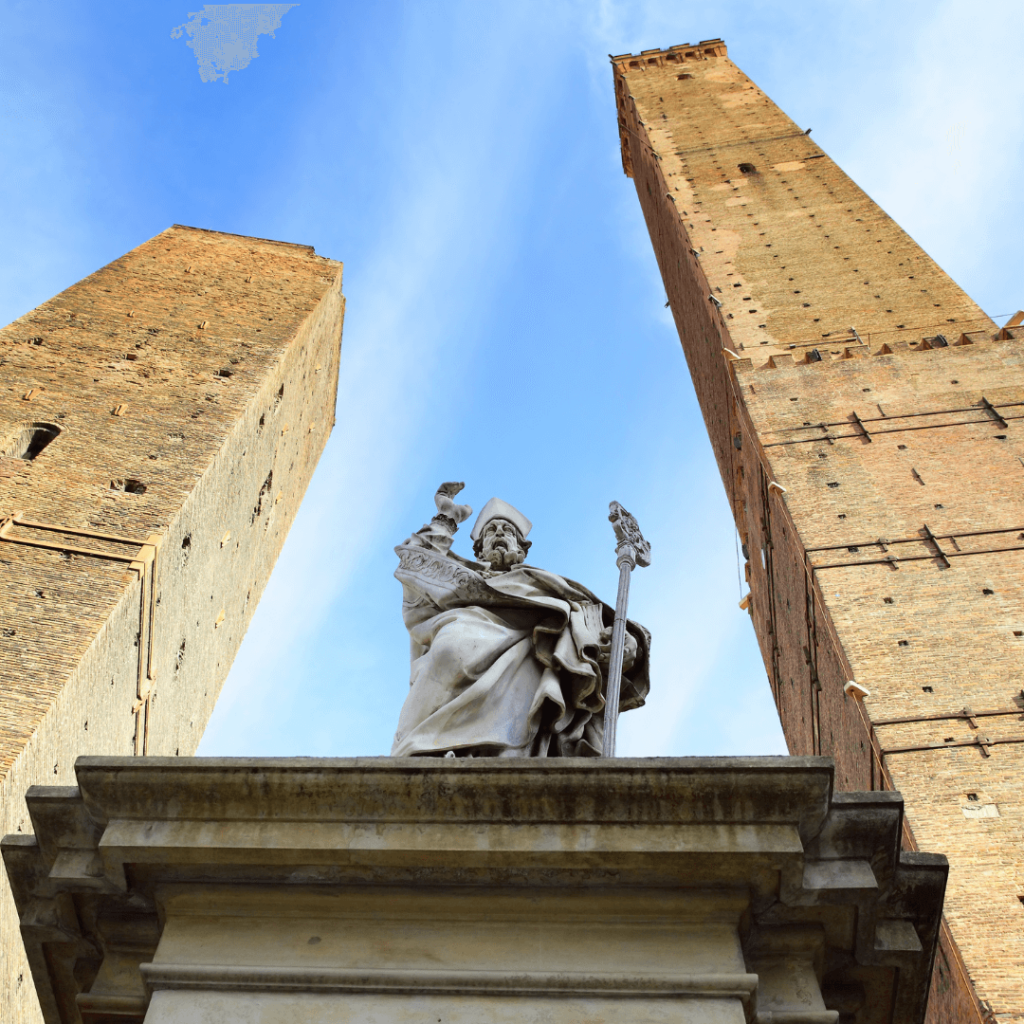
One of the biggest reasons travelers visit the Emilia Romagna region of Italy is simple. The traditional Emilia Romagna food. Often considered Italy’s culinary capital, the Emilia Romagna region is home to many of the country’s most iconic foods. These include Parmigiano Reggiano, Prosciutto di Parma, traditional balsamic vinegar, handmade pasta, and Lambrusco wine.
Whether you’re planning a dedicated food-focused itinerary or simply want to experience authentic regional food during your trip, Emilia Romagna cuisine offers some of the best dining experiences in Italy. From bustling city markets and family-run trattorias to centuries-old cheese producers and vinegar lofts, every meal highlights a region that takes enormous pride in its culinary traditions.
Wondering what to eat in Emilia-Romagna? These are the traditional dishes and local specialties you won’t want to miss.
Why Emilia-Romagna Is Italy’s Culinary Capital
Every region of Italy has its own culinary traditions. Emilia-Romagna stands apart for the sheer number of internationally recognized foods that originated here. There’s a reason it’s referred to as Italys food valley.
The region stretches across northern Italy from the Adriatic coast to the Apennine Mountains. It encompasses cities like Bologna, Parma, Modena, Ferrara, Ravenna, and Rimini. Thanks to fertile farmland and centuries of agricultural tradition, it has become one of Europe’s great food-producing regions.
Many of the products that originated here are protected under European PDO (Protected Designation of Origin) or PGI (Protected Geographical Indication) laws. These certifications ensure that foods like Parmigiano Reggiano, Prosciutto di Parma, and Traditional Balsamic Vinegar of Modena are produced using traditional methods within specific geographic areas.
That commitment to preserving quality and tradition is one of the reasons Emilia-Romagna has earned its reputation as one of the world’s premier culinary destinations.
Read More: Exploring the Diversity of French Regional Food
This post includes affiliate links. I may earn a small commission if you make a booking through them, at no additional cost to you.
Parmigiano Reggiano
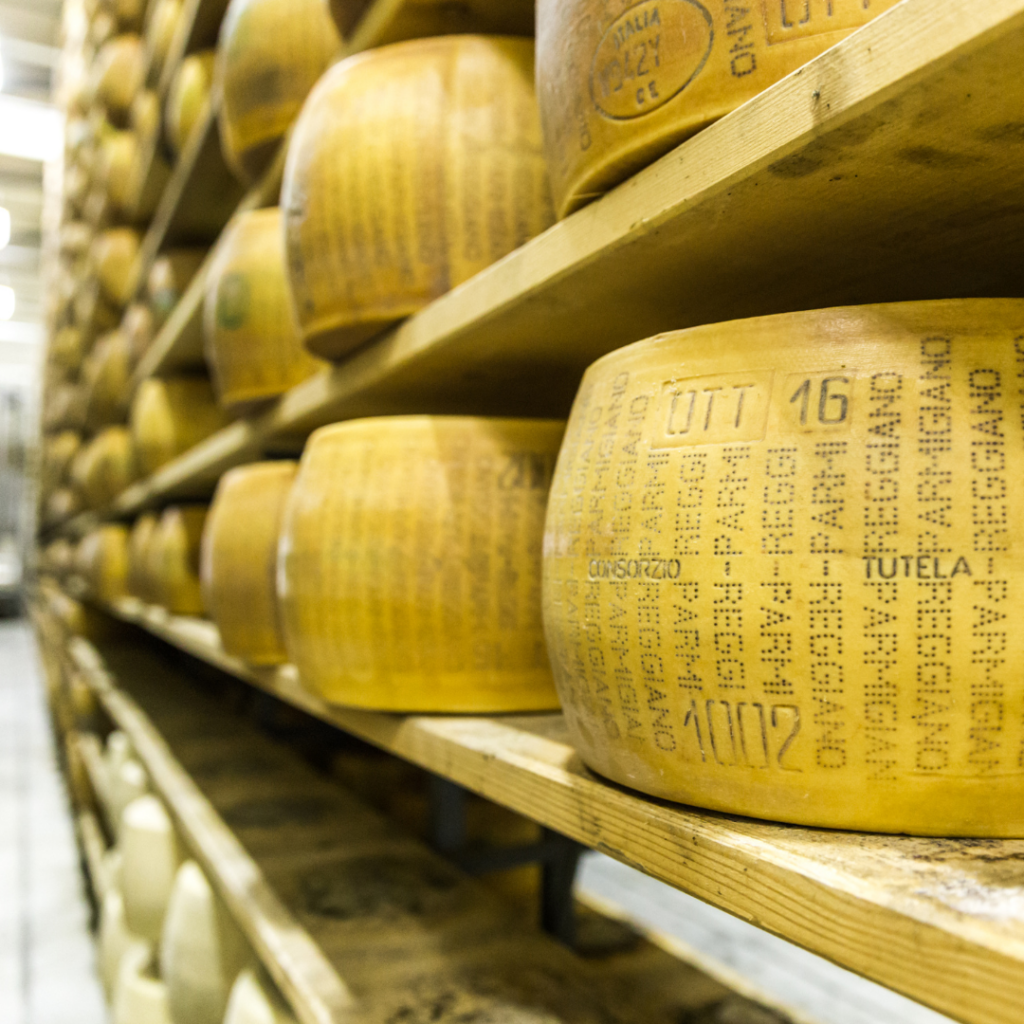
No discussion of Emilia Romagna food would be complete without Parmigiano Reggiano. After all, it’s one of the most famous ingredients in Italian cuisine.
Known around the world as the “King of Cheeses,” authentic Parmigiano Reggiano cheese can only be produced within a designated area that includes parts of Parma, Reggio Emilia, Modena, Bologna, and Mantua. Every wheel is made using just three ingredients – raw cow’s milk, salt, and rennet – and must be aged for a minimum of 12 months before it can carry the Parmigiano Reggiano name.
The result is a rich, nutty cheese with a complex flavor. It’s a world apart from the grated Parmesan cheese commonly found in grocery stores.
While you’ll find Parmigiano Reggiano on menus throughout Italy, tasting it where it’s made is an entirely different experience.
Many dairies around Parma and Reggio Emilia offer guided tours early in the morning, when cheesemakers are lifting enormous wheels from traditional copper vats. You can watch the production process before walking through aging rooms lined floor to ceiling with thousands of wheels quietly maturing.
The tasting is often the highlight of the visit. Sampling cheeses aged 12, 24, and 36 months side by side reveals just how much the flavor develops over time. It changes from mild and creamy to intensely savory with tiny crystals that give older cheeses their distinctive texture.
Only have time for one food-related experience during your visit to Emilia-Romagna? Touring a Parmigiano Reggiano producer is hard to beat.
Prosciutto di Parma
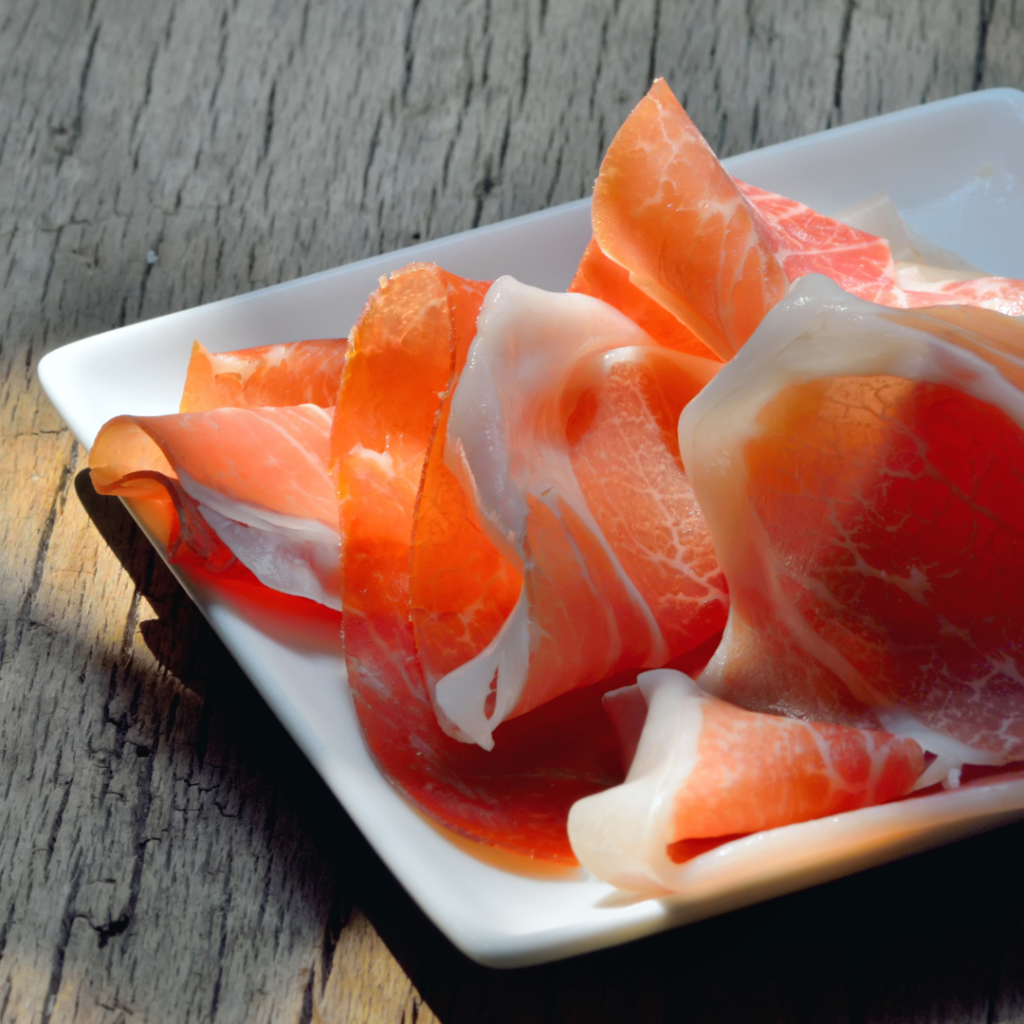
Just a short drive from many Parmigiano Reggiano producers, you’ll find another of Italy’s most famous culinary treasures.
Prosciutto di Parma is made using only two ingredients: carefully selected pork and sea salt. Although the recipe sounds simple, producing authentic Parma ham requires patience, expertise, and the unique climate of the hills surrounding Parma.
Each ham is cured for at least 12 months. That allows it to slowly develop its signature sweet, delicate flavor and silky texture.
Like Parmigiano Reggiano, Prosciutto di Parma is protected by strict production regulations. Every step, from raising the pigs to curing the pork meat, must follow traditional standards. Only then can it receive the famous Parma crown branding.
The beauty of Prosciutto di Parma lies in its simplicity.
You’ll often find it served alongside fresh bread, chunks of Parmigiano Reggiano, ripe melon, or figs during the summer months. Rather than overpowering the meat with elaborate preparations, local restaurants let the quality of the ingredients speak for themselves.
Many producers also offer tours where visitors can learn about the curing process before enjoying tastings of freshly sliced prosciutto.
Combining a Prosciutto di Parma visit with a Parmigiano Reggiano dairy tour makes for one of the most rewarding day trips from Bologna or Parma.
Read More: Discover the Enchanting Regions of Italy
Traditional Balsamic Vinegar of Modena
If you’ve only experienced inexpensive balsamic vinegar from the grocery store, prepare to rethink everything you know about this iconic Italian ingredient.
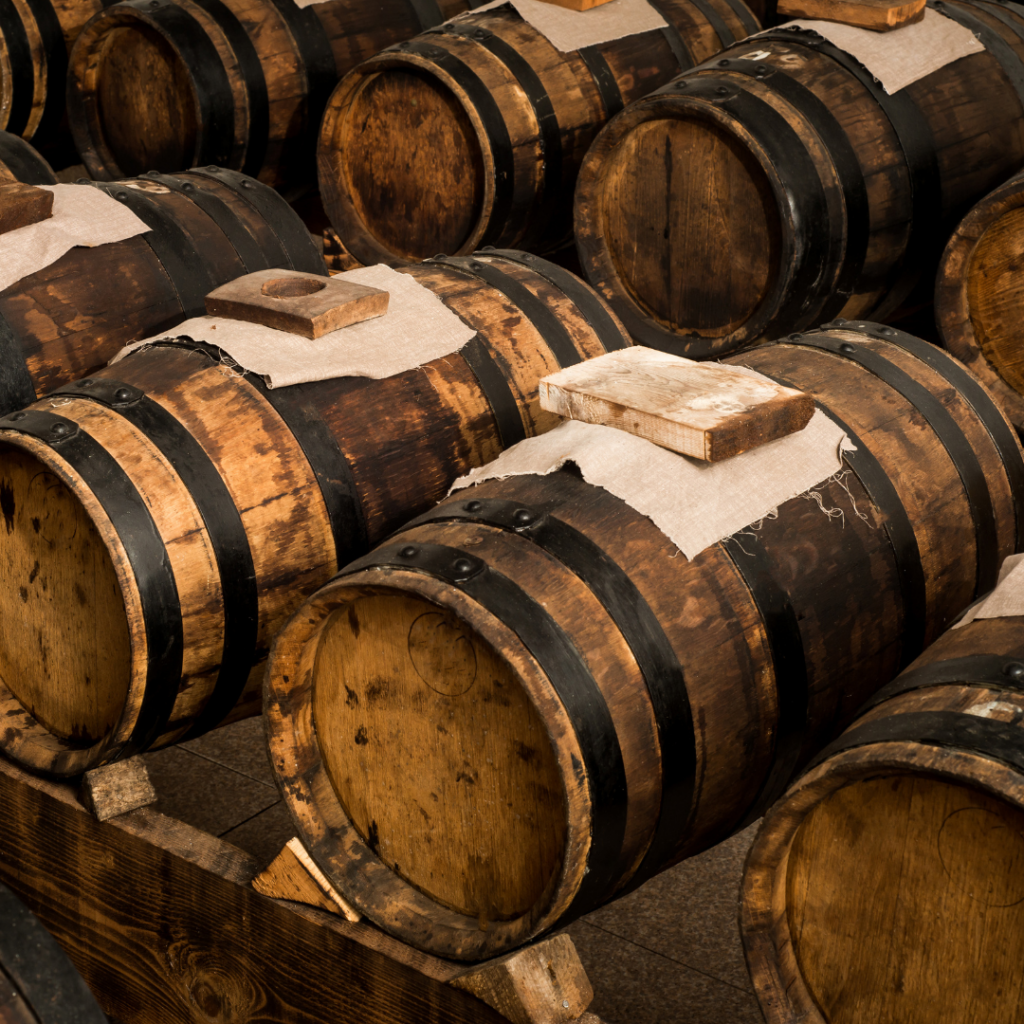
Traditional Balsamic Vinegar of Modena bears little resemblance to the thin vinegar used in everyday salad dressings. Instead, it’s an intensely concentrated condiment produced from cooked grape must. It’s aged in a series of wooden barrels for a minimum of 12 years.
As the vinegar slowly matures, water naturally evaporates through the wooden barrels, concentrating the flavors year after year. By the time it’s bottled, the finished product has a rich, syrup-like consistency. It also has an extraordinary balance of sweetness, acidity, and complexity.
Because authentic traditional balsamic vinegar is so carefully produced, it’s used very differently than commercial balsamic vinegar.
Rather than pouring it over an entire salad, Italians often use just a few drops to enhance simple ingredients like Parmigiano Reggiano, fresh strawberries, grilled meats, or even gelato.
One of the most interesting culinary experiences in Emilia-Romagna is visiting a traditional acetaia, or vinegar house.
Many family-owned producers around Modena welcome visitors for guided tours. They’ll explain how the vinegar is transferred between progressively smaller barrels over decades of aging. Some families have barrels that have been passed down through multiple generations, with vinegar that has been aging for far longer than many visitors have been alive.
Tasting vinegars of different ages side by side offers a fascinating glimpse into one of Italy’s most carefully preserved culinary traditions.
Read More: Explore the Diverse Regions of France
Don’t Miss Bologna’s Historic Markets
While Parma and Modena are known for two of the region’s most famous specialties, Bologna offers one of the best introductions to Emilia-Romagna’s everyday Italian food culture.
One of the first places you should visit is the Quadrilatero, Bologna’s historic market district. Just a few narrow streets are packed with delicatessens, pasta shops, bakeries, wine bars, produce vendors, and specialty food stores that have served locals for generations.
It’s the perfect place to sample regional cheeses and cured meats. You can also browse handmade pasta or stop for a quick aperitivo before dinner.
If you enjoy bringing home edible souvenirs, this is also one of the best places in the region to purchase vacuum-sealed Parmigiano Reggiano, aged balsamic vinegar, or other local specialties to take home.
Even if you don’t buy anything, spending an hour wandering through the Quadrilatero offers a wonderful introduction to the flavors that define Emilia-Romagna.
For a more in-depth experience, consider a food tour of the market and surrounding areas.
Ragù alla Bolognese
One of the biggest surprises for many visitors is discovering that spaghetti Bolognese isn’t actually an Italian pasta dish.
While the bolognese sauce itself originated in Bologna, locals traditionally serve it with fresh tagliatelle rather than spaghetti. The broad ribbons of pasta are better suited to holding the rich, slow-simmered sauce, creating a dish that’s become one of the city’s defining specialties.
Authentic ragù alla Bolognese is made by slowly cooking finely chopped onions, carrots, and celery with beef, pork, tomatoes, wine, and a small amount of milk. Unlike many versions found outside Italy, the sauce isn’t heavily tomato-based. Instead, the meat remains the star of the dish. That results in a rich, deeply flavorful sauce that’s been perfected over generations.
When dining in Bologna, look for Tagliatelle al Ragù on the menu. If it’s your first visit to the city, it’s one dish that absolutely deserves a place on your table.
Tortellini and Handmade Pasta

Fresh egg pasta is one of Emilia-Romagna’s defining culinary traditions, and nowhere is that more evident than in Bologna.
The region is famous for its handmade pasta. Much of the pasta is still prepared using traditional techniques passed down through generations. Walk through the city center and you may spot sfogline. These women specialize in making fresh pasta by hand, rolling impossibly thin sheets of dough in shop windows.
Among the region’s best-known pasta shapes is tortellini.
Traditionally filled with pork, prosciutto, mortadella, and Parmigiano Reggiano, tortellini are often served in a rich homemade broth known as tortellini in brodo. It’s a comforting dish that’s especially popular during the cooler months and around the holidays.
Read More: Italian Christmas traditions that make the season special
You’ll also find cappelletti, tortelloni, passatelli, and countless other regional specialties throughout Emilia-Romagna. While they may look similar, each has its own history, shape, and traditional filling depending on where you are in the region.
One of the most rewarding experiences for food lovers is taking a pasta-making class. Learning how these delicate shapes are formed by hand offers a new appreciation for the craftsmanship behind one of Italy’s most beloved foods.
Piadina Romagnola
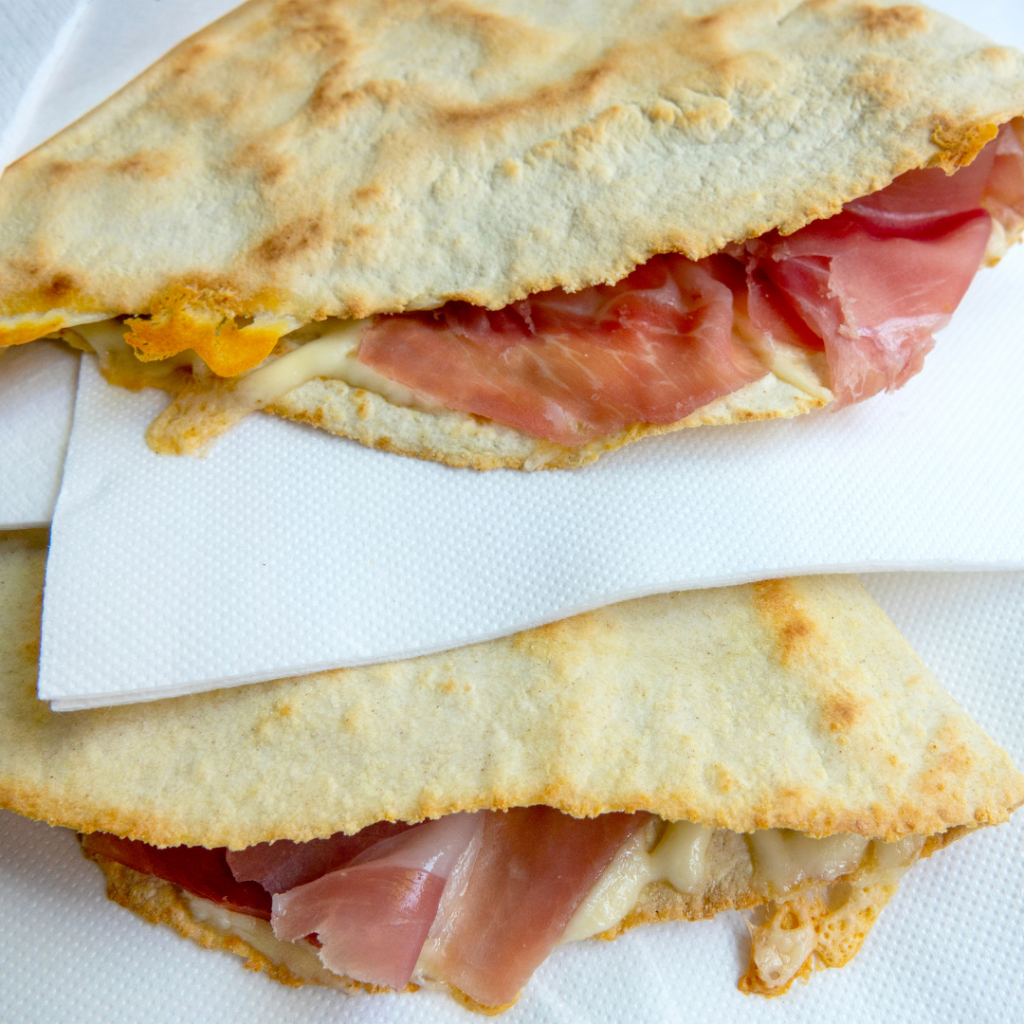
Travel east toward the Adriatic coast, and you’ll discover another local favorite.
Piadina Romagnola is a thin, round flatbread that’s been a staple of the Romagna region for centuries. They’re traditionally made with flour, water, fat, and salt before being cooked on a hot griddle. It’s simple, satisfying, and incredibly versatile.
Today, piadina is one of Emilia-Romagna’s most popular street foods.
Classic fillings include Prosciutto di Parma, soft squacquerone cheese, fresh arugula, grilled vegetables, or local salumi. Although you’ll find countless variations depending on where you stop.
If you’re visiting Ravenna, Rimini, or the coastal towns of Romagna, piadina makes an excellent lunch while sightseeing. It’s quick, inexpensive, and an easy way to experience a regional specialty. It’s every bit as authentic as the area’s more famous cheeses and cured meats.
Read More: What is a traditional breakfast in Scotland?
Culatello di Zibello
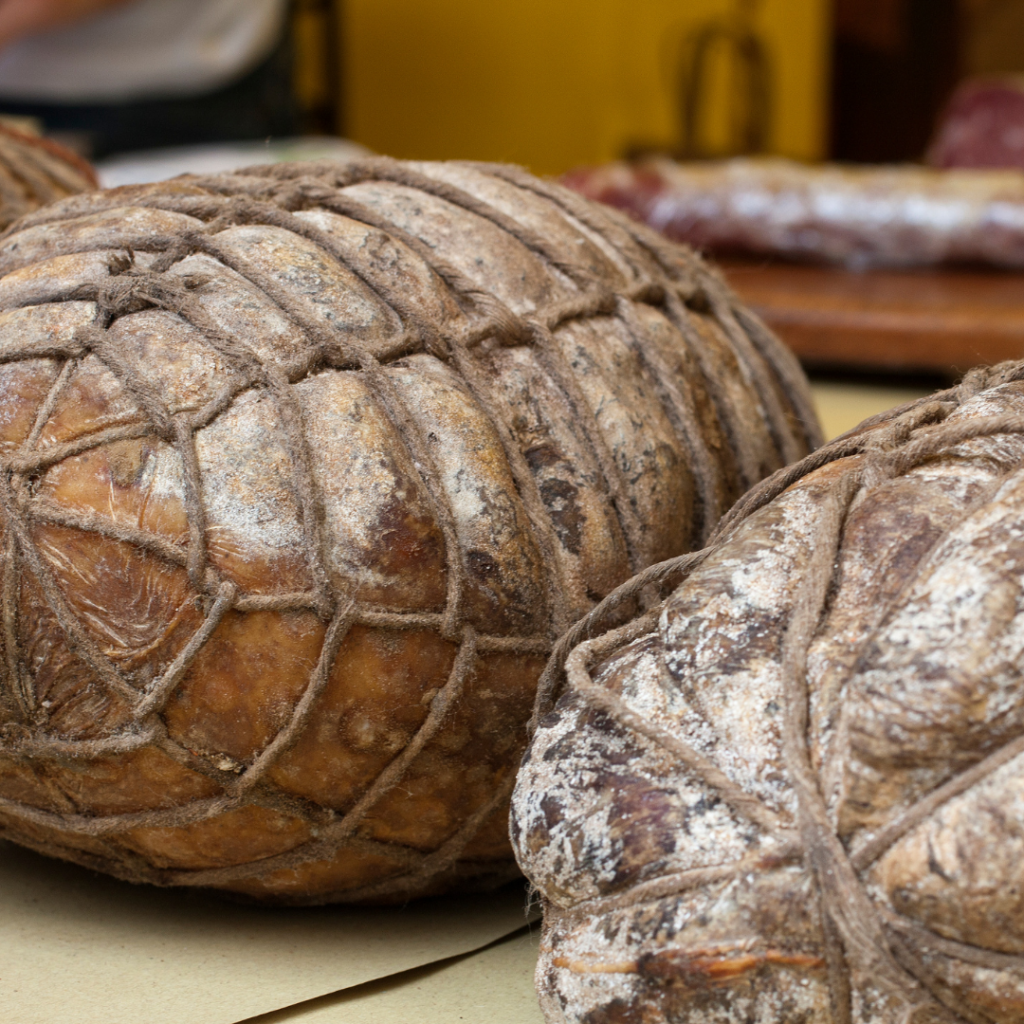
Prosciutto di Parma may be the region’s best-known cured meat. But many Italians consider Culatello di Zibello to be the finest.
Produced in a small area along the Po River, culatello is made from the most prized portion of the pork leg. It’s carefully cured for more than a year in naturally humid cellars.
The result is exceptionally tender, delicately flavored, and often described as the “king of salumi.”
Because production is limited, culatello isn’t nearly as common as Prosciutto di Parma. If you see it on the menu at a local trattoria or specialty restaurant, it’s well worth ordering.
Served simply with fresh bread and a glass of local wine, it perfectly reflects Emilia-Romagna’s philosophy that exceptional ingredients rarely need elaborate preparation.
Lambrusco
No culinary tour of Emilia-Romagna would be complete without a glass of Lambrusco.
For years, Lambrusco developed an unfortunate reputation outside Italy because many exported versions were overly sweet. Visit Emilia-Romagna, however, and you’ll discover a completely different wine.
Most local Lambruscos are dry or lightly off-dry, with lively acidity and gentle bubbles that make them exceptionally food-friendly.
Their bright, refreshing character pairs beautifully with the richness of Parmigiano Reggiano, Prosciutto di Parma, ragù alla Bolognese, and the region’s many cured meats.
If you’ve never enjoyed Lambrusco before, Emilia-Romagna is the perfect place to try it. Many visitors leave wondering why this approachable sparkling red wine isn’t more popular outside Italy.
A Perfect Day for Food Lovers in Emilia-Romagna
If you have one full day to dedicate to Emilia Romagna food, it’s easy to build an itinerary around some of the region’s most famous specialties.
Start early with a tour of a Parmigiano Reggiano dairy. You’ll watch cheesemakers at work before sampling cheeses of different ages.
From there, continue to a nearby Prosciutto di Parma producer to learn about the traditional curing process and enjoy freshly sliced prosciutto.
After lunch at a countryside trattoria, head toward Modena to visit a traditional acetaia. You’ll sample authentic balsamic vinegar that’s been aging for decades. Or, if you’re more drawn to a Michelin-starred experience, try to get a reservation at Osteria Francescana. Massimo Bottura’s 3 Michelin-starred restaurant has been voted the best restaurant in the world more than once.
Finish your day back in Bologna with an evening stroll through the historic center, aperitivo at a local wine bar, and dinner featuring fresh tagliatelle al ragù accompanied by a glass of Lambrusco.
It’s a full day, but one that offers an excellent introduction to the flavors that have made Emilia-Romagna food famous around the world.
If you aren’t self-driving you can also do a full-day food tour from Bologna. You’ll visit some of the local producers without requiring a car.
The Bottom Line
Food isn’t simply something you eat in Emilia-Romagna—it’s woven into the history, culture, and identity of this Italian region.
Whether you’re touring a centuries-old cheese producer, learning to make fresh pasta by hand, wandering through Bologna’s historic markets, or enjoying dinner at a family-run trattoria, you’ll quickly discover that meals here are about far more than what’s on the plate. They’re an opportunity to experience traditions that have been carefully preserved for generations.
One of the biggest mistakes travelers make is treating Emilia-Romagna as a quick stop between Florence and Venice.
If food is one of the reasons you’re visiting Italy, this is a region worth slowing down for. Spending two or three nights in Bologna gives you time to explore the city’s markets, enjoy its outstanding restaurants, and take day trips to Parma and Modena without feeling rushed.
For anyone who loves exceptional food, local traditions, and authentic travel experiences, Emilia-Romagna is one of Italy’s most rewarding destinations.
Looking for more inspiration for your trip? Browse our other Italy travel guides for destination ideas, itinerary suggestions, and practical travel tips to help you plan your visit. And if you’re ready to get started planning your next Italian adventure and would like some expert assistance, contact us today to get started.
One of the biggest reasons travelers visit the Emilia Romagna region of Italy is simple. The traditional Emilia Romagna food. Often considered Italy’s culinary capital, the Emilia Romagna region is home to many of the country’s most iconic foods. These include Parmigiano Reggiano, Prosciutto di Parma, traditional balsamic vinegar, handmade pasta, and Lambrusco wine.
Whether you’re planning a dedicated food-focused itinerary or simply want to experience authentic regional food during your trip, Emilia Romagna cuisine offers some of the best dining experiences in Italy. From bustling city markets and family-run trattorias to centuries-old cheese producers and vinegar lofts, every meal highlights a region that takes enormous pride in its culinary traditions.
Wondering what to eat in Emilia-Romagna? These are the traditional dishes and local specialties you won’t want to miss.
Why Emilia-Romagna Is Italy’s Culinary Capital
Every region of Italy has its own culinary traditions. Emilia-Romagna stands apart for the sheer number of internationally recognized foods that originated here. There’s a reason it’s referred to as Italys food valley.
The region stretches across northern Italy from the Adriatic coast to the Apennine Mountains. It encompasses cities like Bologna, Parma, Modena, Ferrara, Ravenna, and Rimini. Thanks to fertile farmland and centuries of agricultural tradition, it has become one of Europe’s great food-producing regions.
Many of the products that originated here are protected under European PDO (Protected Designation of Origin) or PGI (Protected Geographical Indication) laws. These certifications ensure that foods like Parmigiano Reggiano, Prosciutto di Parma, and Traditional Balsamic Vinegar of Modena are produced using traditional methods within specific geographic areas.
That commitment to preserving quality and tradition is one of the reasons Emilia-Romagna has earned its reputation as one of the world’s premier culinary destinations.
Read More: Exploring the Diversity of French Regional Food
This post includes affiliate links. I may earn a small commission if you make a booking through them, at no additional cost to you.
Parmigiano Reggiano
No discussion of Emilia Romagna food would be complete without Parmigiano Reggiano. After all, it’s one of the most famous ingredients in Italian cuisine.
Known around the world as the “King of Cheeses,” authentic Parmigiano Reggiano cheese can only be produced within a designated area that includes parts of Parma, Reggio Emilia, Modena, Bologna, and Mantua. Every wheel is made using just three ingredients – raw cow’s milk, salt, and rennet – and must be aged for a minimum of 12 months before it can carry the Parmigiano Reggiano name.
The result is a rich, nutty cheese with a complex flavor. It’s a world apart from the grated Parmesan cheese commonly found in grocery stores.
While you’ll find Parmigiano Reggiano on menus throughout Italy, tasting it where it’s made is an entirely different experience.
Many dairies around Parma and Reggio Emilia offer guided tours early in the morning, when cheesemakers are lifting enormous wheels from traditional copper vats. You can watch the production process before walking through aging rooms lined floor to ceiling with thousands of wheels quietly maturing.
The tasting is often the highlight of the visit. Sampling cheeses aged 12, 24, and 36 months side by side reveals just how much the flavor develops over time. It changes from mild and creamy to intensely savory with tiny crystals that give older cheeses their distinctive texture.
Only have time for one food-related experience during your visit to Emilia-Romagna? Touring a Parmigiano Reggiano producer is hard to beat.
Prosciutto di Parma
Just a short drive from many Parmigiano Reggiano producers, you’ll find another of Italy’s most famous culinary treasures.
Prosciutto di Parma is made using only two ingredients: carefully selected pork and sea salt. Although the recipe sounds simple, producing authentic Parma ham requires patience, expertise, and the unique climate of the hills surrounding Parma.
Each ham is cured for at least 12 months. That allows it to slowly develop its signature sweet, delicate flavor and silky texture.
Like Parmigiano Reggiano, Prosciutto di Parma is protected by strict production regulations. Every step, from raising the pigs to curing the pork meat, must follow traditional standards. Only then can it receive the famous Parma crown branding.
The beauty of Prosciutto di Parma lies in its simplicity.
You’ll often find it served alongside fresh bread, chunks of Parmigiano Reggiano, ripe melon, or figs during the summer months. Rather than overpowering the meat with elaborate preparations, local restaurants let the quality of the ingredients speak for themselves.
Many producers also offer tours where visitors can learn about the curing process before enjoying tastings of freshly sliced prosciutto.
Combining a Prosciutto di Parma visit with a Parmigiano Reggiano dairy tour makes for one of the most rewarding day trips from Bologna or Parma.
Read More: Discover the Enchanting Regions of Italy
Traditional Balsamic Vinegar of Modena
If you’ve only experienced inexpensive balsamic vinegar from the grocery store, prepare to rethink everything you know about this iconic Italian ingredient.
Traditional Balsamic Vinegar of Modena bears little resemblance to the thin vinegar used in everyday salad dressings. Instead, it’s an intensely concentrated condiment produced from cooked grape must. It’s aged in a series of wooden barrels for a minimum of 12 years.
As the vinegar slowly matures, water naturally evaporates through the wooden barrels, concentrating the flavors year after year. By the time it’s bottled, the finished product has a rich, syrup-like consistency. It also has an extraordinary balance of sweetness, acidity, and complexity.
Because authentic traditional balsamic vinegar is so carefully produced, it’s used very differently than commercial balsamic vinegar.
Rather than pouring it over an entire salad, Italians often use just a few drops to enhance simple ingredients like Parmigiano Reggiano, fresh strawberries, grilled meats, or even gelato.
One of the most interesting culinary experiences in Emilia-Romagna is visiting a traditional acetaia, or vinegar house.
Many family-owned producers around Modena welcome visitors for guided tours. They’ll explain how the vinegar is transferred between progressively smaller barrels over decades of aging. Some families have barrels that have been passed down through multiple generations, with vinegar that has been aging for far longer than many visitors have been alive.
Tasting vinegars of different ages side by side offers a fascinating glimpse into one of Italy’s most carefully preserved culinary traditions.
Read More: Explore the Diverse Regions of France
Don’t Miss Bologna’s Historic Markets
While Parma and Modena are known for two of the region’s most famous specialties, Bologna offers one of the best introductions to Emilia-Romagna’s everyday Italian food culture.
One of the first places you should visit is the Quadrilatero, Bologna’s historic market district. Just a few narrow streets are packed with delicatessens, pasta shops, bakeries, wine bars, produce vendors, and specialty food stores that have served locals for generations.
It’s the perfect place to sample regional cheeses and cured meats. You can also browse handmade pasta or stop for a quick aperitivo before dinner.
If you enjoy bringing home edible souvenirs, this is also one of the best places in the region to purchase vacuum-sealed Parmigiano Reggiano, aged balsamic vinegar, or other local specialties to take home.
Even if you don’t buy anything, spending an hour wandering through the Quadrilatero offers a wonderful introduction to the flavors that define Emilia-Romagna.
For a more in-depth experience, consider a food tour of the market and surrounding areas.
Ragù alla Bolognese
One of the biggest surprises for many visitors is discovering that spaghetti Bolognese isn’t actually an Italian pasta dish.
While the bolognese sauce itself originated in Bologna, locals traditionally serve it with fresh tagliatelle rather than spaghetti. The broad ribbons of pasta are better suited to holding the rich, slow-simmered sauce, creating a dish that’s become one of the city’s defining specialties.
Authentic ragù alla Bolognese is made by slowly cooking finely chopped onions, carrots, and celery with beef, pork, tomatoes, wine, and a small amount of milk. Unlike many versions found outside Italy, the sauce isn’t heavily tomato-based. Instead, the meat remains the star of the dish. That results in a rich, deeply flavorful sauce that’s been perfected over generations.
When dining in Bologna, look for Tagliatelle al Ragù on the menu. If it’s your first visit to the city, it’s one dish that absolutely deserves a place on your table.
Tortellini and Handmade Pasta
Fresh egg pasta is one of Emilia-Romagna’s defining culinary traditions, and nowhere is that more evident than in Bologna.
The region is famous for its handmade pasta. Much of the pasta is still prepared using traditional techniques passed down through generations. Walk through the city center and you may spot sfogline. These women specialize in making fresh pasta by hand, rolling impossibly thin sheets of dough in shop windows.
Among the region’s best-known pasta shapes is tortellini.
Traditionally filled with pork, prosciutto, mortadella, and Parmigiano Reggiano, tortellini are often served in a rich homemade broth known as tortellini in brodo. It’s a comforting dish that’s especially popular during the cooler months and around the holidays.
Read More: Italian Christmas traditions that make the season special
You’ll also find cappelletti, tortelloni, passatelli, and countless other regional specialties throughout Emilia-Romagna. While they may look similar, each has its own history, shape, and traditional filling depending on where you are in the region.
One of the most rewarding experiences for food lovers is taking a pasta-making class. Learning how these delicate shapes are formed by hand offers a new appreciation for the craftsmanship behind one of Italy’s most beloved foods.
Piadina Romagnola
Travel east toward the Adriatic coast, and you’ll discover another local favorite.
Piadina Romagnola is a thin, round flatbread that’s been a staple of the Romagna region for centuries. They’re traditionally made with flour, water, fat, and salt before being cooked on a hot griddle. It’s simple, satisfying, and incredibly versatile.
Today, piadina is one of Emilia-Romagna’s most popular street foods.
Classic fillings include Prosciutto di Parma, soft squacquerone cheese, fresh arugula, grilled vegetables, or local salumi. Although you’ll find countless variations depending on where you stop.
If you’re visiting Ravenna, Rimini, or the coastal towns of Romagna, piadina makes an excellent lunch while sightseeing. It’s quick, inexpensive, and an easy way to experience a regional specialty. It’s every bit as authentic as the area’s more famous cheeses and cured meats.
Read More: What is a traditional breakfast in Scotland?
Culatello di Zibello
Prosciutto di Parma may be the region’s best-known cured meat. But many Italians consider Culatello di Zibello to be the finest.
Produced in a small area along the Po River, culatello is made from the most prized portion of the pork leg. It’s carefully cured for more than a year in naturally humid cellars.
The result is exceptionally tender, delicately flavored, and often described as the “king of salumi.”
Because production is limited, culatello isn’t nearly as common as Prosciutto di Parma. If you see it on the menu at a local trattoria or specialty restaurant, it’s well worth ordering.
Served simply with fresh bread and a glass of local wine, it perfectly reflects Emilia-Romagna’s philosophy that exceptional ingredients rarely need elaborate preparation.
Lambrusco
No culinary tour of Emilia-Romagna would be complete without a glass of Lambrusco.
For years, Lambrusco developed an unfortunate reputation outside Italy because many exported versions were overly sweet. Visit Emilia-Romagna, however, and you’ll discover a completely different wine.
Most local Lambruscos are dry or lightly off-dry, with lively acidity and gentle bubbles that make them exceptionally food-friendly.
Their bright, refreshing character pairs beautifully with the richness of Parmigiano Reggiano, Prosciutto di Parma, ragù alla Bolognese, and the region’s many cured meats.
If you’ve never enjoyed Lambrusco before, Emilia-Romagna is the perfect place to try it. Many visitors leave wondering why this approachable sparkling red wine isn’t more popular outside Italy.
A Perfect Day for Food Lovers in Emilia-Romagna
If you have one full day to dedicate to Emilia Romagna food, it’s easy to build an itinerary around some of the region’s most famous specialties.
Start early with a tour of a Parmigiano Reggiano dairy. You’ll watch cheesemakers at work before sampling cheeses of different ages.
From there, continue to a nearby Prosciutto di Parma producer to learn about the traditional curing process and enjoy freshly sliced prosciutto.
After lunch at a countryside trattoria, head toward Modena to visit a traditional acetaia. You’ll sample authentic balsamic vinegar that’s been aging for decades. Or, if you’re more drawn to a Michelin-starred experience, try to get a reservation at Osteria Francescana. Massimo Bottura’s 3 Michelin-starred restaurant has been voted the best restaurant in the world more than once.
Finish your day back in Bologna with an evening stroll through the historic center, aperitivo at a local wine bar, and dinner featuring fresh tagliatelle al ragù accompanied by a glass of Lambrusco.
It’s a full day, but one that offers an excellent introduction to the flavors that have made Emilia-Romagna food famous around the world.
If you aren’t self-driving you can also do a full-day food tour from Bologna. You’ll visit some of the local producers without requiring a car.
The Bottom Line
Food isn’t simply something you eat in Emilia-Romagna—it’s woven into the history, culture, and identity of this Italian region.
Whether you’re touring a centuries-old cheese producer, learning to make fresh pasta by hand, wandering through Bologna’s historic markets, or enjoying dinner at a family-run trattoria, you’ll quickly discover that meals here are about far more than what’s on the plate. They’re an opportunity to experience traditions that have been carefully preserved for generations.
One of the biggest mistakes travelers make is treating Emilia-Romagna as a quick stop between Florence and Venice.
If food is one of the reasons you’re visiting Italy, this is a region worth slowing down for. Spending two or three nights in Bologna gives you time to explore the city’s markets, enjoy its outstanding restaurants, and take day trips to Parma and Modena without feeling rushed.
For anyone who loves exceptional food, local traditions, and authentic travel experiences, Emilia-Romagna is one of Italy’s most rewarding destinations.
Looking for more inspiration for your trip? Browse our other Italy travel guides for destination ideas, itinerary suggestions, and practical travel tips to help you plan your visit. And if you’re ready to get started planning your next Italian adventure and would like some expert assistance, contact us today to get started.

