
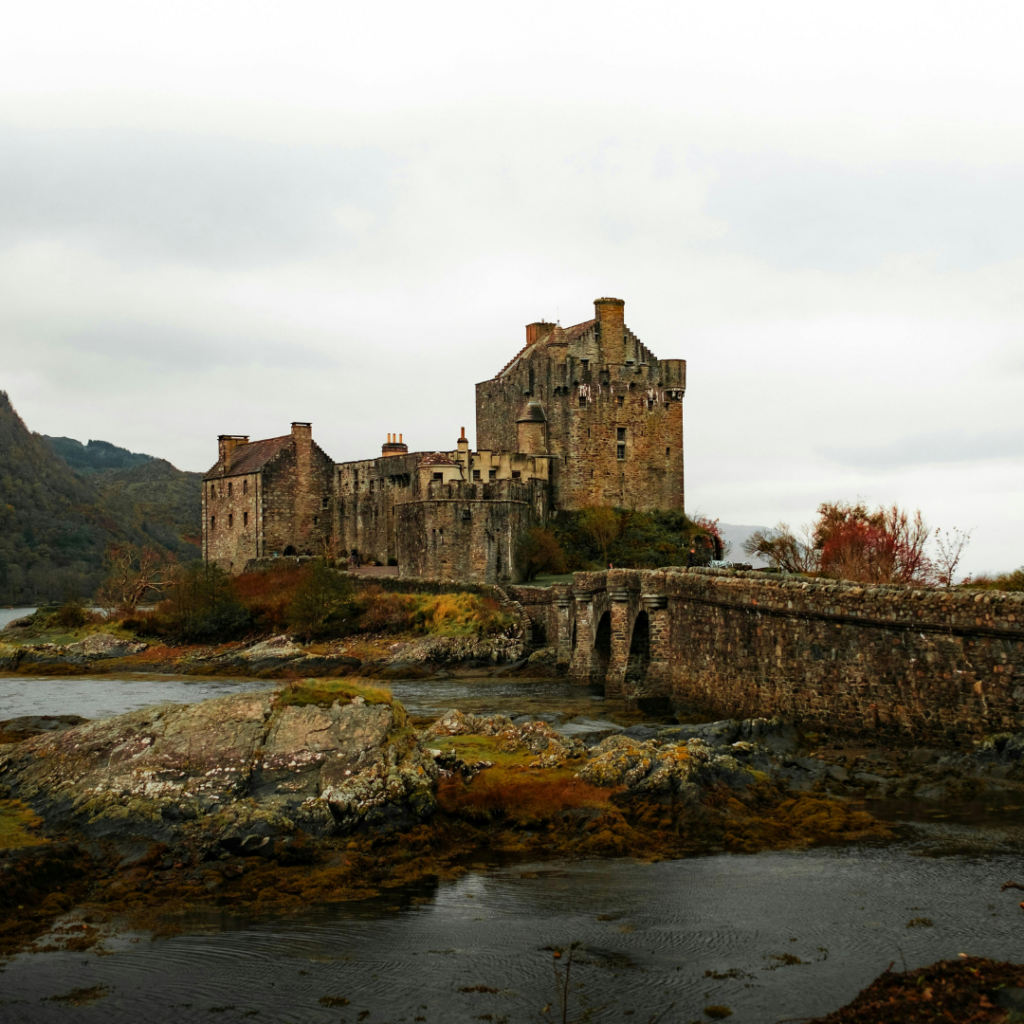
Scotland is one of the most rewarding places to visit in the United Kingdom, but it is also a destination where a little preparation goes a long way. These tips for traveling in Scotland will help you avoid common surprises, pack appropriately, and feel more confident whether you’re exploring Edinburgh, driving through the Highlands, or catching a ferry to the islands.
The cities are easy to enjoy, the landscapes are spectacular, and the hospitality is warm. But Scotland also has rural roads, fast-changing weather, limited services in remote areas, ferry schedules, and long daylight shifts depending on the season.
Here are some of the practical Scotland travel tips that will help your next trip go more smoothly.
Before You Travel
Travel regulations, entry requirements, customs rules, and transportation policies can change. This guide is meant to be a planning resource, not an official source.
Before traveling, verify current requirements with the appropriate government agencies, including the UK government and U.S. Customs and Border Protection. You should also check with your airline if you have questions about your specific itinerary.
Entry Requirements for Scotland
U.S. passport holders do not need a traditional tourist visa for visits of less than six months to the United Kingdom, but you do need a UK ETA, or Electronic Travel Authorization.
The ETA is not a visa, but it is required before travel. Apply through the official UK government website or app before your departure. Once approved, the ETA is valid for two years and applies to travel throughout the United Kingdom, including Scotland, England, Wales, and Northern Ireland.
Your passport should be valid for the full duration of your trip and have at least one blank page.
If you are not traveling on a U.S. passport, check the UK entry requirements for your specific nationality before booking travel.
Read More: 9 Best Luxury Scotland Hotels for an Unforgettable Stay
Money and Payments in Scotland
Scotland uses the British pound sterling, written as £.
Contactless payment is widely accepted, especially in cities, hotels, restaurants, shops, museums, train stations, and many taxis. You can usually pay with a credit card, Apple Pay, or Google Pay.
That said, one of our tips for traveling in Scotland is that it is still helpful to carry a small amount of cash, especially if you will be visiting rural areas, small villages, islands, farmers markets, public toilets, or smaller local businesses.
One thing that occasionally surprises visitors is that Scottish banks issue their own banknotes. They are still pound sterling and are legal currency in Scotland, but they may look different from notes issued in England. If you receive Scottish notes during your trip, do not worry. They are normal to use in Scotland.
For the best exchange rate, use an ATM connected to a major bank rather than exchanging money at the airport. Before you travel, notify your bank and credit card company so your transactions are not blocked.
You can also look into opening a Wise account. Wise is a financial tech company that makes it easy to have accounts in multiple currencies, as well as having some of the most wallet-friendly conversion costs that I’ve found.
One of the best things about Wise is that It can also be a great way to set aside money for your trip. You can convert from USD to GBP when conversion rates are more favorable and then not worry about it as much if the rate isn’t as favorable while you’re traveling.
What to Pack for Scotland
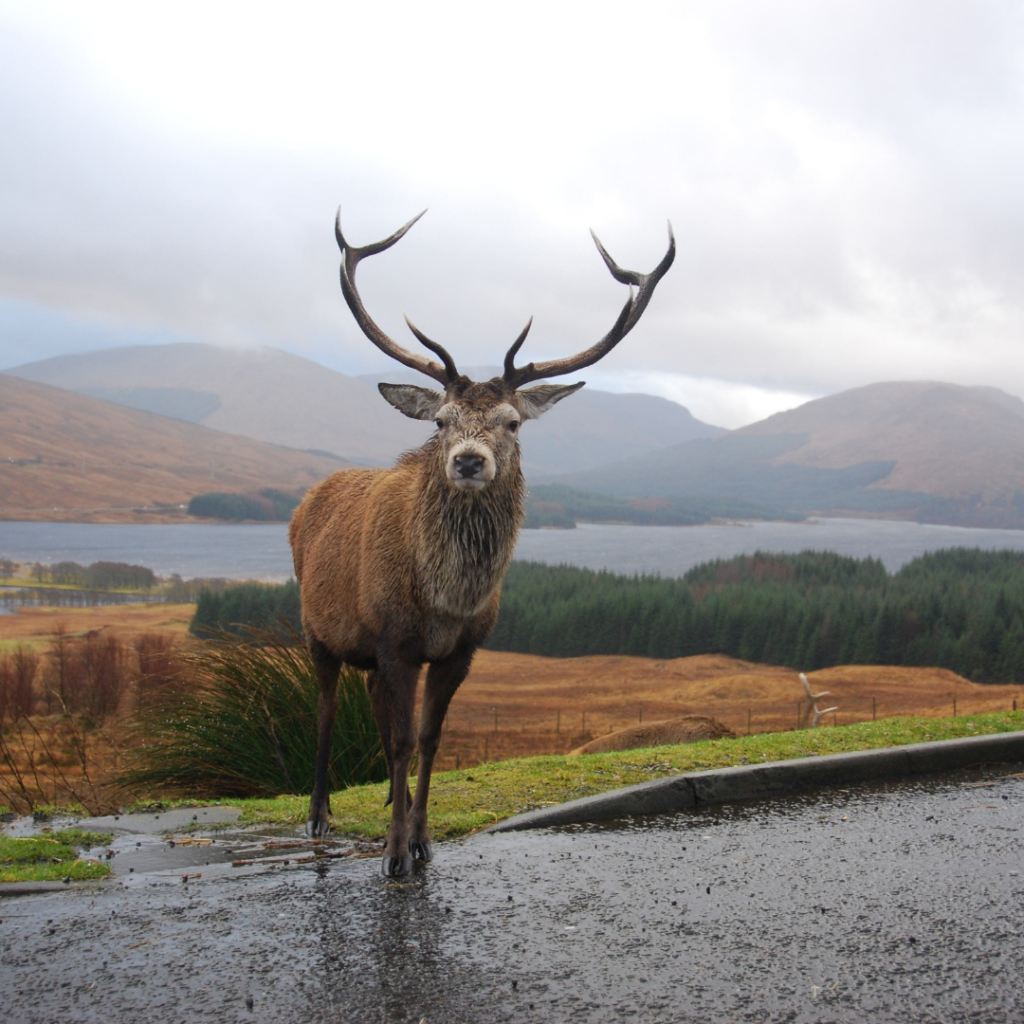
Scotland’s weather is famously unpredictable, and that is not an exaggeration. You can have sunshine, rain, wind, and cool temperatures in the same day. We’ve experienced beautiful weather at Edinburgh castle, rain 30 minutes later while walking down the Royal Mile, and snow a day later driving around Balmoral Castle.
One of the most useful tips for traveling in Scotland is to pack layers rather than clothing for a single forecast.
Bring:
- A waterproof jacket
- Comfortable walking shoes
- Waterproof footwear if you will be walking in the countryside
- A sweater or fleece, even in summer
- A small umbrella for city use
- Insect repellent if you are visiting in summer
Summer temperatures are usually cool by American standards. In many parts of Scotland, a summer day in the 60s Fahrenheit is perfectly normal. Temperatures above 70-75°F are less common, especially in the Scottish Highlands, north coast, and islands.
Air conditioning is also uncommon. Most hotels do not have it, and that is usually not a problem because the climate is mild. If your room feels warm, you will often be opening a window rather than adjusting a thermostat.
One note: window screens are not commonly used in Scotland, which can surprise American travelers.
Midges Are a Real Consideration in Summer
If you are traveling through some of Scotlands wild areas, like wild camping in the Highlands, hiking a wooded rural area, or visiting parts of central Scotland or the west coast in summer, you should know about midges.
Midges are tiny biting insects, similar in annoyance to mosquitoes, though much smaller. They are most active in warmer months, especially in still, damp conditions around dawn and dusk.
They should not stop you from visiting Scotland, but they are worth preparing for. Pack insect repellent, consider long sleeves for evenings outdoors, and be aware that breezy conditions are your friend.
Midges are much less of a concern in cities and during colder months.
Daylight Hours Can Change Your Plans

Scotland sits far north, with much of the country at a similar latitude to southern Alaska. That means daylight varies dramatically by season.
In summer, the days are long, especially in the Highlands and northern islands. This can be wonderful for sightseeing, scenic drives, and late dinners after a full day out.
In winter, daylight is much shorter. If you are planning countryside drives, hikes, scenic viewpoints, or ferry connections, pay close attention to sunrise and sunset times. One of our tips for traveling in Scotland is to check sunrise and sunset times as your planning your Scotland itinerary so you aren’t surprised.
This is especially important in spring, autumn, and winter. A route that looks simple on a map may feel very different if you are driving narrow roads after dark.
Pack Smaller Luggage Than You Think You Need
Large luggage can be inconvenient in Scotland, especially if your trip includes trains, small hotels, rural inns, ferries, or a rental car.
You may need to carry your own bags through stations, onto trains, up stairs, or into smaller vehicles. Rental cars and taxis are generally smaller than what many American travelers expect.
If you are traveling by train, luggage space is limited. Smaller bags can often fit overhead, while larger suitcases may need to go in racks near the doors. These spaces are first come, first served.
A medium-sized suitcase and a backpack per person is usually much easier than a large checked bag.
Scottish Culture Differences to Know
Scotland is part of the United Kingdom, but it has its own distinct culture, history, identity, and social norms. Here are a few tips for traveling in Scotland to help you blend in a bit more with Scottish culture.
Politeness still matters. Say “please,” “thank you,” and “sorry.” Queue properly. Be mindful of your volume in public places, especially on trains and buses.
Scots are often warm, friendly, and helpful, but communication can be more direct than visitors expect. Humor is also important, especially dry wit and self-deprecating humor.
There are a few topics to handle carefully. Scottish independence, religion, politics, and the monarchy can be sensitive subjects. Unless someone brings them up in a comfortable way, they are best avoided in casual conversation.
Dining and Tipping in Scotland
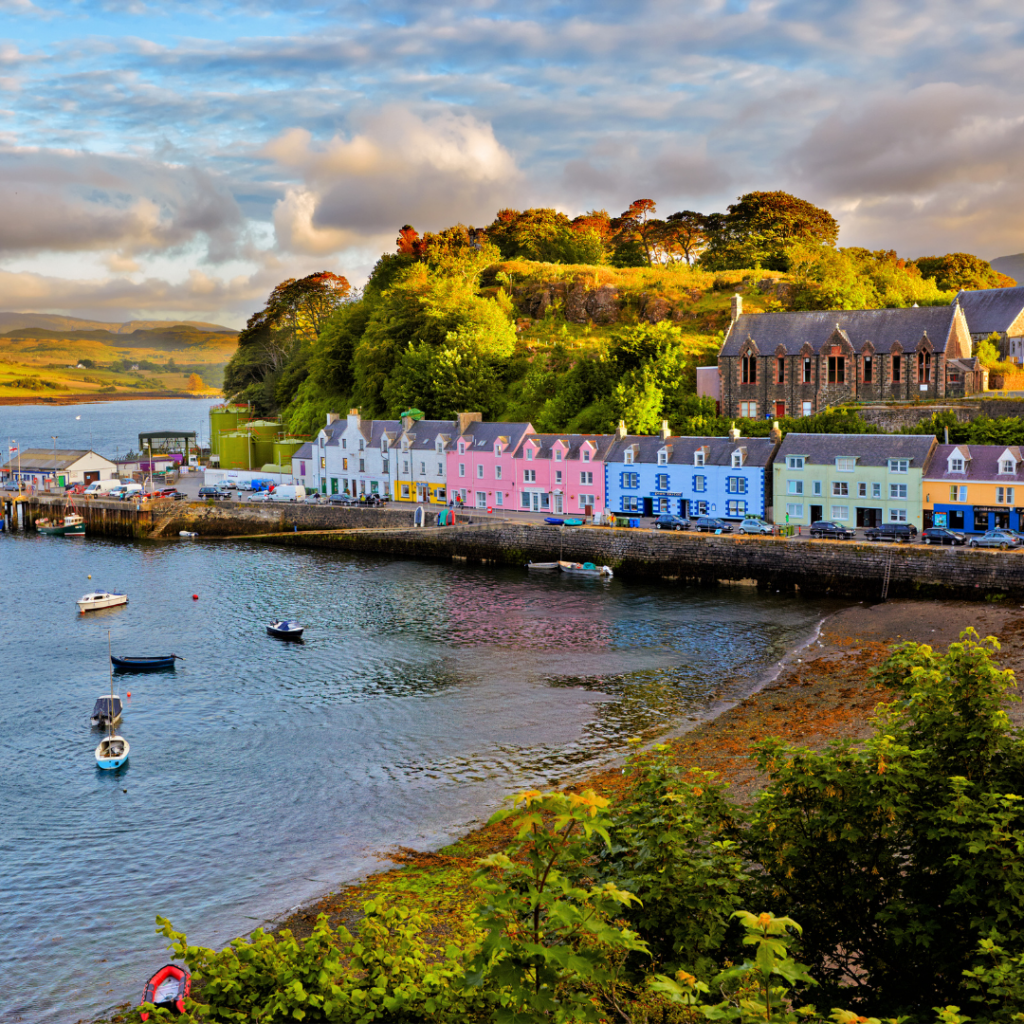
A key tips for traveling in Scotland: dinner reservations are important, even outside the major cities.
Dinner in Scotland often starts later than many Americans are used to, with restaurants commonly beginning full dinner service around 7:00 p.m.
Reservations are often vital, and not just in Edinburgh or Glasgow. In smaller towns, rural areas, and islands, there may be fewer restaurants than you expect. Some places may close certain days of the week or stop serving food earlier than you assume.
If you know where you will be for the evening, book ahead.
Tipping is different from the U.S. Some restaurants include a service charge, often around 10-15%. If a service charge is included, you usually do not need to add more.
If there is no service charge, tipping around 10-15% for good service is customary.
In pubs, you usually order drinks at the bar unless there is table service. If you are dining at a pub, some take reservations, which can be very helpful on weekends or in rural areas.
Staying Safe in Scotland
Scotland is generally a safe destination, but normal travel awareness still applies.
Keep your bag secure, do not leave valuables unattended, and avoid displaying expensive jewelry or electronics unnecessarily.
Phone snatching is less common than in some major European cities, but it can still happen in busy areas of Edinburgh or Glasgow. Keep a secure grip on your phone when taking photos, checking maps, or walking near roads.
It is also smart to keep digital and paper copies of important documents, including your passport and travel insurance details.
Emergency services can be reached by calling 999, which is similar to dialing 911 in the U.S. For urgent but non-life-threatening medical help, call NHS 111.
Pharmacies and Medical Help
Pharmacies are useful for minor health concerns while traveling.
Boots is one of the most common pharmacy chains in Scotland and is a good place to find over-the-counter medicine, first aid supplies, toiletries, and basic travel essentials. Larger grocery stores may also have pharmacies.
Emergency rooms are called A&E, which stands for Accident & Emergency.
For urgent medical advice that is not life-threatening, NHS 111 can help direct you to the right care.
Travel insurance is strongly recommended. Many travel insurance plans also include telemedicine services, which can be useful if you need advice while away from home.
Electricity and Plug Adapters
Scotland uses the same plug type as the rest of the UK: Type G plugs with three rectangular prongs.
You will need a UK plug adapter for American devices. Most modern phones, laptops, tablets, and camera chargers are dual voltage, which means they only need an adapter, not a converter.
Check the label on your device. If it says 110V/220V or 100-240V, it is dual voltage.
Bathrooms in the UK generally do not have standard outlets. You may only see a low-power shaver outlet. Plan to use hair tools, chargers, and appliances outside the bathroom.
UK outlets also have switches. If something is not charging, check that the outlet is switched on.
Wi-Fi and Cell Service Tips for Traveling in Scotland
Wi-Fi is widely available in hotels, cafes, restaurants, airports, and train stations. Speeds can vary, especially outside major cities.
Cell service is generally strong in Edinburgh, Glasgow, Inverness, Aberdeen, and larger towns. It can be much less reliable in the Highlands, islands, rural glens, and remote coastal areas.
Before heading into the countryside on a day trip or longer road trip, download:
- Maps
- Driving directions
- Train or ferry tickets
- Hotel confirmations
- Restaurant addresses
- Any documents you may need offline
If your phone supports eSIMs, an eSIM can be a convenient option for mobile data. You can also check with your U.S. provider about international coverage before you leave.
Getting Around Scotland
Scotland is easy to explore in some ways and more complicated in others.
Trains connect major cities and towns, including Edinburgh, Glasgow, Inverness, Aberdeen, and many smaller destinations. Booking in advance can often save money.
Edinburgh and Glasgow each have more than one major train station, so check your departure station carefully.
Edinburgh also has a tram line connecting the Edinburgh airport with the city center. In most other places, you will rely on trains, buses, taxis, walking, or a rental car.
Buses can be useful for local travel and for reaching some smaller towns and rural areas. In remote areas, service may be limited, so check schedules carefully rather than assuming there will be frequent departures.
Read more: 9 Breathtaking Rail Journeys in the UK
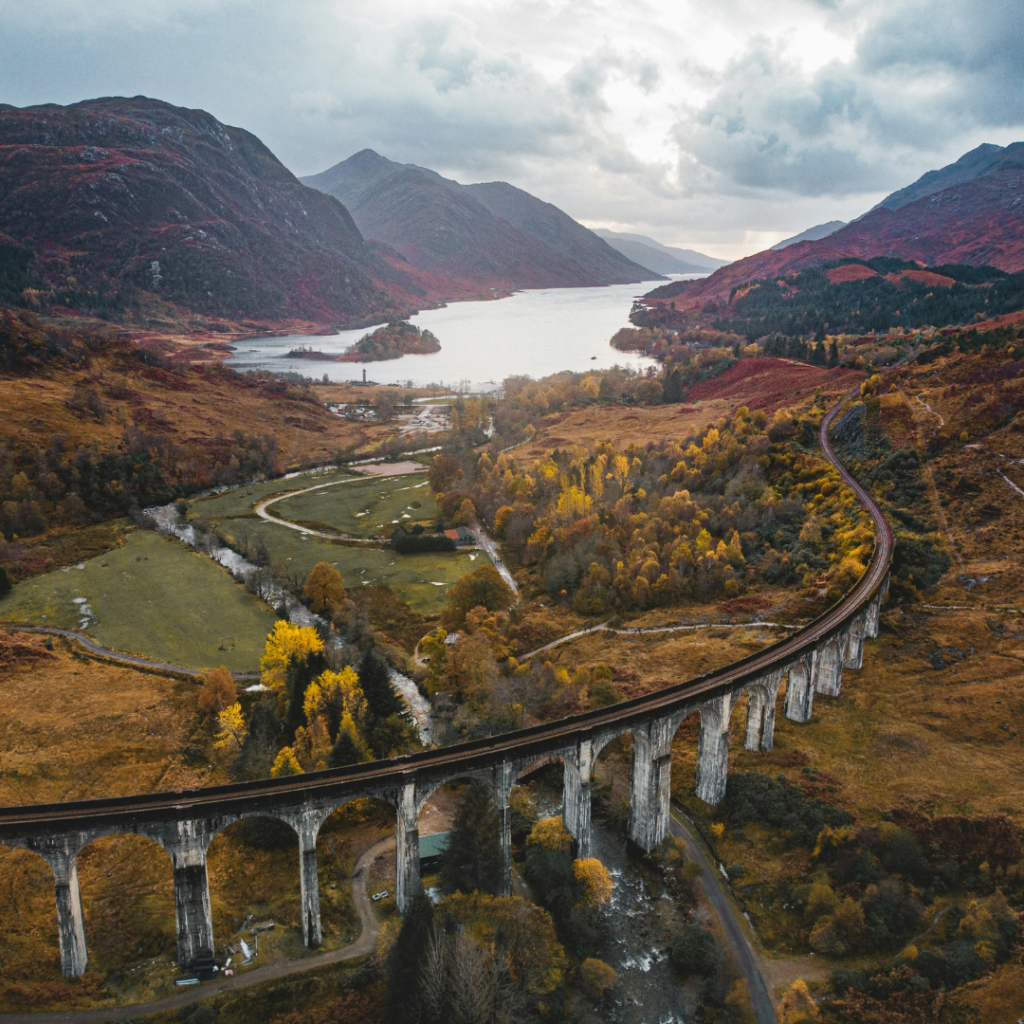
Scotland has some of the most beautiful rail lines in the world. One of the best is the West Highland Line, which runs through the scenic western highlands and crosses the famous Glenfinnan Viaduct.
You can experience it on a regular train or take the Jacobite Steam Train, most famous for its role as the Hogwarts Express in the Harry Potter movies. The train runs from Ft. William, but multiple day tours from Edinburgh, Glasgow and Inverness include it. For many people it’s a bucket list addition to a Scotland itinerary.
Ferries and Island Travel
If your Scotland trip includes islands, ferries also become part of your itinerary planning.
Read More: Plan a Trip to Kirkwall, Scotland’s Hidden Gem
Scotland has an extensive ferry network serving islands such as Mull, Skye, Orkney, the Outer Hebrides, and many smaller communities. Caledonian MacBrayne, often called CalMac, operates many west coast ferry routes, while NorthLink serves the Northern Isles.
The Isle of Skye is one of the few Scottish island destinations that doesn’t require a ferry. While there is a ferry you can take, the island is also connected to the mainland by bridge.
Some ferries carry both passengers and vehicles, while others are passenger-only. If you are traveling with a car, advance reservations are often essential and can book up well ahead of time, especially in high season.
Ferries are also weather-dependent. Another of the best tips for traveling in Scotland is to build flexibility into your itinerary if you’re relying on ferries.
Read More: The Orkney Islands: A Guide to Visiting Scotland Beyond the Mainland
Driving in Scotland

Any practical Scotland travel guide needs to be honest about driving: it is one of the best ways to explore the countryside, but it is not something to take lightly.
Renting a car gives you access to scenic roads, small villages, castles, whisky distilleries, lochs, glens, and remote landscapes that are difficult to reach by public transport.
You will drive on the left side of the road, and the driver sits on the right side of the car. Roads can be narrow, winding, and rural, especially in the Highlands and islands.
Single track roads are common in remote areas. These are roads with one lane for traffic in both directions, with passing places along the way. Use a passing place to allow oncoming traffic to pass, and be prepared to reverse if needed.
Do not use passing places as scenic pull-offs. If you want to stop for a photo, find a proper layby or parking area.
Read More: England Travel Tips: Things to Know Before Traveling to England
You may also encounter sheep, deer, cyclists, farm vehicles, blind corners, steep gradients, and sudden weather changes.
If you plan to rent a car, one of the most important tips for traveling in Scotland is to choose the smallest vehicle that comfortably fits your luggage. Smaller cars are easier to manage on narrow roads, in villages, and in tight car parks.
If you are not comfortable driving a manual, request an automatic transmission in advance. Automatics are usually more expensive and may be limited, but they are often worth it when you are also adjusting to driving on the left.
Another important travel tip if you plan to taste some Scottish whisky on your trip. Scotland doesn’t allow any level of alcohol consumption while driving. So if you’re visiting a distillery and doing a tasting, they’ll provide a “driver pack” for you to take with you and enjoy after you’re done driving for the day. Having a driver arranged for any tour and tasting days is an easy way to make sure everyone can enjoy the tasting on site.
Roundabouts and Road Rules
Roundabouts are common in Scotland.
Always give way to traffic already on the roundabout and look right before entering. Larger roundabouts may have lane markings or signs showing which lane to use for each exit.
Speed limits are in miles per hour, and speed cameras are common.
One of the most important things to remember is that posted speeds are limits, not targets. A narrow rural road may technically have a 60 mph limit, but that does not mean it is safe or realistic to drive that fast.
Drive for the road, the weather, and your comfort level.
Public Toilets
Public restrooms are usually called toilets or loos.
In cities, towns, train stations, attractions, and larger visitor sites, toilets are generally available. In rural areas, the Highlands, and islands, facilities can be much more limited.
Use the toilet when one is available, especially before long drives, ferry journeys, scenic routes, or countryside walks.
Some public toilets are pay-to-use. In towns and cities, payment may be by card or contactless. In smaller places, you may see a donation box asking for 20-50p, so it is useful to carry some small change.
Pubs generally have toilets for customers. If you stop in just to use the facilities, it is courteous to buy a drink or snack.
Returning Home to the U.S.
TSA PreCheck does not apply when departing from Scotland. You will need to follow standard airport security rules, including liquid restrictions for carry-on luggage when they apply.
If you buy duty-free liquids before flying home and have a connecting flight in the U.S., make sure you have space to pack them in your checked luggage after clearing customs.
When you arrive in the U.S., you must collect your checked bags, clear customs, and then recheck your luggage for your connecting flight, even if your bag is tagged through to your final destination.
Avoid bringing restricted agricultural products such as fruits, vegetables, plants, or fresh food back into the United States.
The Bottom Line
These tips for traveling in Scotland won’t eliminate every surprise, but they’ll help you spend less time figuring out the logistics and more time enjoying everything from the Scottish Highlands and islands to Scotland’s historic cities.
The cities are easy to enjoy, but some of the most memorable parts of a Scotland trip are found beyond the obvious places: in the Highlands, on the islands, along quiet coastal roads, in small towns, at castles, distilleries, and scenic viewpoints.
Pack for changing weather, travel lighter than you think you need to, make dinner reservations, plan ahead for ferries and rural transportation, and give yourself extra time when driving outside the cities.
Once you understand how the practical details work, you can relax into the trip and enjoy what makes Scotland so special: dramatic landscapes, layered history, welcoming towns, and the kind of scenery that stays with you long after you return home.
If you’re looking for more Scotland tour and itinerary ideas, check out our other Scotland travel resources. And if you’re ready to start planning your trip with the help of a Scotland travel expert, contact us today.
Scotland is one of the most rewarding places to visit in the United Kingdom, but it is also a destination where a little preparation goes a long way. These tips for traveling in Scotland will help you avoid common surprises, pack appropriately, and feel more confident whether you’re exploring Edinburgh, driving through the Highlands, or catching a ferry to the islands.
The cities are easy to enjoy, the landscapes are spectacular, and the hospitality is warm. But Scotland also has rural roads, fast-changing weather, limited services in remote areas, ferry schedules, and long daylight shifts depending on the season.
Here are some of the practical Scotland travel tips that will help your next trip go more smoothly.
Before You Travel
Travel regulations, entry requirements, customs rules, and transportation policies can change. This guide is meant to be a planning resource, not an official source.
Before traveling, verify current requirements with the appropriate government agencies, including the UK government and U.S. Customs and Border Protection. You should also check with your airline if you have questions about your specific itinerary.
Entry Requirements for Scotland
U.S. passport holders do not need a traditional tourist visa for visits of less than six months to the United Kingdom, but you do need a UK ETA, or Electronic Travel Authorization.
The ETA is not a visa, but it is required before travel. Apply through the official UK government website or app before your departure. Once approved, the ETA is valid for two years and applies to travel throughout the United Kingdom, including Scotland, England, Wales, and Northern Ireland.
Your passport should be valid for the full duration of your trip and have at least one blank page.
If you are not traveling on a U.S. passport, check the UK entry requirements for your specific nationality before booking travel.
Read More: 9 Best Luxury Scotland Hotels for an Unforgettable Stay
Money and Payments in Scotland
Scotland uses the British pound sterling, written as £.
Contactless payment is widely accepted, especially in cities, hotels, restaurants, shops, museums, train stations, and many taxis. You can usually pay with a credit card, Apple Pay, or Google Pay.
That said, one of our tips for traveling in Scotland is that it is still helpful to carry a small amount of cash, especially if you will be visiting rural areas, small villages, islands, farmers markets, public toilets, or smaller local businesses.
One thing that occasionally surprises visitors is that Scottish banks issue their own banknotes. They are still pound sterling and are legal currency in Scotland, but they may look different from notes issued in England. If you receive Scottish notes during your trip, do not worry. They are normal to use in Scotland.
For the best exchange rate, use an ATM connected to a major bank rather than exchanging money at the airport. Before you travel, notify your bank and credit card company so your transactions are not blocked.
You can also look into opening a Wise account. Wise is a financial tech company that makes it easy to have accounts in multiple currencies, as well as having some of the most wallet-friendly conversion costs that I’ve found.
One of the best things about Wise is that It can also be a great way to set aside money for your trip. You can convert from USD to GBP when conversion rates are more favorable and then not worry about it as much if the rate isn’t as favorable while you’re traveling.
What to Pack for Scotland
Scotland’s weather is famously unpredictable, and that is not an exaggeration. You can have sunshine, rain, wind, and cool temperatures in the same day. We’ve experienced beautiful weather at Edinburgh castle, rain 30 minutes later while walking down the Royal Mile, and snow a day later driving around Balmoral Castle.
One of the most useful tips for traveling in Scotland is to pack layers rather than clothing for a single forecast.
Bring:
- A waterproof jacket
- Comfortable walking shoes
- Waterproof footwear if you will be walking in the countryside
- A sweater or fleece, even in summer
- A small umbrella for city use
- Insect repellent if you are visiting in summer
Summer temperatures are usually cool by American standards. In many parts of Scotland, a summer day in the 60s Fahrenheit is perfectly normal. Temperatures above 70-75°F are less common, especially in the Scottish Highlands, north coast, and islands.
Air conditioning is also uncommon. Most hotels do not have it, and that is usually not a problem because the climate is mild. If your room feels warm, you will often be opening a window rather than adjusting a thermostat.
One note: window screens are not commonly used in Scotland, which can surprise American travelers.
Midges Are a Real Consideration in Summer
If you are traveling through some of Scotlands wild areas, like wild camping in the Highlands, hiking a wooded rural area, or visiting parts of central Scotland or the west coast in summer, you should know about midges.
Midges are tiny biting insects, similar in annoyance to mosquitoes, though much smaller. They are most active in warmer months, especially in still, damp conditions around dawn and dusk.
They should not stop you from visiting Scotland, but they are worth preparing for. Pack insect repellent, consider long sleeves for evenings outdoors, and be aware that breezy conditions are your friend.
Midges are much less of a concern in cities and during colder months.
Daylight Hours Can Change Your Plans
Scotland sits far north, with much of the country at a similar latitude to southern Alaska. That means daylight varies dramatically by season.
In summer, the days are long, especially in the Highlands and northern islands. This can be wonderful for sightseeing, scenic drives, and late dinners after a full day out.
In winter, daylight is much shorter. If you are planning countryside drives, hikes, scenic viewpoints, or ferry connections, pay close attention to sunrise and sunset times. One of our tips for traveling in Scotland is to check sunrise and sunset times as your planning your Scotland itinerary so you aren’t surprised.
This is especially important in spring, autumn, and winter. A route that looks simple on a map may feel very different if you are driving narrow roads after dark.
Pack Smaller Luggage Than You Think You Need
Large luggage can be inconvenient in Scotland, especially if your trip includes trains, small hotels, rural inns, ferries, or a rental car.
You may need to carry your own bags through stations, onto trains, up stairs, or into smaller vehicles. Rental cars and taxis are generally smaller than what many American travelers expect.
If you are traveling by train, luggage space is limited. Smaller bags can often fit overhead, while larger suitcases may need to go in racks near the doors. These spaces are first come, first served.
A medium-sized suitcase and a backpack per person is usually much easier than a large checked bag.
Scottish Culture Differences to Know
Scotland is part of the United Kingdom, but it has its own distinct culture, history, identity, and social norms. Here are a few tips for traveling in Scotland to help you blend in a bit more with Scottish culture.
Politeness still matters. Say “please,” “thank you,” and “sorry.” Queue properly. Be mindful of your volume in public places, especially on trains and buses.
Scots are often warm, friendly, and helpful, but communication can be more direct than visitors expect. Humor is also important, especially dry wit and self-deprecating humor.
There are a few topics to handle carefully. Scottish independence, religion, politics, and the monarchy can be sensitive subjects. Unless someone brings them up in a comfortable way, they are best avoided in casual conversation.
Dining and Tipping in Scotland
A key tips for traveling in Scotland: dinner reservations are important, even outside the major cities.
Dinner in Scotland often starts later than many Americans are used to, with restaurants commonly beginning full dinner service around 7:00 p.m.
Reservations are often vital, and not just in Edinburgh or Glasgow. In smaller towns, rural areas, and islands, there may be fewer restaurants than you expect. Some places may close certain days of the week or stop serving food earlier than you assume.
If you know where you will be for the evening, book ahead.
Tipping is different from the U.S. Some restaurants include a service charge, often around 10-15%. If a service charge is included, you usually do not need to add more.
If there is no service charge, tipping around 10-15% for good service is customary.
In pubs, you usually order drinks at the bar unless there is table service. If you are dining at a pub, some take reservations, which can be very helpful on weekends or in rural areas.
Staying Safe in Scotland
Scotland is generally a safe destination, but normal travel awareness still applies.
Keep your bag secure, do not leave valuables unattended, and avoid displaying expensive jewelry or electronics unnecessarily.
Phone snatching is less common than in some major European cities, but it can still happen in busy areas of Edinburgh or Glasgow. Keep a secure grip on your phone when taking photos, checking maps, or walking near roads.
It is also smart to keep digital and paper copies of important documents, including your passport and travel insurance details.
Emergency services can be reached by calling 999, which is similar to dialing 911 in the U.S. For urgent but non-life-threatening medical help, call NHS 111.
Pharmacies and Medical Help
Pharmacies are useful for minor health concerns while traveling.
Boots is one of the most common pharmacy chains in Scotland and is a good place to find over-the-counter medicine, first aid supplies, toiletries, and basic travel essentials. Larger grocery stores may also have pharmacies.
Emergency rooms are called A&E, which stands for Accident & Emergency.
For urgent medical advice that is not life-threatening, NHS 111 can help direct you to the right care.
Travel insurance is strongly recommended. Many travel insurance plans also include telemedicine services, which can be useful if you need advice while away from home.
Electricity and Plug Adapters
Scotland uses the same plug type as the rest of the UK: Type G plugs with three rectangular prongs.
You will need a UK plug adapter for American devices. Most modern phones, laptops, tablets, and camera chargers are dual voltage, which means they only need an adapter, not a converter.
Check the label on your device. If it says 110V/220V or 100-240V, it is dual voltage.
Bathrooms in the UK generally do not have standard outlets. You may only see a low-power shaver outlet. Plan to use hair tools, chargers, and appliances outside the bathroom.
UK outlets also have switches. If something is not charging, check that the outlet is switched on.
Wi-Fi and Cell Service Tips for Traveling in Scotland
Wi-Fi is widely available in hotels, cafes, restaurants, airports, and train stations. Speeds can vary, especially outside major cities.
Cell service is generally strong in Edinburgh, Glasgow, Inverness, Aberdeen, and larger towns. It can be much less reliable in the Highlands, islands, rural glens, and remote coastal areas.
Before heading into the countryside on a day trip or longer road trip, download:
- Maps
- Driving directions
- Train or ferry tickets
- Hotel confirmations
- Restaurant addresses
- Any documents you may need offline
If your phone supports eSIMs, an eSIM can be a convenient option for mobile data. You can also check with your U.S. provider about international coverage before you leave.
Getting Around Scotland
Scotland is easy to explore in some ways and more complicated in others.
Trains connect major cities and towns, including Edinburgh, Glasgow, Inverness, Aberdeen, and many smaller destinations. Booking in advance can often save money.
Edinburgh and Glasgow each have more than one major train station, so check your departure station carefully.
Edinburgh also has a tram line connecting the Edinburgh airport with the city center. In most other places, you will rely on trains, buses, taxis, walking, or a rental car.
Buses can be useful for local travel and for reaching some smaller towns and rural areas. In remote areas, service may be limited, so check schedules carefully rather than assuming there will be frequent departures.
Read more: 9 Breathtaking Rail Journeys in the UK
Scotland has some of the most beautiful rail lines in the world. One of the best is the West Highland Line, which runs through the scenic western highlands and crosses the famous Glenfinnan Viaduct.
You can experience it on a regular train or take the Jacobite Steam Train, most famous for its role as the Hogwarts Express in the Harry Potter movies. The train runs from Ft. William, but multiple day tours from Edinburgh, Glasgow and Inverness include it. For many people it’s a bucket list addition to a Scotland itinerary.
Ferries and Island Travel
If your Scotland trip includes islands, ferries also become part of your itinerary planning.
Read More: Plan a Trip to Kirkwall, Scotland’s Hidden Gem
Scotland has an extensive ferry network serving islands such as Mull, Skye, Orkney, the Outer Hebrides, and many smaller communities. Caledonian MacBrayne, often called CalMac, operates many west coast ferry routes, while NorthLink serves the Northern Isles.
The Isle of Skye is one of the few Scottish island destinations that doesn’t require a ferry. While there is a ferry you can take, the island is also connected to the mainland by bridge.
Some ferries carry both passengers and vehicles, while others are passenger-only. If you are traveling with a car, advance reservations are often essential and can book up well ahead of time, especially in high season.
Ferries are also weather-dependent. Another of the best tips for traveling in Scotland is to build flexibility into your itinerary if you’re relying on ferries.
Read More: The Orkney Islands: A Guide to Visiting Scotland Beyond the Mainland
Driving in Scotland
Any practical Scotland travel guide needs to be honest about driving: it is one of the best ways to explore the countryside, but it is not something to take lightly.
Renting a car gives you access to scenic roads, small villages, castles, whisky distilleries, lochs, glens, and remote landscapes that are difficult to reach by public transport.
You will drive on the left side of the road, and the driver sits on the right side of the car. Roads can be narrow, winding, and rural, especially in the Highlands and islands.
Single track roads are common in remote areas. These are roads with one lane for traffic in both directions, with passing places along the way. Use a passing place to allow oncoming traffic to pass, and be prepared to reverse if needed.
Do not use passing places as scenic pull-offs. If you want to stop for a photo, find a proper layby or parking area.
Read More: England Travel Tips: Things to Know Before Traveling to England
You may also encounter sheep, deer, cyclists, farm vehicles, blind corners, steep gradients, and sudden weather changes.
If you plan to rent a car, one of the most important tips for traveling in Scotland is to choose the smallest vehicle that comfortably fits your luggage. Smaller cars are easier to manage on narrow roads, in villages, and in tight car parks.
If you are not comfortable driving a manual, request an automatic transmission in advance. Automatics are usually more expensive and may be limited, but they are often worth it when you are also adjusting to driving on the left.
Another important travel tip if you plan to taste some Scottish whisky on your trip. Scotland doesn’t allow any level of alcohol consumption while driving. So if you’re visiting a distillery and doing a tasting, they’ll provide a “driver pack” for you to take with you and enjoy after you’re done driving for the day. Having a driver arranged for any tour and tasting days is an easy way to make sure everyone can enjoy the tasting on site.
Roundabouts and Road Rules
Roundabouts are common in Scotland.
Always give way to traffic already on the roundabout and look right before entering. Larger roundabouts may have lane markings or signs showing which lane to use for each exit.
Speed limits are in miles per hour, and speed cameras are common.
One of the most important things to remember is that posted speeds are limits, not targets. A narrow rural road may technically have a 60 mph limit, but that does not mean it is safe or realistic to drive that fast.
Drive for the road, the weather, and your comfort level.
Public Toilets
Public restrooms are usually called toilets or loos.
In cities, towns, train stations, attractions, and larger visitor sites, toilets are generally available. In rural areas, the Highlands, and islands, facilities can be much more limited.
Use the toilet when one is available, especially before long drives, ferry journeys, scenic routes, or countryside walks.
Some public toilets are pay-to-use. In towns and cities, payment may be by card or contactless. In smaller places, you may see a donation box asking for 20-50p, so it is useful to carry some small change.
Pubs generally have toilets for customers. If you stop in just to use the facilities, it is courteous to buy a drink or snack.
Returning Home to the U.S.
TSA PreCheck does not apply when departing from Scotland. You will need to follow standard airport security rules, including liquid restrictions for carry-on luggage when they apply.
If you buy duty-free liquids before flying home and have a connecting flight in the U.S., make sure you have space to pack them in your checked luggage after clearing customs.
When you arrive in the U.S., you must collect your checked bags, clear customs, and then recheck your luggage for your connecting flight, even if your bag is tagged through to your final destination.
Avoid bringing restricted agricultural products such as fruits, vegetables, plants, or fresh food back into the United States.
The Bottom Line
These tips for traveling in Scotland won’t eliminate every surprise, but they’ll help you spend less time figuring out the logistics and more time enjoying everything from the Scottish Highlands and islands to Scotland’s historic cities.
The cities are easy to enjoy, but some of the most memorable parts of a Scotland trip are found beyond the obvious places: in the Highlands, on the islands, along quiet coastal roads, in small towns, at castles, distilleries, and scenic viewpoints.
Pack for changing weather, travel lighter than you think you need to, make dinner reservations, plan ahead for ferries and rural transportation, and give yourself extra time when driving outside the cities.
Once you understand how the practical details work, you can relax into the trip and enjoy what makes Scotland so special: dramatic landscapes, layered history, welcoming towns, and the kind of scenery that stays with you long after you return home.
If you’re looking for more Scotland tour and itinerary ideas, check out our other Scotland travel resources. And if you’re ready to start planning your trip with the help of a Scotland travel expert, contact us today.

